‏إظهار الرسائل ذات التسميات travel. إظهار كافة الرسائل

السبت، 25 يناير 2020

Mexico and Hispanic Art

While roaming around in Mexico, I got a better understanding of the men who wrote the canon of Latin American literature. On the one hand, they were orphans if they full out rejected Spanish colonialism.  But a part of them also loved their new home with more passion. Their knowledge was a privileged burden. Fuentes, through the voice of Artemio Cruz, suffered; Garcia Marquez suffered. All could compare themselves to the worse off Latin American country, e.g. The traffics situations or the drug sources. And yet American imperialism grew despite them all. What were the men supposed to write?
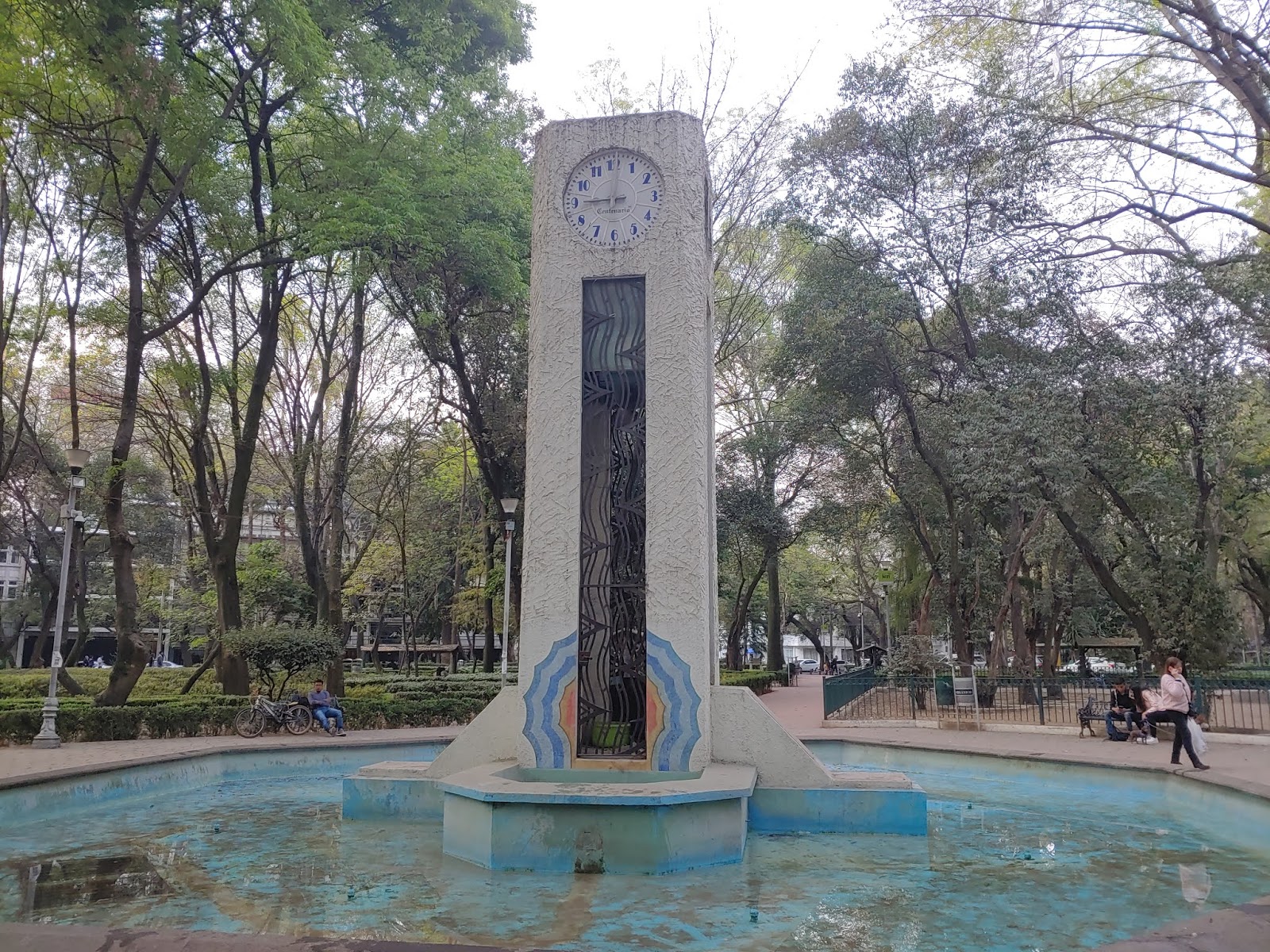
A dysfunctional clock commemorating the Armenian genocide in Colonia Roma

The mexico park adjacent to the spain park; where kids played 

A modernist car

A China clock tower commemorating the Sino-Mexican relations. dates back to Qing dynasty / 1800s

Edgar Allen Poe in public street art

The 20th century was the century of modern literature, and Latin America produced much better modern literature than China, yet they are strangely absent from mainstream institutions of China or the US.

Spanish translation of Tahar ben Jelloun's novella inside a cute cafe. He writes in French though his first language is Arabic. 


An art museum in the old city center host san exhibition the new generation of Mexico-based artists inspired by Marcel Duchamp and others' idea of Camp. I quietly note that none of whom are indigenous or black. The guard communicates to me the boundaries of the exhibition through a whistle, a non-linguistic sounds, hiding our mutual ignorance of each other's colonial language. A 40-year old woman and her accomplice try to steal my phone in a bookstore guarded by a suited security man.

Mothers of Mexico


Looking back at the 15-day trip, I did not have a single English discussion about literary books during my trip. Only magazines and a film. What is the weight of Spanish? The handsome pedlar of English language textbooks handed each out to the commuters. I notice the US flag printed on the cover. He scurried around the subway, retrieving them into a backpack like any ordinary contraband. A century of Magical Realism?

Selfie with a Che statue in a park with a lot of males, both statues and live ones. We avoid eye contact and soon I am the only living person in the park.


Dolled-up girls  in public notice my attire and compare themselves to me without holding back. Boys  are mostly more restrained.

I return to Massachusetts and notice more Aztec themed restaurants in well to do areas. I still have not finished Savage Detectives. The suicidal tendencies of some of the characters are impossible to offer an actual lesson for my trajectory, since the American continent has been so generous to me. I was slightly disappointed by Mexico City's structures, with all the malls, greatly resembling those cities of the US, yet I can still imagine a brighter future there. Just like all the other Latin American exiles. We share the ambivalence towards Europe, yet we all, enjoy our vacations abroad and Nouveau Vague aesthetics in films. We do not care if Spain was the original or copy of Mexico, as long as music keeps us dancing and the food tastes great.

 Academic works continue to explore the multiple meanings of Hispanidad.  Online, political controversy surrounding Hispanic issues continues. Latinx authors of the English language continue to languish without much praise while non Latinx authors benefit from their writings on issues related to the borders. 

الاثنين، 30 ديسمبر 2019

Traveling in Teotihuacan and Seeking refuge

During my trip to one of the pyramid sites, Teotihuacan, thankfully saved from Spanish destruction, I booked a tour guide on Airbnb. I did not expect as many people as eight other visitors, but we were all eager and enthusiastic for the trip, if not somewhat competitive as well. One girl from the US in particular liked to show off her Spanish as well as her closeness to her amiga blanca


At first, I thought the designated driver of our fancy Nissan van was Alejandro because I did not read the email prior to departing. He was actually the brother of Alejandro, Sergio, and spoke little English. We waited in front of the gate of the tour site for Alejandro together and I was a bit puzzled.
Soon Alejandro emerged and the answer to my question was revealed. 
He said some things that struck me as particularly revealing. For example, he repeatedly said he had Arab blood and then later said his "Mayan" heritage was 42 percent. Only then I realized he took one genetic test exam to get such results. One of my other self-conscious friend, who also interacted with another ethnic group for a living, took this kind of test as well. Alejandro commented on the other Mexican American couple on the trip in regards to their shorter height, and commented that shorter people were possibly “purer” in their indigeneity. I also read recently that someone has argued the study of genes in the history of science directly related to the study of eugenics.
Alejandro also talked about the language his mother spoke. He said when he traveled to Arizona, another “Hopi” man heard him speak the language and remarked, “how come you speak my mother’s language?” At first Alejandro slyly pretended that he did not understand. Later he said to the man in English, “It’s because we are brothers.” Alejandro clarified that his version is called Nahuan rather than Hopi. I loved that story, more than the test story.

Old paintings in a royal house

In the introductions, he asked us to say what we expected from the tour. I said I was interested in Aztec design and paintings. He concluded by saying there will be all of what we expected. Yet during most of the tour of the structures, we barely saw drawings. He emphasized a lot of the water-levelness of building structures, well-designed acoustics, technological as well as drainage accomplishments of the Aztecs, in somewhat of a defensive manner. He bragged about the availablity of fresh fruits in the Mexico agricultural economy vis-a-vis the Global North, something which tourists often exclaim to him during their travels. He also joked frequently about possibly scary situations but soon laughed it off. He recalled when the sites were less guarded and regulated, he and his friends used to relax around and do what many teenagers did in the absence of their parents. 

"We humans are made of different colors, like corn."

When we approached lesser visited sites, of the royal domestic quarters as well as his own house, there was more presence of Aztec aesthetics.

Alejandro's talk about pure Aztec Indians reminded me when Walid showed me a video clip where people seeking refuge claimed to be "suri" (Syrian) in their primary spoken Arabic. The "real" Arab would interview them about their origins with a fluent "non-creole" Arabic dialect. One girl with dark skin giggled in response to the question "where are you from" and said "ana suri" and looked away in shyness. In the same edited clip a purported Afghani man among other men in an outside environment, possibly waiting in line for some distributions, said similar things. While Walid found it entertaining and funny, I thought the video clip was cruel. Privileged spectators joked while people seeking refuge adopt new social orders. Still, Arab men tend to be quite funny and self deprecating in most circumstances, and I also found the interactions filled with humorous energy. After all, who would've imagined that being an Arabic-speaking "suri" was so globally accepted to be politically important?
Now after my travels in Mexico and I think back to this clip, authenticity in this day and age is so regulated by our notions of purity and whiteness.

The same instance is repeated when Zayn in the film Capernaum tried to claim that he was related to a dark skinned baby. 


An Ethiopian worker  took him in and left her son with him and could not return on time due to rounded up in jail after encountering the Lebanese authority. The fixer who tried to take the baby from him understood the kinship relations from the standpoint of his precariousness, and joked about the improbability that Zayn and the baby were actually related, but then decided to exploit it. Zayn also claims to be Syrian in order to get provisions from a stand during moments of desperation. 

During this competition for resources under capitalism, authentic suffering and/or civilization becomes the true measuring stick for humanitarian attention-- will the real Syrian / indigenous person please stand up? Or rather, has the struggle of the Syrian leaving a warzone or an indigenous person trying to maintain their identity by any means necessary inspire the other people who are also not indigenous or Suri by descent?
In some senses, Alejandro was the only person who I could speak to on his  indigenous identity and his life during my two weeks in Mexico, partly because he liked to as a mischievous man and his slightly self-absorbed personality, partly because I paid for this Airbnb experience. I unfortunately realized that white supremacy existed in Mexico very quickly, even though I had subconsciously hoped for something else.

Still, the Mexican-Spanish language and music are relatively open systems (more like Linux than Windows or Apple), and overall people did not assume anything about my personhood as quickly based on my looks as some other white-passing / white supremacist cultures in the world. 
الاثنين، 9 أكتوبر 2017

Day Trippin' Tripoli, the one in Sham


Tripoli, aka Tarābulus / Tarabulus al-Sham, was not on top of my list of tourist destinations. Like many millenials who travel to Lebanon, I had watched the Vice documentary about the armed urban conflict and decided best to stay away from Tripoli. My Airbnb flatmates Ian and Dan held a similar impression of the city when they arrived in Lebanon for their holiday. Dan was especially worried that something wrong might happen. Ian was eager to see the city because it is closer in architectural style to his hometown, Damascus, than Beirut. But our host Ibrahim said that it is a cool city and showed us a short documentary on the reconstruction efforts since the conflict. I was also hoping we could visit the bookstore that burned


We set off on July 15 and made jokes about getting shot by crossfire. The same jovial middle-aged Lebanese driver who took us to Jounieh also found us again and offered to take us to Tripoli as well. At first he did not even recognize us, even though I think we stand out as a odd group of tourists. Ian, who continued to act as our trusty translator, said we didn't have the money and opted to take a bus for 5000LL per person.


At the bus stop in Beirut

On the way north, we passed by the same places we visited before; Jounieh and Harissa, which I might write about in a future post. The main highway artery is right next to the sea. We shared the bus with soldiers and a classmate from Arabic. There was supposedly 1 hour wifi for free but we didn't log in successfully. I snapped more shots of the road while Ian and Dan slept. 


When we arrived at the last stop, we were a bit at loss because there was no Google Maps. But I had the tour book with me from Ibrahim, which showed that the famed Citadel was at the bank of the river, so we ambled towards the river. On the way, we passed by bazaars and busy streets.


 Now I look back at the photos, I am surprised that the architecture maintained some uniform style, even though a lot of them are dilapidated. Clearly someone put in some effort in urban planning. 
But I have yet to read into the history. I took a lot of photos of the landscape and buildings that had religious significance or signs because I noticed the use of calligraphy was different from the signs in Beirut. 


(Colonial) Clock tower


We stopped by a very beautiful shop with tourist ornaments on the 1st floor and generic cosmetics on the 2nd floor. The architecture was beautiful.


As we left from the bazaar area, political posters began to appear. We also looked at the Syrian street from afar.


On the way to citadel, we passed a shop that sold religious CDs and cassettes. Ian interpreted the shopkeeper's brief explanation and I remembered my anthropology Professor's work on Islamic soundscapes.


Instructional DVDs on proper conduct in Islam with English translations


Skull caps imported from Turkey


We hiked along the river a while and found a very unconventional route that took us to the foot of the citadel but not the main entrance.


#OfficiallyLost #Tripoli


We even passed by a private home right next to it. The home seemed very peaceful with lots of (stray) cats.


We passed through an ancient alleyway. It seemed as old as the citadel itself. 


After stepping over a gully that had a dead rat in them, we made it to a grave which led to a side entrance of the citadel.


Pictures of the tombstones and flowers. Very picturesque graveyard and probably the only predominantly Islamic grave I have been inside.


At this point I still have not seen anything that "makes" this place a tourist spot.  


At the darwaza of the citadel


Stray cat at the citadel


What impressed me most was the birds eye view of the city as well as the presence of the Lebanese army. We found an army post with tents in a very secluded corner of the citadel. Even after centuries, a fort will more or less function as a fort. I have not seen any similar form of army presence at the Great Wall in Beijing or the Red Fort in Delhi, which is telling about the precarity of Lebanon. A guard emerged from his tent, saw us and shooed us away from the premises. 


There were also dungeons and I was kind of spooked, afraid that there might still be dead organic matter lying around. It reminded me of some former royal places in India.


We had lunch at a normal looking joint because there was chicken roasting by the corner. Most of the people who worked and patronized there are from Syria and they also talk with Ian about his British-Syrian origins. The cashier guy was so generous and warm, when he heard how far we traveled from, he gave us falafels for free. I was a bit unwell (shang huo) and didn't want falafels; Ian was a bit annoyed with me that I didn't eat meat and thus created more issues for him in terms of solving the food logistics. But I decided to eat them anyways. 


Beautiful archways in the old part of Tripoli


At some point while we we were wandering in the bazaar, we were apprehended by some youngsters. They were hired by the soap-selling shops and wanted us to buy some soap. We entered in a courtyard with a very classic fountain, one that reminds Ian of his home in Damascus. I also saw the soap-making bucket and was impressed by the antique-style set up. One girl who worked at the same shop said she learned English from watching English television. I was shocked and finally accepted the fact that I would have to learn languages through other means. I bought two bars of soap for 12,000LL. The male shop keeper also said that he had customers from China who bought soap by the ton.


I asked the soap-seller where I could find the bookstore. He was fluent in English, had heard about the bookstore, but was not sure about where it was and thought it might be closed. I realized I might leave without visiting it. 


I also realized that most books available are very generic.


I wanted to visit a mosque but all of them were closed. So we just snapped shots outside of them. Mamluk architecture is so different from other architectural styles I have seen in the same area.


Lovely street calligraphy


We passed by this cute kid and stylish car. They look like they were headed to some event. Ian was still full of energy while Dan and I were beat.
We asked several people for the directions to the bus station and many of them told us that the buses were already finished. Still, we persevered just in case there were buses left.


A tank parked on the street. We passed by an army point in the city. One officer said hello to me. Other boys on the street also notice I am Chinese and say "ni hao". Ian gets a great kick out of it; one of them chuckles in a very silly way after he said ni hao and Ian was so amused by the corniness of it all and repeats the anecdote time after time.


I also bought some string beans for 1000LL. That was definitely cheaper than what I would get in Beirut. At last we found the bus station but the last bus to Beirut indeed had left the dock. We luckily found a minivan and packed into it. The Americans we saw from the castle also joined us in the bus. We learned that most of them study about the Middle East at Harvard. But the one we talked with the most was exchanging at AUB from Georgetown University. His name was Hank.

On the way back, Hank and Ian discussed their impressions of the city.

Ian: Beirut is capitalist and divided. It's very different than Tripoli's vibe.

Hank: The latter is connected more to Damascus. It was never considered part of Mount Liban until the 1920s partition of the Ottoman Empire and official establishment of the French Mandate.

Beirut rose into prominence during the 1800s. More people came and missionaries took advantage. Western trade oriented. It was very rich until civil war.

Then the conversation shifted to the Shia neighborhood in Beirut: Hank explained that in the 1890s, Dahiya became part of Beirut. The inhabitants were mostly village people and more conservative than the heart of Beirut. Hank lived there in 2015 for several months. He also gave us a brief overview of his understanding of Syrian history: the French favored Alawis and minorities because they were part of the war zones. The Alawis suffered a lot from the late 1800s famine as well. Alawis were heavily divided in their attitudes toward the French. They were not a coherent group until the Assad family came into power. The first Assad removed religious authority and dismantled "Alawi" as a religion. The French gave them social mobility. It would have been difficult for them to achieve mobility otherwise; although there were also Alawi tax collectors (which is a relatively high social position) in 1860s.

Later I lost track of the conversation and focused on the beautiful scenery.


 Then we arrived in the Armenian town of Beirut; Ian, Dan and I took a bus back to the promenade close to where we lived while the others took a taxi. We arrived at the promenade just in time for the sunset. 


End note: I wrote this a bit later than I expected, and may have left out some details. Overall I should accept that blogs will not reflect experiences as they were, but rather filtered through memory and time. I really appreciated Ian's role of interpreting and guiding us, even though Dan and I also got fed up with him sometimes. The trip would not have happened if I did not have their company. My blog's readership exceeded 5000 hits last month! Thanks to all of you for reading!