‏إظهار الرسائل ذات التسميات Islam. إظهار كافة الرسائل

الخميس، 10 يونيو 2021

Queering Paternity in Academia and Art

The book Jinnealogy: Time, Islam, and Ecological Thought in the Medieval Ruins of Delhi engages with important aspects of intercultural relations, both horizontally and vertically. The significant sites of South Asia are visited through ethnographies. Ruins such as Firoz Shah Kotla tell us of “Islam as an ethical inheritance and not a religious identity, the inheritance of a premodern past shared by Muslims and non-Muslims.” Yet inheritance also involves kinship, which is also shaped by religious identity and the more unsavory aspects of humanity, such as slavery.


Photo from "Story at every corner"
https://storyateverycorner.com/feroz-shah-kotla/


Sometimes the textual evidence in the book is a bit scant, which leads to strenuous conclusions, such as the uncritical citation of the work of Dr. Asma Barlas (2002). Barlas claimed that the Qur'an is egalitarian and anti-patriarchal. Dr. Taneja also entertains this notion by quoting the parts where Barlas notes that the Prophet Muhammad was not the father to any men but a daughter. The life of the Prophet happened as such, and some Muslims use the narratives to productively help them understand the text. I also took accepted the genealogy as suitably prescriptive in modern times for many years, until I read David S. Powers' book Muḥammad Is Not the Father of Any of Your Men: The Making of the Last Prophet. In the book, Powers showed that the Muhammad's adopted son, Zayd, was disowned. Zayd's recorded response to Muhammad's renunciation that he is not his son was affirmative: 
"I am Zayd bin Haritha زَيْد ٱبْن حَارِثَة‎," 
Haritha being his birth father's name. 

Readers also learn in Powers' book that Zayd was a former slave. It is interesting that the question of paternity continue to haunt the lives of ex-slaves even to this day. (If Zayd was born during Malcom X's time, perhaps he would have renamed himself as Zayd X.) And perhaps his response to the renunciation would have been different if his circumstances were different. But Zayd still had several progeny from his marriages with many wives. So the patriarchal genealogy continues, despite the fact that Zayd chose to recover his name before enslavement after his adopted father renounced their relationship. If I did not read Powers' book, I would continue to grapple with Barlas' argument and the baffling extent to which patriarchal relations exist throughout the Muslim world. Some men are choosing to use their kunya (Abu Leila, for example) with their daughters' names as a progressive move now. Yet many daughters of the Middle East continue to be identified within their patriline, as a person of a Muslim background noted in her essay for Sumou mag. (Read it here)

Mneera writes: "Last year, I decided to get my maternal lineage tattooed on my right arm—and through that, I will carry with me four generations of strong women who have given life to that tree but whose names, voices, and histories have been brushed away and made invisible. But I see you, now everyone sees you, and you will never be forgotten."

It is also interesting that in South Asia where caste is usually identifiable with one's last name, the practice of using one's father's name as a last name can replace the caste hierarchy of last names with a gendered hierarchy. This is usually done by South Asian Muslims who converted in the past two hundred years. In conclusion, I am slightly disappointed with the sweeping idealizations in this otherwise rich book by Dr. Taneja. If we are to inherit the rich past, it must be done with caution since much of the past is entangled with relations of slavery.

My own biological father practically stopped speaking to me some years ago when I did not feel comfortable calling him by his title on WeChat. A few years later, many Uyghur and Kazakh families started fracturing and disappearing, all the while performing their loyalty to the party on WeChat for self-survival. The little contact people had with their families continued to be hosted on this platform that otherwise censors most forms of minority expression. I was first astonished when I saw Uyghur people continue to use the app when they are overseas, fully aware that their activities are being watched by the genocidal state. Now, perhaps their behaviors makes more sense in the context of American slavery and its afterlife. 

My biological mother, also in a series of startling moves, became employed by a company run by a Chinese man from Inner Mongolia. She practically became a cultural interpreter among the diverse employees, in addition to being the scientist. A white co-worker there asked her what his tattoo meant. It was the Japanese kanji character for Buddha, yet it looked like a Chinese character.


My mom did not know this character and later asked me. After I told her, she told him. He chuckled and said he thought it meant "father." And then in a characteristically American fashion, he said, Buddha is a father symbol of the east, so it is not that far off. If I was there, I would promptly correct him according to Buddhist principles which I have studied for many years. Yet on the other hand, it would be quite embarrassing since he cannot easily undo this etymological mistake on his body. 

Today, during eclipse season, I reminisce how many contemporary Chinese intellectuals claim that such and such Japanese or Korean practice came from China when they are visiting such places. In such a claim of lineage, Chinese intellectual tourists perhaps seek to recover paternity or the comfort of "family" standard. I do not know how many times tour guides faced the decision with asserting their individuality or accommodating such exclamations as benign. The novelist Changrae Lee delves into such uneasy patterns in many of his works that explore kinship and adoption.

I enjoy playing the qanun for disrupting such interactions and assumptions as well. While one could argue that the qanun originated from China, which has a long civilization and an instrumental relative called the guqin, today the social meaning of the music of the guqin largely diverges from the social meaning of the music of the qanun. Furthermore, after the Cultural Revolution, Chinese teachers of those times have been largely challenged by the generation that followed them in violent as well as non-violent forms. (For example: My mother told me that she wrote an essay denouncing one of her female teachers in 2nd grade.) Thus, the Confucian lineage of respecting teachers as father-mother figures has been challenged and negotiated since; just like the way slaves have been groomed to call their owners "Mother" and "Father" in the past and in the present.


BBC News: Maids for Sale


I remember a Saudi artist Abdullah who visited the Maghreb in recent years and surveyed the works of people there. His style focuses on the indigenous flavor of Saudi society, which might appear to some as orientalist since modern machinery is mostly absent from his works. In an interview on Instagram live during quarantine, he appreciated the artists, the galleries, and their creativity. Yet he also expressed that he was unsettled and upset that many people there drank alcohol to his interlocutor, who presumably would share his discomfort. I wondered if this sort of exclamation is parallel to the cultural paternity that Chinese tourists express when they visit Japan and Korea. 

Perhaps Africana Studies and Black studies face a similar issue today. If we are to claim a lineage from Africa while also accommodating the various forms of kinship and expressions of sexualities that exists in America today as well as in the past of Africa, then perhaps Black studies is the answer. But if there is an urge to preserve W. E. B. DuBois as the founding father of such studies, then Africana Studies perhaps is still the way to go. 

الأربعاء، 28 أبريل 2021

Sufi Orders and East Turkestan: history notes

Tommaso Previato : Mongol schism and conversion

"After a short period ... in which Islam was temporarily displaced from its position as state religion and the Mongols still remained torn between Buddhist-Nestorian beliefs of the Turkic-Uyghur tradition and the Arabo-Persian ones, the attendants of the house of Chaghatay (1183–1242), forced to find new ways of ruling over the heterogeneous Muslim population, began to support local Sufism seeing in it an effective tool to legitimate their governance and gain authority from the traditional institutions of local Muslim elites. It was at the dawn of the fourteenth century, that they came into contact with local Sufis and decided to convert to Islam, seemingly because driven by the will to follow the example of Chagathay’s younger brother Ögedey (1186–1241) grand Khan, who was more sympathetically inclined towards the Muslims"

...

This prolonged chain of conversions concomitantly triggered an anti-Muslim reaction among some conservative members of the royal family, which manifested continuing adherence to the great yasa (lit. ordinance), the costomary law of the steppe as codified by Genghis. It was clear that unity could no longer be ensured. The ideological schism that followed, in the middle fourteenth century, broke the khanate in two: the eastern half known as Moghulistan, based in Almalik (in the Yili 伊 犁 river valley, northern Xinjiang), largely retaining the normative practices and beliefs of their ancestors into the framework of a nomad state; and the western one in Transoxania, which endeavoured to combine the zeal of Persian-Islamic culture with the traditional Mongol heritage but in the long run could not keep from implementing the shari’a. It was exactly under these circumstances that the newly-formed Naqshbandiyya 納格什班底耶 Sufi order, by placing utmost emphasis on social and political aspects of religious life, stepped into the breach and turned itself into an effective tool against the Moghul’s 'infide' governance. Since Baha-ud-Din Naqshband Bukhari 伊本·白哈 丁 (1318–1389) established the order around Bukhara, the Naqshbandiyya shortly became the dominant Sufi organization in Central Asia and the Chinese Turkestan (nowadays Xinjiang). Its teachings proved suitable enough for the Mongol ruling class of the western khanate, who only one century after Chaghatay’s death definitely lose power to the Timurids (1370–1507). Initiator of a brand-new, fully Perso-Islamic dynasty yet stemming from the noblest Turko-Mongol lineage, the great Timur/Tamerlane 帖木兒 (r. 1370–1405) was himself a Naqshbandiyya follower that paid Sufi sheikhs particular honor. Such a profound change could not have been achieved solely during his rule, it must undoubtedly be the completion of a long acculturation process that had started at least three generations before, with Tarmashirin seizing the throne. 

What remains indisputable is that the first contact the Chaghatayid had with the Sufis and Islamic culture at large was by no means congenial. Differently from the other ulus which essentially were peopled by agriculturalists, the Chagatay Kingdom was highly diversified as pertains to lifestyles and ethnic-religious composition, hence the Sufis at first might have exerted some sort of influence merely to certain segments of society, and the pastoral-nomads were surely not parting with them. 

A letter written by the Sufi Sayf al-Din al-Bakharzi (1190–1261) to the Kutb al-Din Habash ‘Amid, the regent-vizier of Chaghatay, the Muslim elites were initially deeply disappointed about the Mongol rulership and tried in several occasions to push the Khan’s royal family in favour of Sufism.

...

The first to establish one of the most influential sects based on the Naqshbandi’s knowledge set was Ma Laichi 馬来遲 (1681?–1766). After coming back from Haji Islamic Networks under the Mongol Rule 249 and having spent almost five years abroad (in Middle East and Central Asia, namely Mecca, Yemen and Bukhara) to study the Qur’an, Ma Laichi made himself the founder of the “Flower Mosque” brotherhood (花寺門宦) of the Khufiyyah order (虎夫耶, later named “Old Teachings” 老教). While, his fellow student Ma Mingxin 馬明心 (1719–1781) held different opinions that led him to initiate a revised version of Sufism, known under the name of Jahriyyah (哲赫林耶, also called “New Teachings” 新教). ...

This split triggered a series of internal struggles, that attracted the attention of the highest Court in Gansu. The Qing authorities decided in favor of the Kufiyyah, presumably because it was the oldest between the two congregations. Ma Mingxin was then arrested and put to death, together with his disciple the Salar commander Susishisan (1729–1781) who died soon afterwards in the effort to seek revenge.

Conclusion: normalization of state - Muslims relations "had sectarian differences institutionalized, along with a highly ideological and polarized dichotomy 'bad Muslim 回匪-good Muslim良回' which ultimately come on the scene with inevitable consequences for all Sufi tariqahs."

الثلاثاء، 9 مارس 2021

عيسى بلومي يكتب عن تعطش العالم لموارد اليمن والحرب

"اليمن فتاكة"

المثل الإقليمي-

يستكشف المؤرخ عيسى بلومي الأسباب طويلة المدى للإهمال العالمي للحرب في اليمن ، مثل التصورات الاقتصادية والأيديولوجية.

مترجم من كتابه تدمير اليمن.


تُظهر الأمم المتحدة إحجامًا عن الاعتراف بكارثة المجاعة بسبب ثلاث سنوات من الحصار. في الواقع ، كشفت الأمم المتحدة في صيف عام 2016 عن لحظات ارتباك محرجة ، حيث أدان مسئولون من المستوى الأدنى الجرائم السعودية إلا أن مسئولي الأمين العام السابق للأمم المتحدة بان كي مون تراجعوا عنها. تحت قيادة بان كي مون ، لم تشرع الأمم المتحدة في إجراء تحقيق في ذلك الوقت.

 . على النقيض من هذا الموقف في سوريا ، من الواضح أن الأمم المتحدة تخدم مصالح أطراف معينة فقط.

تحت غطاء قرار الأمم المتحدة (في حالتنا ، قرار مجلس الأمن رقم 2216) ، أذنت المملكة العربية السعودية (السعودية) والولايات المتحدة الأمريكية لنفسها باستخدام العنف في اليمن. بحجة إعادة الحكومة "الشرعية" "المعترف بها" ، فإنهم يدعمون علنًا بقوة مميتة معتبرة نظامًا مرتبطًا بعبد ربه منصور هادي (من الآن فصاعدًا هادي).

نادرًا ما نوقشت الظروف غير المقبولة حقًا التي وجد اليمنيون أنفسهم يعيشون في ظلها خلال حكومة هادي المؤقتة. في وقت استيلاء أنصار الله على العاصمة ، اعترف أولئك الذين يعيشون في اليمن إلى حد كبير بأن إدارة هادي فاسدة وغير كفؤة بشكل مفرط.


ربما كان الشاغل الأكبر لليمنيين من جميع النواحي السياسية والثقافية والاقتصادية هو إدراك أن هذه "الحكومة المؤقتة" المفترضة أخذت على عاتقها ، دون إشراف برلماني ، دفع "إصلاحات" التحرر الاقتصادي إلى الأمام التي وضعت الكثير بشكل غير قانوني. من الأصول العامة اليمنية معروضة للبيع. الأكثر إشكالية هو أن المستفيدين الرئيسيين كانوا أجانب.

 على مدى القرن الماضي كانت هناك حالات عديدة من التدخل الأجنبي في جنوب الجزيرة العربية. سواء كانت حملات "إنسانية" أو "تنموية" مصادق عليها من قبل منظمات متعددة الأطراف مثل الأمم المتحدة أو ضربات طائرات بدون طيار غير مصرح بها بقيادة القوات العسكرية الأمريكية ، فإن مثل هذه التفاعلات مع اليمن لها تأثير عالمي بقدر ما لها بصمة محلية. إن دراسة مثل هذه التدخلات عن كثب لا تساعدنا فقط على فهم العالم الحديث ولكن تذكرنا أيضًا كيف أن الأجواء العالمية هي مجال الشعوب التي تتجاوز الذكور البيض في العالم الأوروبي الأمريكي. لهذا السبب ، هناك قيمة مضافة لتقديم تحليل تاريخي أكثر تفصيلاً لمشاركة هذه القوات مع اليمن.

في معظم التواريخ الأوروبية الأمريكية في العالم المعاصر ، بالكاد تحتل اليمن أي هامش. وفقًا لهذه الكتب ، "اكتشف" التجار البرتغاليون والهولنديون والجنوفيون اليمن في القرن السادس عشر ، ومثل سكان أستراليا أو الأمريكتين ، أصبح اليمنيون وإنتاجيتهم هدفًا ذا قيمة استراتيجية للغرباء فقط بعد أن بدأ هؤلاء الرجال الغربيون العقلانيون. للاستغلال وبالتالي الربح من منطقة "غير مستغلة" اقتصاديًا.


1920 فترة

في القرن العشرين ، اكتشفت المصالح الرأسمالية الأمريكية الأوروبية طرقًا لدمج اليمن بشكل أفضل في نظامهم العالمي المتطور ، وهي عملية جردت اليمنيين بالضرورة من دورهم التاريخي كمحرك اقتصادي وثقافي وروحي وسياسي لمعظم دول المحيط الهندي. .

منذ عشرينيات القرن الماضي ، كان اليمنيون منيعين عن دعوات المصالح القوية مثل شركة فورد أو الجيولوجيين الممول من روكفلر. عند التعامل مع العالم الخارجي ، رأى الإمام يحيى وحلفاؤه أن البريطانيين هم المشكلة. إن استخدام السعوديين كحليف ، إن لم يكن كأداة فظة صريحة للبريطانيين ، سيظل نقطة مرجعية لحسابات اليمنيين. كان هذا هو الحال بشكل خاص مع الأراضي في الشمال التي لا يزال توجهها الثقافي والتجاري والاستراتيجي يجعلها حتى اليوم مناطق "يمنية" تحتلها الدولة السعودية.

حدثت سلسلة من الحملات التجارية الأمريكية إلى شمال اليمن. وزاروا حكومة الإمام في محاولة لكسر الحظر الذي حاولت سلطات عدن فرضه على جارهم المحارب. وُصفت أولاً بزيارات "حسن النية" ، وسرعان ما سافرت عدة وفود من رجال الأعمال على الطرق الطويلة إلى المرتفعات اليمنية.


يبدو أن Twitchell كان أول أمريكي يحشد المساعدات لخدمة مصالح الرأسماليين الأمريكيين في شبه الجزيرة العربية.

عرض T المساعدة الفنية التي تضمنت وضع التصاميم لطريق الحديدة الجديد إلى صنعاء (وجميع الجسور والجدران المعززة التي استلزمها) أجرى مسوحات لشمال اليمن وتفقد جيولوجيا البلاد وكتابة تقارير عن نوعها. من الاستثمارات في البنية التحتية كانت هناك حاجة لبدء عملية تعدين واسعة النطاق . هذه الأنشطة تزعج الإمام.


مراسلون غربيون يزورون أحمد 
 اليمن
 كان ابن يحيى محمد حميد الدين


الاستنتاجات التي خلصت إليها هذه الحملات التي بدأت في عام 1920 اعترفت بأن اليمن كان غنيًا للغاية. يستحق اليمن الشمالي ، الغني بالزراعة والمحملة بالمعادن ، بما في ذلك البترول ، الاهتمام الفوري من حكومة الولايات المتحدة. بالنظر إلى موجة الضغط التي أعقبت ذلك ، عرف الإمام وحلفاؤه ما يفعلونه ومع من كانوا يتعاملون.

من المحتمل أن تتجاوز ثروة اليمن المعدنية ثروة الخليج. بمرور الوقت ، ستصبح كنوزها مرة أخرى مركزًا للاستراتيجيات الاحتكارية. قدمت الحسابات الإستراتيجية للملك عبد العزيز ، الذي احتضن فريق Crane-Twitchell التابع لشركة Standard Oil of California ، بداية الاعتراف بأن الولايات المتحدة لا تريد حربًا شاملة على ما اعتقدوا بشكل متزايد أنه سيكون تحت سيطرتها. محيط التأثير. هذه المحاولة للربط بين العلاقات الجيدة مع اليمن الشمالي مع توسع أمريكا المستمر في بقية شبه الجزيرة العربية حددت طبيعة العنف في المنطقة لنصف القرن المقبل.

صراع قصير العمر للوصول إلى الإمام الموعود بعقود من المؤامرات مثل الاقتصاد السياسي للنفط ، وتمزيق أجزاء من إفريقيا والأمريكتين وأماكن أخرى في الشرق الأوسط ، وغزو اليمن أيضًا. على سبيل المثال ، قامت شركة Rockefeller Standard Oil Company الشهيرة بتكليف رحلات استكشافية بقيادة الجيولوجي الفرنسي ، فيكتور ل.

وأعقب ذلك زيارة أميركي سوري اسمه أمين الريحاني عام 1921-1922. كان لدى كلتا البعثتين ، القادمتين من زوايا مختلفة ، نية واضحة لتسهيل الاتفاقات الأقل رسمية التي لم ترق إلى الاعتراف السياسي والدعم الدبلوماسي ، لكنها كانت متقدمة بما يكفي لاستكشاف إمكانية تمويل مشاريع بناء الطرق والجسور. كان السبب دائمًا ثروة اليمن الجيولوجية.

من جانبه ، أراد العربي الأمريكي أمين الريحاني أن يدعي أن لديه علاقة خاصة مع الإمام وعمل ساعيًا يحمل رسائل شخصية إلى رئيس الولايات المتحدة ، والقنصل في عدن .

كان تشارلز كرين ، الذي يمثل النفط الأمريكي الكبير ، يأمل في الحصول على امتيازات النفط والمعادن من الإمام. لكن بدون دعم دبلوماسي كامل من واشنطن ، كان على رجال الأعمال الأمريكيين اللجوء إلى تكتيكات جديدة. لم يكن يحيى يتنازل عما يريده هؤلاء الزوار الأمريكيون بوضوح. قد تكون هذه هي النقطة عندما يقدم السلك الدبلوماسي الأمريكي عرضه الأول لمساعدة الشركات على "التنمية".

رأت النخب في شمال اليمن من تفاعلاتها المتكررة مع الأمريكيين والبريطانيين أنهم وجهان لعملة واحدة صكتها الإمبراطورية.

كما نشهد في حملة تدمير اليمن منذ عام 2015 ، كانت أهم أداة للإمبراطورية التي زرعها الممثلون البريطانيون لرأس المال العالمي منذ عام 1902 هي التحالف الذي تم تشكيله مع المملكة العربية السعودية ، وهو تحالف قائم آنذاك كما هو الحال اليوم. كان هذا التحالف للعديد من الأنظمة السياسية الإقليمية ، بما في ذلك الهاشميين ، سببًا كافيًا لليمنيين لتبني استراتيجيات تبدو متناقضة. كما تمت مناقشته لاحقًا ، أدت المقاومة المستمرة للعنف البريطاني / السعودي إلى إضعاف اليمنيين تدريجياً حيث بدأت الإمبراطورية لأول مرة لتسخير تنوع في الإسلام (يشمل التكفير) لتدمير استقلال اليمن.

السبت، 31 أكتوبر 2020

Some East African History from My New Friend

It has been 10 days since I arrived in Djibouti. It is 30+ degrees celsius here and I do not leave the indoors much in the daytime, which gives me time to ruminate and read. The currency here is the Djiboutian Franc and there are usually power-outs every week.

Much has happened though I will focus on one individual. I have met a Somali-Canadian gentleman here whose name is Sahal Ali. He invests in agricultural products in the countryside. While staying at the same hostel, we are lucky enough to hear the azaan every day from the neighboring mosque. The man who conducts the azaan is very good. Coincidentally, I am also reading a book about Africa and the Indian Ocean World, which traces the spread of trade in these two regions as well as the proselytization of Islam. My new friend Sahal Ali also helps with my understanding of the religious-cultural terrain. Upon learning about my research interests, he has shared photos of his travels to a museum in Massawa, Eritrea. The city of Massawa, like Djibouti, is a a historically important port that hosted traders of varied ethnicities, many of whom were Muslim. The Ottomans also had official ties with the Emirs, one of whose name is Emir Abdullah (not to be confused with the Hashemite Abdullah of the Arab revolt). Sahal Ali knows one of the traders of cultural artifacts in this town and has said that the trader owns a copy of a 9th-century Quran. I wonder if it is for sale or just for show and tell. 

1935 photo of Massawa Bazaar. Source: journalist Martin Plaut


Sahal also has a very interesting background. He traveled to Canada to pursue his studies  in 1991 when he was 16 years old. He learned French and settled in Ottawa for work--he translated and processed immigration applications. Perhaps that explains his friendly attitude and organized demeanor. I said I have always wanted to visit Toronto because of its diverse inhabitants. He has some relatives in California as well.

He became bored of the job after 18 years and also faced many Islamophobic harassment due to his name, which was "Ali." He also found that the Canadian government tried to pass citizenship laws that infringed upon the rights of his second-generation children: a certain law (I am not sure if it passed or not) stipulated that if second generation Canadians commit a crime in Canada, they faced deportation.

He decided to move back to where he was born. Many of his colleagues and friends found his decision to be ridiculous, but so far things have gone well until the shutdowns related to the coronavirus pandemic occurred. Sometimes he visits Canada as well and drives for a smart-phone app car service. When white men board his car, he asks them where they are from. First they are usually puzzled, but after his insistence and explanation ("I am always asked where I am from"), they tell him that their grandfathers or fathers came from another country. He felt satisfied in knowing that white Canadians also come from elsewhere, though the laws and social culture may inadvertently benefit them more. 

His father used to live in the Somali area of Ethiopia as well, which gave him a unique perspective about the country. He criticized the old regime for colonizing Somali land and pushing for Ethiopian supremacy, but finds that now the politics is more balanced, since a Somali can become a president of Ethiopia (which I assume was not the case before). He is amazed that Ethiopia did not manage to occupy a place with a port after many years of  dominance in the region. I said I did not know much about these events before, and I only read about the Ottoman participation at the Berlin conference (1884–1885), which was an international conference regulating the Scramble for Africa and her resources. Sahal said that Ethiopia delegates also participated at this conference, though I have yet to find a written source to confirm this statement.


These days the Ethiopian government is finishing a dam on the Nile river, which has been under construction for 7 years, and the Egyptian government has expressed their discontent. Sahal said that it is too late for their intervention; and anyways they constructed the Aswan dam a long time back. Though the rhetoric is heated and sharp, Sahal does not think any serious conflict will happen. He also finds that American politics to be "bizarre," though the cyclical nature of ideologies will inevitably backfire against the extreme posturing of the leader today. I admired his eloquence and calm attitude in discussing these matters. He said that Africans do not get aggressive easily when expressing their opinions. Perhaps it is because of the qat-chewing that keeps everyone in their cool. In any event, it is a nice intellectual detour for me from the otherwise brain-wracking scene of American politics.


السبت، 1 أغسطس 2020

Academics Against Uyghur Genocide: Zvi Ben-Dor Benite

Given the current state of affairs, I have decided to create this initiative to connect academics who are against the current genocide against Uyghur culture. As the Dalai Lama has said in the context of Sino-Tibetan relations, studying history together, alongside non-Asian historians, is a possible route for addressing the present. 
 I hope to garner more support in the future. There is currently a twitter account for posting happenings related to such efforts within academia. 

Here is a book review I read yesterday. I am sharing it here with some of my Mandarin annotations for those people interested in peace, Uyghur history, and preserving Uyghur culture.

----------

Book review: Holy war in China

Benite, Zvi Ben-dor
The Journal of Asian Studies, 2005, Vol.64(1), pp.170-172

الأحد، 8 سبتمبر 2019

Ali Sachay Rizvi's Noha Performances

Ali Sachay Rizvi is a famed noha performer who has performed worldwide, including places like Pakistan, Houston, Maryland, and Washington D.C. He is the son of the poet and noha-performer Sachay Bhai.


I have found his performances because of this year's Muharram commemorations. I searched randomly on Youtube and was captivated by the dignity and rhythms of his recitals. The video accompanied me during journeys along the public transportation system. Zeba saw my share of his performance on faceb00k and informed me of his father's work. She also mentioned attending his majalis march in D.C. during her work trip and we both praised his graceful sonic effects.

As a historian, very few look into sonic resources. Sounds of Islam is one exception by an anthropologist. Many histories of Islam also do not address South Asian contributions to the spirit of Islam (which is also a reference to South Asian thinker Iqbal's book). This post seeks to do some justice; but it is by no means complete. Sadly my Urdu is not up to par for translations.

Whenever the baby or child cried during our majalis, Shaikh Imranali Panjwani of Gujarat (by way of England) would recite salawat and sometimes it could calm down the child. That is the amazing effect of vibrations. 

Here are some of the Mr. Ali Sachay Rizvi's Urdu noha performances in latam sessions, mostly uploaded by Hyder Rizvi.


For Bibi Zahra  (a.s.)


For Bibi Fatima (a.s.)


For Abbas (a.s.)

2012

Text for this noha listed below; copied from Noha Writeups

Bazaar may binte ali deti thi sada bhai
abbas kahan ho
sar par bhi nahi chadar laakhon hai tamashayi
abbas kahan ho
abbas abbas….

is aalam e ghurbat may koi bhi nahi mera
hai khaak e safar sar par aur raat rasan basta
pardes may zainab ko taqdeer kahan laayi
abbas kahan ho
abbas abbas….

paywast hai naize may sar shaahe shaheedan ka
ye dekh ke ay ghazi phat-ta hai mera seena
marjayegi is gham may shabbir ki maajayi
abbas kahan ho
abbas abbas….

darya ke kanare tum aada se gaye ladne
sab dekh rahi thi mai darwazaye qaima se
ab jung hamari bhi dekho to zara bhai
abbas kahan ho
abbas abbas….

dunya ka sahara hai baba jo hamara hai
mushkil may magar maine tumko hi pukaara hai
ab dhoondti hai tumko bhaiya meri beenayi
abbas kahan ho
abbas abbas….

be-monis o yawar hai batlao kidhar jaaye
is tarha to jeene se behtar hai ke mar jaye
faryaad kare kis se hoti nahi sunwaayi
abbas kahan ho
abbas abbas….

ay mere jari meri imdad ko aajao
maanga hai kaneezi may zaalim ne sakina ko
hai waqt qayamat ka masoom hai ghabrayi
abbas kahan ho
abbas abbas….

ahmed ki nawasi ka yasir yehi noha tha
na bhai bache mere na koi bacha beta
ab jeeke karoongi kya gar maut nahi aayi
abbas kahan ho
abbas abbas….
For Bibi Sakina


Tewar wohi shabab wohi baakpan tamam (urdu lyrics listed below)


A non-latam poetry recital

الاثنين، 15 يوليو 2019

Retracing the Uyghur Identity in Chinese / East Turkestan

This is a paper I wrote for a graduate history course taught by Prof. Ayesha Jalal at Tufts University in 2017. Prof. Jalal encouraged me to write on this subject and I am grateful for her interest. I have not edited it significantly since I submitted it. All mistakes are my own.

I had my own reservations of sharing my findings then; things in Turkestan have exacerbated significantly since my writing of this paper. As a non-Muslim Han Chinese who is in solidarity with Uyghur aspirations for autonomy, I am feeling increasingly powerless and voiceless. I am drained from feeling sad and angry from news of the concentration camps, such as the recent Vice documentary on how the Chinese communist state systematically separates Uyghur children from their relatives and parents, many who have left East Turkestan for better opportunities.

I am also disappointed at the many nations and international bodies who have not denounced this well-documented atrocity. Some of the protesters of Hong Kong this summer expressed their solidarity with the Uyghurs in concentration camps and are a delightful exception. While the cause for discrimination and torture against Uyghurs in East Turkestan ("Xinjiang") is rooted in some of the racist attitudes and/or ignorance of religious practices, it is important to remember that the current system uses Uyghur men and women to torture Uyghur men and women, just as Han Chinese are used by the system to other police Han Chinese. While the degrees of suffering under the current regime vary, the flagrant denial of human rights can be felt by any person in China (as well as Hong Kong) under the current regime. Still, I think it is appropriate to use the word "cultural genocide" for the present situation of East Turkestan.

from @AbdugheniSabit on Twitter: "More Hong Kong protesters who occupied the Legislative Council spraypainted the below to show who they stand in solidarity with #Uyghurs."
The graffiti text says: "China will pay for its crimes against Uyghur Muslims."

This paper has been written with care and compassion, though I am aware that the findings can upset anyone, as history often does. I have never visited "Xinjiang" or East Turkestan. Still, I am publishing it here in hopes that this paper can create a sense of continuity for whoever is interested in this area's history, regardless of ethnicity or religion. The former title I submitted was "Retracing the Uyghur Identity in Chinese Turkestan" but I have modified it for this blog post.


الاثنين، 13 مايو 2019

Ramadan 2019: Day 6-7

Day 6
Saturdayyyyyyy but my work ethic made Walid and I go to the Boston Public Library and finish my last paper project. I prepared a peanut butter sandwich and added some dates from the milk-date drink Walid made. On the way, I read some passages from a borrowed book. When we arrived, I was angry at the library because the way whyte people take up space (one man stood right in front of the entrance as if he wanted to block us); also, people do all kinds of shenanigans in the bathrooms, such as leaving their work clothes in the stalls. I complained, this is not their home!! Walid quipped, and that is why they trash the place. The upside was that Walid successfully obtained his card.
We serendipitously sat at the immigrant help section. I finished my work around 2pm and felt dizzy. I ate the food while Walid explored the law section of the library. He borrowed Our Constitution and I also showed off some of my knowledge about American political institutions. I also felt pretty disconnected from this knowledge, despite multiple efforts in participating in public life and mused whether this was because of Boston's unique climate.

We sat in the library courtyard for a while. Some whyte people played beautiful music. An Indian family tried to take group photos with their professional camera but was stopped by a custodian, possibly due to their camera's settings. I mused about the topic I just wrote about--visualizing resistance--and how people obsessively documented their visual experiences. All the while I wished my brain could just stop analyzing. Walid thought about Mother's day.


Then Walid watched me as I ate at nearby + famous California Pizza Kitchen for the first time. I only knew about it from the show Bojack Horseman. Walid, fasting, as usual, could not even drink the ice water!

Walid thought about replicating the food at home, which we did on day 8.

I went home and watched the special series on manhood as well as other skits by the Saudi Arabia youtube sensation Telfaz 11 for hours. This type of comedy kills me because of its self-awareness, understated acting, as well as deprecation. The subtle commentary is also quite daring at times. The interludes of urban moments are also very beautiful and accurate, although I have never been there to judge...

snapshot from Telfaz11


Day 8

I woke up some more bad dreams, did the laundry with nightmare collateral damage, and read a great poem about someone's mother, which is possibly the best poem I ever read on mothers.

Screenshot from the film Intimates
I called my Syrian friend Ahmad for the first time in a while. He updated me about his life and chess progress. We also shared some rap songs. I skimmed through some of the library books due soon and learned some shocking history about the transnational nature of the Sahwa movement. I also watched a Chinese movie Intimates about women who chose to be celibates their whole lives (partly due to the patriarchal expectations of them to marry against their will). Since the late-1800s, they formed small communities in places of Guangdong and lived together with their earnings from the prosperous silk industry. The film also included a lesbian love-story plotline as well as a very realistic portrayal of an American-born-Chinese woman.


Walid arrived at my place around 6 with all the materials for halal carbonara pasta and prepared food at 7:20. I was the sous chef. He broke his fast while making a lot of food. I joked that the food was worth $60.

We watched The Avengers: Ultron and I did not realize I had already finished it before until the very end. Walid found it amusing that I had very large reactions to special effects and plot twists. I gave some of my opinions of the human-centric notions of good and evil and how both AI bots in the film are too anthropocentric.


الأحد، 12 مايو 2019

Ramadan 2019: Day 4-5


Unfinished books at the site of fighting
The stress was starting to become unbearable. Walid was in a bad mood on Day 4 and I also had a ton of work. We talked with my classmate a bit and I drank two cups of coffee, despite my intention to quit. My classmate was frustrated over the thesis of his paper. We also discussed whether or not to accept my other classmate's dinner invitation. 
I planned to skim through some books at the library, which I did not finish. We fought over the restaurant of choice with other students shushing us. Walid was resistant against going to my favorite falafel place. I thought that Walid was being picky and (male-)ego-centric. He explained that the restaurant’s staff did not speak to him in Arabic. I thought that reason did not qualify as a valid, since I as a non-first-generation Chinese speaker, I found speaking my “ethnic” language to be extremely distressing under circumstances such as a racist city like Boston. The staff in question was not a first-generation immigrant, so I tried to reason on those grounds. Walid said he heard him speaking Arabic to the other staff. He also pulled out his “customer” card and said that as a customer he would like to be treated in the best way possible. I remembered later that Walid, as a long-time worker at a certain falafel establishment in New York, would have such strict standards. Walid probably suffers from his profession, which is to emphasize certain aspects to meet the ethnic expectations of the various customers who visit their business. I myself have had such expectations when I visit falafel places.

We decided to go the overpriced Mexican-indigenous restaurant, which was also close. Walid apologized on the way. He broke his fast with coffee and we entered the restaurant ceremoniously. I ordered a plate of shrimp for $20 and cried over the food due to the upsurge of my past traumas as a student who cannot afford to eat at this place even after long sessions of studying. I started right before it was almost too cold. The waitress gave Walid dirty looks, while the customers continued their merry end-of-semester conversations. Walid ordered fish tacos, which was quite ordinary but a safe choice. I was still hungry after we finished, and the weather was still cold despite my winter clothes. I suggested we go to Cheesecake fact0ry. We ordered a Lyft and I continued to express my stress. Walid apologized again. I ate a veggie burger and Walid ate the 30th-anniversary chocolate fudge cheesecake. He said he wished that we could also celebrate our 30th anniversary in the future.
I thought later that Ramadan is a time where the gift economy is very robust: people take turns inviting each other and celebrate over the bountiful amount of food and kinship. In Khaleeji as well as Indian and Chinese societies, such opportunities are not limited to the month of Ramadan. I experienced many instances during my teenage years in China, from both men and women, oftentimes without any strings attached. I have still yet to invite those people back.

In the U.S., I have yet to find that type of non-monetary gift economy. There were starts of it between my roommates and me, but it soon broke down under various factors (including the fact that one of the guys used the gifts to start dating one of the roommates at a quite shocking speed). Sometimes our department has a non-monetary exchange of food, but there is always the premise of studying and working after eating the food. It is called “free food.” Even during Ramadan, Walid has started to call his iftars “free” food. But it is much more ritually significant. He joked that the smaller neighborhood mosque has better food than the bigger mosque downtown. He also can put down a lot of pretenses at the smaller mosque, since the feeling of community is stronger. Ramadan in America is more special because of the lack of other gift economies. Yet who is responsible for giving the gift, between a relationship as ours?

At the 2nd restaurant, I felt better. But at some point, when I tried to speak Arabic with Walid, he started using it as an opportunity to show off his literary skills in pun and satire. I misunderstood the pun and started to remain silent in anger. Sometimes Walid performs his Arabic for no conversational reason, except that he is in conversation with himself or people not present. We share the same levels of peculiar thought patterns and both recognize each other as majnoon. We put on rational masks to face the other people in life, and we have yet to come to an agreement on how to coordinate our masks together so that one does not inadvertently expose the other.

I recovered from my anger and finished some of Walid’s cheesecake. We walked to the T stop. He stopped by DD to use their restroom. I was hesitant to go, but he said since the staff is of a certain racial makeup, they would let him use it for free. I sighed and waited for him.
The frequently seen poster in the metro these days
"An Idea. A Movement. A Musical"

At the T stop, I finally reconciled bits of Walid's personality with what I experienced today--''I guess we are both idealists, and it is hard to live by those ideals."

Then as soon as we entered the train, we saw a poster of We Live in Cairo, a musical about the revolution. I expressed some exaggerated exasperation and pretended to tear out the poster. We cannot escape our dreams, even if we tried to forget them. Walid later posted along with this picture, "هرب من قلبي اروح على فين
ليالينا الحلوة فكل مكان
#25_January"

By the time we arrived back to my place, I was so exhausted and slept immediately, only to be interrupted by many nightmares.


Day 5

I stayed at home and found some new followers on my Chinese social media page. One interesting person, Aroush, goes to school at SOAS and blogged about an event by Dr. Dhiren Borisa that explored queerness, sexuality, and caste in India's gay-dating apps. Fascinating work. I read some parts of Ahmed Shabab's book Before Orthodoxy and articles on the downfall of the Abbasid Empire. There seems to be an underlying argument among many non-Arab scholars that Islam's spread started as an elite-Arab-centric, patronage state. I wonder if the universalizing message of Islam truly reached its intended effect under the rule of the Ottomans. I am appreciating the larger (dynastic) picture more and more, despite my older inclinations to look at very specific sites of historical change.

I also started using the Word-counting website recommended by Put Away the Globe to document the number of words I write. Another scholar, Chao, also messaged me in Chinese about questions regarding liberalism and property law in India. I found some literature and sent it to him, despite his usual air of cliquey, faux sincerity. My classmate, who entered our institution this academic year, also found out on this day that our library was closed for the next week to prepare for graduation. I thought to myself, space for learning and research is so limited and there are always bosses keeping our time. Our lives are dependent on arbitrary management who don't prioritize our needs. Our slacked attitudes are rather consequences of neglect rather than active protest...

Walid attended iftar at the larger downtown mosque and met some new people.
Ramadan is also about trust: how much do you trust the person in front of you that they do not mind that you are eating and drinking as usual? How much do you trust the people who are donating food to have good intentions? How much do you trust the host of the location to not make this event into a free-for-all?

In the evening, I met up with Walid at our supermarket. I went in first while he was on the train. He guessed correctly that I took a nap as well as my precise location in the supermarket. The supermarket had deals on haagen dazs ice cream and we fussed over it until we finally got the $5 discount. I did not feel like cooking and ate bread and cheese prepared by Walid at 10pm. I have been playing host at my place, but now the roles are shifting as Walid becomes more familiar with his new environment.

الأحد، 24 فبراير 2019

Towards a definition of Black Islam in America


In order to have any productive discussion on this matter, one has to define who are Black Muslims. This question is fraught with tension, but it holds promises for solidarity as well. Both talks at college campuses I attended on this theme neatly skirt clear of calling out the Nation of Islam as non-Muslims, although in doing so, both speakers inadvertently highlight the higher authority of Sunni Islam in the contemporary U.S. discourse around Islam. Politcal scientist Fanar Haddad (2014) has linked critical race theory's notion that people with privileged skin color adopt stances of "color-blindness," while Sunnis have a similar "sect-blindness." Sunni Muslims often subsitute their experience as the universal experience, with claims such as "We are all Muslims." Shi'as and other "sects" are much more aware of their Otherness. Br. Sharif Nasir honored his family's roots in Nation of Islam, but also stressed that it was necessary for his eventual road to Sunni Islam. After Br. Sharif Nasir's talk, I found myself asking, while Islam may benefit from rehabilitating the legacy of Malcolm X, how does Nation of Islam (NOI) figure into our understanding of the black radical tradition? Are we doing justice to the latter in our attempts to narrate a teleogy from NOI to (Sunni) Islam? 


My facebook post on Sharif Nasir at Harvard University
The anthropologist of the two speakers, Dr. Donna Auston, did give credit for NOI for having contributed to the BLM movement in cities such as Baltimore, yet how can one even speak of Black Islam if there is no clear definition? The khutba (sermon) at Islamic Society of Boston Cultural Center (ISBCC) did not evade this question, since their religious authority is in direct competition with NOI in America. (A presumably NOI brother was yelling at people who were on their to the mosque last Friday, asking why they wore western clothes to worship and why they did not bond together as a "nation.")

The imam of the sermon commemorated Malcolm X’s decision to convert at the risk of ostracization. In calling out “Christian-supremacy” (words of Dr. Auston) in the US, there are also forms of hegemony and hierarchy that we must be wary of. Dr. Auston's work does explore the complexities of living as black and Muslim in America, such as being both impoverished but also under the radar in terms of discussion. Yet her framework is largely a liberal one, in which the assumption is that media exposure would lead to the betterment of events. If poverty and lack of food is at the center of the Black Islamic experience, as she emphasized throughout the talk, then a more leftist and socialist orientation should be adopted in the research methods. Black Lives Matter has addressed the issue of capital and exploitation since the years of its movement aftermath. I think the same can be adopted in critiquing the predicament of Islamophobia, which Dr. Auston rightly pointed out to be an "industry" rather than just an opinion. 

In terms of who is an American Muslim, I personally am in favore of a more fluid definition, rather than a Sunni-centric one. This is a work in progess, and I do not have all the answers. At the same time, there are so many historical events that need to be unpacked for building true and long-lasting solidarity. I look forward to such efforts made by Sharif Nasir, whose well-researched documentary on the assassination of Malcolm X is due to come out this year. 

الأحد، 28 أكتوبر 2018

How to Love an Arab in 2018

"Here is the medicine: That though the heart is breaking, happiness can exist in a moment, also."
- Alice Walker, in the Foreword to Zora Neale Hurston’s Baracoon

Before Jamal Khashoggi's death, before Saudi's involvement with Lebanon's politics and Nasrallah's threat of retaliation, before the surge of #MeToo news alerts, I was in love with an Arab student from Jizan. It happened during one of my first weeks in New England. I already felt like I didn't belong here. His attention and love was one comforting aspect of my otherwise dreary life. We had a brief moment of political solidarity when we drove to his apartment one night. He said that Saudi students rarely used their opportunity in the US to make money on the side, even though there are plenty of other students on F1 visas who work within the gray area. He said that this was also common among Chinese students he knew, and he surmised that it was probably because both governments were very strict and created law-abiding cultures in China and Saudi Arabia. I was envigorated by this observation of love and appreciated this rather somber connection with him.

Soon our differences emerged, particularly on the question of Saudi's involvement with Lebanon's politics, Saudi's disproportionate war with Yemen, as well as our interpretations of Islamic culture. I wrote about this in another earlier post titled Solidarity, Dissimulation, and Making Space. He did not wish to continue to talk with me after a fallout in regards to our differences. Sometimes I would still check his social media. He was home for the summer and once visited the tomb of one former caliph in the desert. It was quite an interesting homecoming for a diasporic Muslim whose identity shifted through time and space.

In wake of Khashoggi's death, I am sure he and I would have differences in our political analysis of the events. But making sense of events "abroad" and away from "home" is always a complicated affair. Especially when the English news media often promotes certain kinds of narratives over others. I was especially moved by the detail that Khashoggi was living in Turkey, which is often viewed by minorities in certain parts of the Arab world as a relatively neutral ground vis-a-vis the "West." Given the Turkish state's incompetency in stopping the Saudi bodyguard from moving Khashoggi's body onto a private plane in Istanbul, the tragedy made me think more about my understandings of Turkey, much more so than Saudi Arabia. I am affected by this tragedy in the way that I also believe in similar values as Jamal Khashoggi and I too wish a better future for Saudi Arabi and the Gulf. While I never knew about his work prior to his gruesome death, I am further connected on a second level to this story--I started as a journalist from the non-West, and often have to struggle against totalizing narratives of the lack of free speech in China. The more I reflect on the matters of the world, the more complex "free speech" becomes. Yet those who do not recognize the complexity often reduce the subjectivities of non-Westerners to either a pro-liberal or anti-liberal. I recognize the humanity of Saudis as well as anyone residing in the Gulf. They inhabit a fertile ground for creativity, and will continue to connect with one another and re-imagine a future beyond what the powerful have dictated for them. I believe in them as I believe in my own potential.

Here are some insighful thoughts on the Khashoggi tragedy I read from Twitter--


My thoughts are with the millions of young Saudis for whom Jamal Khashoggi wished a better future and who may be wondering what lies in store for their country, my thoughts are with the millions of Iranians, Syrians, Egyptians... all the people of this region. We deserve better.

The Khashgoggi story has a human element that is disturbing and macabre. However it points and illustrates a wider point about Saudi society and culture. I've lived in the Kingdom for many years - not that makes me an authority by any stretch of the imagination》》1:41 AM - 22 Oct 2018
Saudi society and culture in Riyadh is deeply toxic. Anecdotally people will say that the people of the Eastern province and Jeddah are hospitable kind and more open but Riyadh is a different story altogether. Going beyond the govt. Saudi society is hopelessly dysfunctional
More... To throw the Salafi school under the bus for the hopeless state of Saudi society is unfair. The problem is inextricably linked to wealth and the corrosive effects of it on a society that merely a few decades ago was a Bedouin backwater
Muslims in the West have known this for many years. There are bigger, wiser and better people who can point to the mortal danger the Saudis and their allies pose. Our options are simple but difficult to implement - we require financial independence and autonomy

-----------------------------------------------


Source: https://www.thevintagearab.com/post/179330775839


During this year I have also reflected on previous notions of feminine identity. I have had tense relations with many female relatives in my earlier life. I have gradually learned to stop fighting and love women in a different way. While following various people from the Gulf on social media, I realized that when men are the public faces of a community, one learns to see and feel attached to their female relatives regardless of whether or not meeting their relatives in person. Because kinship does not necessarily entail social contact. There are many ways to express and receive love beyond becoming in contact. Affection and care received by men--the public face--can be connected and transferred to the womenfolk through ways other than language or images. Even though it is assumed that everyone who can access internet would create a social media account, these gendered silences are also important for me personally as I grow into my public persona of an academic.

Being part of the diaspora in the U.S., one gains a certain distance from the usual sectarian logics. There can be space for dialogue if one can see how justice is impossible without love. While there is disproportionate amount of violence in the news, I hope for the possibility for reconciliation. Within this context, I also want to share the news with my readers that I am engaged to my future husband, Walid Anbar. We both believe in the values of interfaith dialogue, love, and understanding. Insha'allah we will be part of this ongoing process of creating such spaces in the U.S.

الأربعاء، 7 فبراير 2018

Thoughts on Islam and the English Enlightenment

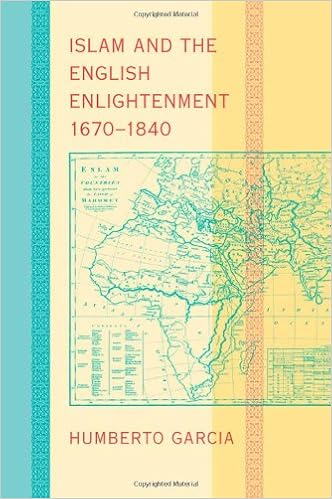
The following response is written based on my reading of the introduction to the book Islam and the English Enlightenment, 1670-1840. I might post more thoughts if I finish other chapters of the book.

Image result for Islam and the English Enlightenment, 1670-1840


Dr. Humberto Garcia’s introduction to his book, which includes a brief discussion on British Radicalism, is interesting. He stresses how Islamic republicanism provided British radicals to denounce their opponents, such as the Trinitarians. The radicals saw a connection between Islam and Christianity as they would like it to be (e.g., Deism). But to what extent does his text speak to Islamic intellectual history? I remember in another history class at Tufts, when I was arguing for an understanding of the ulema within each specific context (rather than positioning it as a universal category), a person commented that the ulema is just like the Catholic clergy, implying that they were the ruling class opposed to general interest of the people. I do not know what Garcia thinks about the Islamic ulema, but this view is definitely still common and simplifies the complexity of Islamic thought. If Islam once served as a placeholder for British radicals to envision Christianity without a clergy, it can also easily become another placeholder for other purposes.

My second point of uneasiness with Garcia’s treatment of Deism is in his easy acceptance of its ahistorical claims. Concepts of time are a crucial difference that proponents of deism conveniently glide over: They reiterate that the Prophet Muhammad is merely another Luther who came centuries earlier. Yet they fail to see how the richness of Islam encompasses both linear as well as non-linear time. Garcia does not discuss the role of prophets. According to Islam, Jesus is another prophet of the same God’s message, which Muhammad was asked by God to deliver for the last time. While Muslims and deists would be similarly opposed to Trinitarian creed that Jesus is the son of God, what do deists have to say about humanity’s constant need for prophets throughout (secular-historical) time? In Colin Jager’s concept of romantic secularization, who Garcia cites, religions become more concerned regarding issues within this world rather than the hereafter; this concept is another phenomenon of the same issue regarding time.

The final concern I have with Garcia's treatment of Deism lies in the lack of discussion in regards to Deism's attitude towards “heathens.” As Dr. Tomoko Mazusawa, author of The Invention of World Religions, succinctly summarizes on page 188, “Measured against the trio of monotheisms, all forms of Gentile polytheism were deemed no match, however grand and Olympian they might be, not to mention more humble instances of heathen idolatry, fetishism, or any other veneration of limited and particularistic deities and spirits. … any serious challenge to Christian supremacy could come only from other monotheisms.” It is worth mentioning here that the word “Gentoo,” which the British used for non-Muslims in India, was possibly derived from the Portuguese word Gentio: a gentile, a heathen, or native. Prof. Jalal shows in her book Partisans of Allah that there were many Sufis in Mughal South Asia under who promoted the oneness of God after interactions with Hindu practices. Yet how monotheistic does any deism have to be? And to whose monotheism is one measuring one’s belief? It is indeed a fine line. In terms of discursive power, waḥdat al-wujūd, deism and Brahmo are not the same.  Except in the case of Iqbal, deistic ideas of the British variant seem to have been much more prevalent than Sufi ones among colonial Indian intellectuals. To quote from page 283 of The Invention of World Religions: “According to [Rammohun Roy, Keshub Chunder Sen, Debendranath Tagore, and Swami Vivekananda’s] projective view, ‘Hinduism,’ though the term itself may be a neologism, refers to the ancient faith of India, a religion that was essentially monotheistic, and whose ancient wisdom is encapsulated in certain select but voluminous canonical texts, which were beginning to be known in the West as early as the eighteenth century...”  In this context where monotheism is the hegemonic discourse, it would be interesting to discuss Rammohan’s role in our class next week.


C.A. Bayly’s project in Recovering Liberties links these ideas with social realities. He relates that there were many sources for deciding the rights (adhikar or haq) of Indians under colonialism. Yet he is also acutely aware of the colonial conditions which bring these issues to rise: extraterritorial subjects such as lascars or Parsi merchants brought liberalism to the foreground of debate. The British administration’s reaction was to create separate courts for separate believers. In socio-legal reality, there seems to have been many gods in India indeed.


Some more of my thoughts during Prof. Jalal's classroom discussion on the 18th century:
  • One needs to be careful in separating "the West" and "colonialism." I would argue that many people in European countries became entangled with colonial systems much later than the process of colonial domination. For example, maps served as tools of colonial domination long before they became Victorian household objects. While there are many linkages between "the West" and "colonialism" found by methods a la Said's Orientalism, the connections are less well established in social history. In my opinion, that is the complex contribution of the Early Modern historiography--if one can start to think of a world before Western dominance, then one can see how history was not pre-determined. 
  • Once one can perceive of a world prior to "the West" as the hegemonic power (militarily and ideologically) know today, then one can see how the contestations within "the West" during the 18th century. What Locke, Montesquieu, or Rousseau wrote became a Western canon much later than their publication. Similarly, the dating of Sunni and Shi'a orthodoxies is also important for one to understand what one means when one discusses what is Islam. In this regard I am in agreement with Dr. Abdolkarim Soroush that Sunni and Shi'a orthodoxies only become known categories after the first thousand years since the Prophet Muhammad (in Gregorian calendar, approximately 1600s).
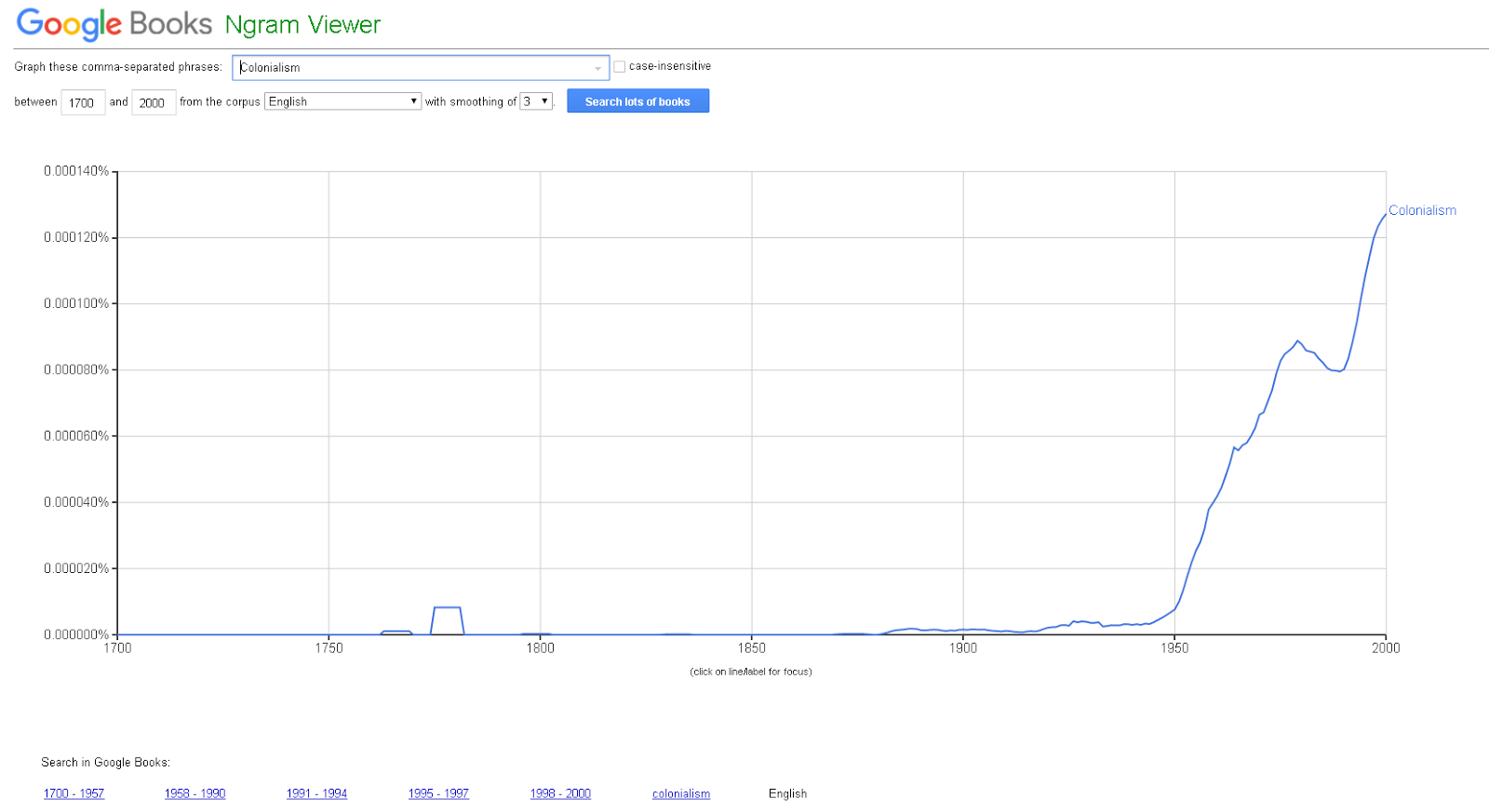
  • "Colonialism" as an idea and "colonialism" as a social reality should be disentangled. I think many works use an analytical shorthand to mean both at the same time. We can see quantitatively in English publications how the emergence of "Colonialism" as a published word is rather recent, happening around the same time as decolonization in the 1960s. One can argue that others have been discussing colonialism in other languages much before that, but this post is primarily discussing the English-speaking academy. 

The frequency of "colonialism" in English books uptick in the 1960s, correlating to the process of decolonization.

Comparing the frequency of "colonialism" with the word "colonies."

Obviously there are other usages of "colonies" beyond the meaning of those of colonial domination, but the gap between the two vocabularies' frequencies is still quite significant. One additional objection to the significance of the comparison of these two words might be that the culprits of colonialism would not want to use the word to describe their activities at least when writing in the English language. Thus, there is even more burden of finding "proof" and labor required of those who choose to write critical histories of colonialism, such as learning (academic) English.