‏إظهار الرسائل ذات التسميات Massachusetts. إظهار كافة الرسائل

الخميس، 27 يونيو 2019

Sketch of Malden's Minorities

I moved to malden from arlington because I found that there were more non-white people on occasion of visiting a friend around two years ago. He warned me that it might unsafe to travel at night, even though I enjoyed the commuting atmosphere. It is quite interesting to contrast the malden scenery every day with that of my school, both of which are at higher altitudes. I almost feel self-conscious when I press stop on the bus around the private university.

Later I realized that despite the new immigrant population, my new neighborhood that bordered the other town, melrose, still had many white inhabitants. Some may even stretch back to the first white settlers. (Malden's history as a settlers' town precedes Boston.) Many were conscious of their decreasing numbers. They made their presence known by hanging American flags and letting their dogs hover in the backyard; sometimes the dogs barked at me. I also responded sometimes with Arabic slurs. English failed to serve this purpose, since I did not intend to address their owners. Some parked their trucks on the street while others (often new to the neighborhood like me) hid theirs in a car garage. One old white male neighbor parked his brown pickup in a fenced orchard and burned wood during cold days, seemingly defiant of state-owned institutions like National Grid. His American flag even had a post. The fence seemed very sturdy against the encroaching chinese immigrants like me, as well as for the wildlife animals. His wife sometimes opened and closed the gate for him.

I was also defiant because I did not enjoy climbing up the hill to where I lived every day. Still, this regimen helped me from any sickness during my short year stay. My immediate neighbors are also ethnic chinese, but often strove to maintain their superiority in comparison to us female neighbors, due to their male gender. They did not care what I was studying. After learning about fengshui, I begin to understand their attitude more specifically related to the less-than-ideal housing conditions we shared.
Related image
Waitts Mount (image from the internet)

I often thought of pulling pranks on the neighbors when I was especially bitter about racial capitalism and the barking dogs. I also muse about who among them own a gun. The nearby settler landmark--waitts mount--is a reminder of how guns established the place and delineated property. I learned at waitts mount that the First Baptist Church has been on the map since the founding in the mid-1600s, and now primarily serves immigrant communities. Americans suffering from homeless conditions also appear during days of food handouts.
Related image
Taste of India (image from Foursquare)
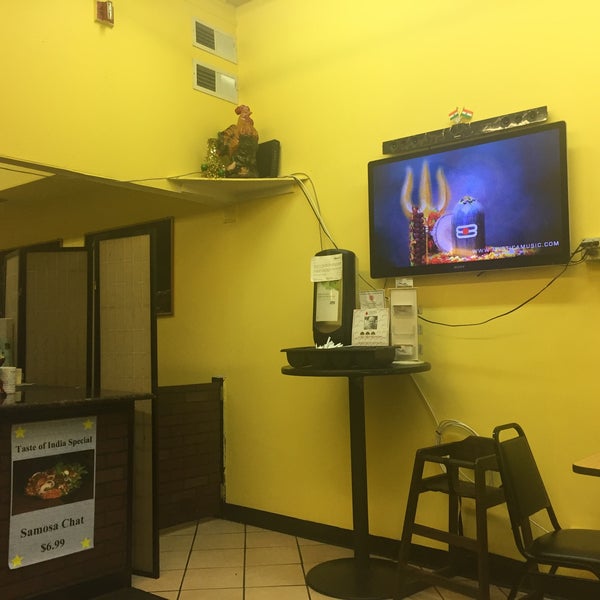
We have no immediate black neighbors. One African American family lives at the edge of the hill and is occluded from direct view by a car-path ledge. They also own a small dog that barks. Caribbean stores and the french-speaking seventh adventist church for Haitians also male up for the otherwise lack of black presence. My favorite place to eat--an Indian restaurant--is also nearby. I like it partly because of the food, and partly because the same chef usually plays videos on TV.

Walid has been more mellow than me, even though he also feels tired walking up the hill. He admired some of my neighbors' cars. The flora also adds a beautiful touch this summer, though we are careful to distinguish which flora is of whose private property. 

الجمعة، 31 مايو 2019

Ramadan 2019: Day 22-24

Day 22 Monday

In the morning, Ian made some annoying comments about my snaps of the ICE protest and mentioned for Brexit. I was perplexed by how he made the connections between "problems" at "home" and problems in the U.S.
At 2pm, Walid accompanied me on the bus headed school. Few people appeared on the street during this holiday. Walid departed for work while I went to the department and printed some forms. I met Michael, who was still working on his never-ending paper, and we discussed issues like his favored online community--Reddit. He asked if I was free to take over his plant. I obliged and followed him while he discussed his non-South Asian advisor with me. We saw his roommate Mackenzie packing to go on her vacation just as we approached his house.

I heated my food and ate some at his place. I also borrowed some books from him. The downside was that he continued to make weary comments about his relativistic attitude toward historical research and fussing over his future. Some interesting conclusions we reached: 1. Russian socialist architecture (and the Chinese derivative) are ableist and often carry eugenic assumptions about the productive proletariat.  2. High school history education in both China and the U.S. are much more patriotic than their college versions.

Later, I left for home on a cab with the plant while I gave some reproductive advice over the phone to a person in need. I remembered the restfulness worthy of any holiday and enjoyed watching the sunset from my room. Walid arrived at my place after work at 11pm. We listened to some tracks by Belafeesh, and Walid knew some of the music quite well. We also listened to Surat Sakinah and I thought about the question about why the nonbelievers do not have access to Allah's tranquility.  I drank pomegranate juice and mentally prepared for---

Day 23 Tuesday - My day of fasting

Walid and I woke up for suhoor at 3am. Walid prepared for us sweet fateer, jam, and told me a trick: ignore the feeling of being full... I later found out that we could have stopped eating at a later time, which was what I did last year, but Walid preferred to stop before fajr.

We watched the film Eternal sunshine of the spotless mind. I found it quite depressing and joked that the film could have only been shot before the social media era since nothing is truly erasable from the internet.

During the afternoon, we went to buy some marinated chili (harissa) from the Arab shop for only $2.7. We also bought fish and other vegetables from the Super88 market. Walid instructed the man in charge of cutting fish and the other fishermen watched attentively. He expected me to translate and eventually tried.
After arriving back to my place, Walid and I filled out some of the forms despite our fatigue and my dizziness. I felt frustrated, as usual, over the information requested. Walid also read from his book.


When the clock approached 6:30pm, Walid started preparing for the Egyptian dish--sengari fish--for dinner. He learned about the recipe from watching a DIY video on Y0utube. I also busied alongside him as the sous chef. The end result was more watery than he expected, but I liked it since it was closer to the fish I was used to eating. We broke our fast after bismillah at 8:17pm. I ate while my brain was on autopilot. When we finished eating, I sent some of the pics to my grandfather and mom. Tea, among other food items, tasted much better after I broke my fast.


Day 24 Wednesday 

I woke up around 9am and read a very annoying rejection email from an organization. Walid comforted me and said that at least I can spend more time with him.

In the afternoon, I tried going to Zumba but physical conditions prevented me. Walid and I toured around Newbury street and we ventured into an art gallery for the first time. We saw an old French sketch of Egypt for $300. Walid pointed to exactly where he lived on the sketch. I debated whether to drink coffee (in the end I did not). We also browsed at some books in Trident Bookstore. Walid accompanied me back to my place, made the special Syrian apricot drink Qamar-a-din, prepared the thermo-pillow for me, and then left for work. I also missed the last Purifying the Nafs event organized by the Taha Collective, which I planned to attend before.

Captured still from the music video Asrab Shai
In the evening, I visited the big mosque. I saw the green lights shining from the minarets for the first time. Three elderly people walked in front of me. I followed them slowly. Later, I entered the bustling canteen. Walid introduced me to his Egyptian colleague and gave me a plate of mixed pasta and rice. She said hello very warmly. She resembled the ideal Egyptian middle-aged woman, with a very functional headdress, I see on tv sometimes.

I sat in a corner facing the window while Walid busied around with his Kuwaiti colleague. He complained later that he was never scheduled for the same time slot as his Turkistani colleague. He suspected that this was because the management recognized that both of them had good work ethics. Walid later told me that he also made Somali tea with sugar. He was annoyed that I missed it, among other snacks, but I did not mind since I thought that priority for food should be given to those who are fasting.

I also saw the Turkistani man and his wife, among other people coming-and-going around the parking lot or in the canteen. The call to prayer happened and Walid cleared the canteen with his colleague. Some girls sat in the canteen during prayer time as well, which I found comforting. In different contexts, public space meant different things to different people: in Boston, where space is charged for increasingly high rent, I was very grateful to have a warm place to stay, away from the place where I pay for rent. I almost teared up when I first sat down and felt the warmth of people relaxing and chatting.

After the prayer, Walid returned and he continued to serve people, including some black kids. I sipped the coffee prepared by Walid. I finished the book Being Muslim and wrote down some of my thoughts. I overheard one of the guest imams lecturing about the importance of knowing that one's actions are always being watched. I found the overall message of his sermon to be quite confusing since one could easily use that in a pro-surveillance context. I also reflected on my own position of watching others (including Walid) and being watched in the canteen. I saw a man holding a cushion in his hand, and I realized that Walid did not joke when he said people camped at the mosque during the Night of the Decree (laylat-ul-qadr).

I waited to give Walid his advil until he told me that he did not need it. Later, the imam delivered 12 raqa'as. I did not know that this was only one segment and thought that he would go on forever.
I used the restroom upstairs; while I was waiting, I saw a Moroccan man cleaning the floors.

At the T station, I went on the wrong train and waited an addition 14 minutes for the next. Two Turkish-speaking girls, one wearing a hijab, arrived on the new train and they were overjoyed with the festivities of Ramadan. I felt lucky to participate in the events more than last year, despite my initial apprehensions.

الاثنين، 30 أبريل 2018

Arabic Music Performance in Boston


Boston College organized a free Arabic music concert on rainy Sunday night, April 15th, at Gasson Hall. Prof. Ann Lucas said the introductory remarks first in English and then in Arabic. She welcomed us with “أهلا و سهلا” and also wished that the program will continue in the future (في مستقبل) Many of the audiences also were Lebanese. I stood throughout the show because all the chairs were taken. It was my first time at such a formal Arabic music performance. Before my exposure to music of the same region was mostly dabke and zajal music.


The main show of the evening featured  Lebanese oud performer Charbel Rouhana. Before he went on stage, the ensemble and chorus performed Levantine folk songs featuring themes of love and scenes of nature in the first half. Children of the Center for Arabic Culture the opened the show with My Darlings Around me (حبايبنا حولي), conducted by Syrian lawyer and conductor Alma Riceh. This choir is the only children’s Arabic choir in Massachusetts. The remaining choruses were directed by Nizar Fares, a Beiruiti who holds a PhD in musicology. During certain intervals, the Qanun player also had his solo parts and the audience responded with loud applause.

from Wikipedia


Dr. Fares, who also plays the Oud and is a musician in his own right, praised Charbel Rouhana to have accomplished what he thought as excellence that required an average person at least four times the amount of effort. Rouhana took stage and played several more numbers of Levantine songs as well as Oud-centric musical arrangements for us. The later learned that the oud is an instrument 3500 years old and has heavily influenced the Spanish guitar. 

Gasson Hall April 15th; Picture found from website


I also attended an Oud performance in Beirut, where I sat very formally at first; but I soon realized that Oud could also be entertained for a dance party. The crowd in the bar rose to their feet and also made requests upon the performer. I later found out that Rouhana also performs Oud in jazz style.

In this case, at Boston College, it was modeled off of a European influenced understanding of a performance. I had read about Umm Kulthum’s rise in fame as well as her collaboration with old forms of performances. While she retained the formal Arabic language in her pronunciations, she also contended with the new arrival of film and dressed in European dresses. 

Umm Kulthum and her ensemble

The Lebanese dialect lyrics of this musical performance was transliterated and translated for us to follow. I could understand “moon” and “lover.” During the call and response sections, I also participated in the choruses. I noticed that the gender of the addressee is important in Arabic; God would be presented as a gender-specific figure in literature and poetry. In contrast, Indian Sufi music addresses God in gender-neutral terms.

After the last amusing song Qahwa (coffee), a nun from Lebanon presented an award to Boston College’s music department, commended this performance and also praised the ability for music to communicate through all cultures. She also looked forward to future performance exchanges in Boston. Rouhana also signed his book on Maqam for people who were interested in purchasing it. I would like to learn more about Arabic music theory in the future.