‏إظهار الرسائل ذات التسميات Boston. إظهار كافة الرسائل

الجمعة، 7 يونيو 2019

Ramadan 2019: Day 25 - Eid al-Fitr

I will skip writing about some days, partly because I am lazy, and partly because I want to discuss the feelings of the end right now. I usually did not have a lot of opportunities for making meaning with others in previous endings of school or relationships. Eid is very special in that sense because it is a public celebration of the end of an intimate matter related to the body and soul. Astrology appeals to me for the same reason, because some humans become aware of the lunar calendar and celestial order through astrology as well. The lunar calendar of Chinese Han culture did not make a very deep impression on me prior to the discovery of Islamic months and astrology.

On Day 24, Khalid, Walid's brother, called us and Walid told him about my day of fasting. Khalid has two sons, who are very cute in their different ways. He recently went through a divorce, and I was curious to see that he was still wearing his wedding ring. He reminded me of my parents' experiences, even though I know very little of either case. He asked if I was happy being with Walid, and I said sometimes. He said it's ok, we are also only sometimes happy with Walid. I enjoyed his self-deprecating humor and openness to my emotions. He told us that he was learning English because he wants to communicate with me when I visit their house.


Day 25 Thursday

Stills from the film Shadow Play (2018) directed by Lou Ye
In the afternoon, I watched a Chinese thriller film, The Shadow Play. The Chinese name of the film is also adapted from a famous Mandarin song, "there is a cloud made up of rain, floating in the wind." The Taiwanese woman A-yun, whose name means cloud, made a fortune in mainland China during the prime years of her youth. Her untimely death despite her wish to return to Taiwan also reminded me of the lack of ritual that can mediate my coming and going from mainland China to the U.S. In contrast, I really appreciate the different Islamic ways of mediating different forms of existence and relationships to place, such as the verse read before traveling.


Afterward, I went to the big mosque because Walid told me that there would be fish in the evening. I sat at my usual corner and continued to read Empire of Guns. It was my first time visiting there without wearing a hijab. Walid later introduced me to his co-worker's fiancee, who is a practicing convert. She told me that the mosque during Night of the Decree (laylat-ul-qadr) was fully packed. We both were curious about each other and talked for over an hour. She started her studies in Boston last year and lived along the green MBTA line. I also met one of her friends, a student from Turkey. But in the end, the curiosity seemed to be largely intellectual and felt like fieldwork. She did not seem to have had many Asian American friends and was surprised that I could be both Asian American and Han Chinese. It is also partly due to the fact that fewer women of color engage in the public sphere. She seemed to be self-conscious about her origins and her single-parent mother, as was I. I congratulated her on Eid in advance because I knew I would not see her before then. The fish was a little bland but I was grateful for the free food.


Day 26 Friday - Eid al-Fitr (Tuesday for some, Wednesday for others)

On Saturday, Walid and I bought some more food and a blender from C0stco. He thought he might give the soon-to-be-wed couple a blender as a gift as well.

I received my first issue of the International Journal of Middle Eastern Studies in the mail today. I joined their membership recently because I will present at the upcoming conference in New Orleans. I was very happy to read Dr. Max Weiss's article, which called for critical Ba'ath studies, rather than reproducing the "war-mongering" rhetoric of the post-2003 era.

On Sunday, I watched an interesting video about feminine energy. Walid and I walked to the park nearby to bathe in the sunlight and I tried to discuss some of my spiritual goals in life. He and I talked, looked at animals and also heard some children play nearby. He also climbed a tree, which I thought was quite cool and funny.

During the following days, Walid and I continued to have conflicts over our interpersonal relationships. We ate his last iftar together and he sang an Arabic song jokingly, that said, "I wish Ramadan was longer." I mourned June 4th, which was the 30th anniversary of the Tiananmen Massacre. Walid celebrated Eid with the mosque community while working on that day. He started work at 5am for necessary preparations. He met Omar, from Taha collective, and wrote a Faceb00k post about it. The other people from Taha collective started celebrating Eid mostly on the later day, Wednesday.

I was glad and relieved that it was over. I felt overwhelmed with the connotations of the holiday and Walid's work schedule. I wished Ahmad and some other close friends "Eid Mubarak", but not as much as I had expected when this month first. I was happy to see snaps of people in Gulf countries all dressed up, hanging out, giving children money and getting new haircuts. I, meanwhile, gave and received zero gifts.

On the bright side, at least I did not have to call any relative I did not want to call:

from a meme group on Faceb00k

Reading the following tweets saved me from more bitterness--


I wondered to Walid, why I only hear from people who are distributing food to the poor, but not poor people receiving food offerings during Ramadan (except me)? The good news is that I finally successfully submitted all documents for food stamps received news from the Massachusetts DTA on this issue. I was grateful that this unusual schedules ended and Walid's non-Ramadan schedule is more similar to my summer schedule. Walid ate plenty of dates at his workplace and perhaps will return to his non-date diet, which usually lacks fruit. I also finished my box of dry dates that I bought a long time back during the last days of Ramadan, 2019.
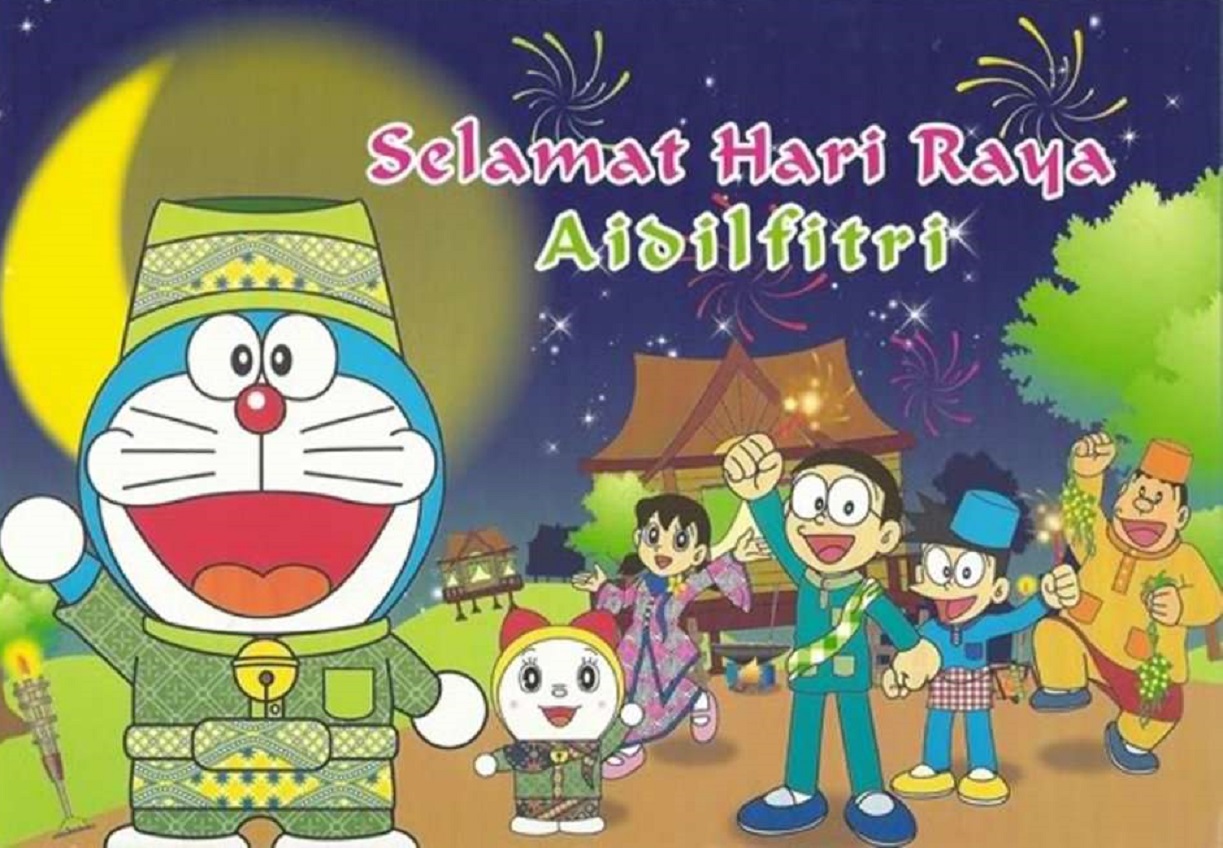
Doraemon themed Eid al-Fitr Celebration graphic. Interesting to see the Japanese anime characters in Islamic clothes....


الاثنين، 27 مايو 2019

Ramadan 2019: Day 16-18


Day 16 Tuesday

In the morning, I blocked the person who was man-trolling my posts and also wrote posts celebrating Modi's electoral success on Faceb00k.

In the afternoon, Walid and I ventured to the MIT area because I was scheduled to meet a friend from college, as well as her parents. Walid and I parted at H-Mart. I felt nervous because I hadn't seen her since 2014 when she was interning in D.C. She looked good, with a new lipstick habit she picked up from Columbia University. She seemed to have enjoyed my company and her mother was very interested in my Ph.D.-student life. Her mother probably worried that her daughter might suffer if she went on the path of academia. I found out later in the meeting that she was working at a New York corporation. Her father spoke little and us three women enjoyed his non-intrusive presence. We parted ways, and I thought they went to their hotel in Allston.

When I tried to find Walid again in H-Mart, I saw his text that he was in the Cambridge mosque. I felt upset because I did not being in Cambridge on a busy afternoon by myself. I also felt that he ditched me. When I called him I was upset and informed him to meet me. Coincidentally, I also saw my friend and her parents buying sushi and food from the supermarket. My friend's father commented on my purchased good--a bag of frozen dumplings. They did not seem to be very free or talkative as before. When I finally found Walid at the door of H-Mart and we left for the red line, we ran into her parents again. I introduced them to Walid and he greeted them, graceful as always during such occasions. I was ill at ease and we later fought in the subway. I was ready to forgive him when we arrived at my home station. He helped me return my frozen dumplings to my fridge while I hurried to meet Manho at Malden Center. Manho was early as usual. The Vietnamese restaurant we intended to eat was closed on Tuesdays. So we walked around, saw the older-than-America First Baptist church and went to Ming's (See my post on Day 1 of Ramadan). Manho was very pleased by the cleanliness of Malden, in comparison to Boston's Chinatown.

We ordered seafood and veggies. We ate and chatted, even though Manho felt that it was rude to eat before Walid. At around 8pm, Walid broke fast with my friend, Manho, and I. Manho was happy to leave Boston; we celebrated his birthday. By the end, the waiters almost forgot about us as well as the dessert they usually served to everyone. But Walid remembered, and we ate our share of a taro sweet soup.

Here are some other observations we had about tea and eating habits, which I wrote in Chinese: 看得出成长环境的不同 比如喝茶的习惯我到了17才有 而我对象和文豪都是从小喝茶。另,文豪如果早点来 是有机会认识一个四姨太的小孩 结果没撞上。我和对象翻译了这个故事 他没反应到点是什么 . 还有Nutella 我到了德国才吃到 吃过ferroro 但没想到还有如此平凡的酱版。文豪以前吃过 他来到美国惊奇于人对花生酱的热衷 觉得pb&j是一种懒人的食物。对象说他某一天并不知该三明治的做法 但自己却“发明”出来了 所以也很难说到底是美国人造就了pb&j 还是环境使然

In the evening, I was too full to fall asleep. I delved deeper into my insecurities in regards to Walid's visit to the holy place of the mosque. The membership system seems very strict, even though it does not appear as such at the surface. The same issue occurred with a Sikh temple in Germany--diasporas guard such spaces with more scrutiny as well. Walid understood my concerns about his sudden departure today. We made up a scenario about if all humans became 5-year-old children, there would probably still be hierarchies among us. We fell asleep at 3am.


Day 17 Wednesday


I went to Zumba in the afternoon and Walid broke his fast at his work. Ahmad messaged me the day before, "My mobile has been dead for the last few days and I could not have it fixed yet." I found our friendship as resilient as ever, despite the presumed difficulties.


I chatted with Amina about a new e-magazine founded by Chinese youngsters that tried to carry on our legacy from our e-magazine (South Asian Hutong). She was bored by their electoral analysis, whereas I was a bit happier: at least some Chinese-speakers continued to study and write about South Asia, albeit from a more practical lens. We also chatted about the new social media industry of youtubers and gamers. She decided to attend a talk on Afghanistan.


Day 18 Thursday


Riyadh
I went to a therapy session, which I am increasingly suspicious of the efficacy, but Walid finds that it might be helpful for me. He is more patient than me in many matters. On the way there, I read about the Greek architect Constantinos Apostolou Doxiadis' contribution to Riyadh's current city layout. I was surprised the extent to which modernist aesthetics and urban standards affected parts of the world I was connected to. One could argue that Zaha Hadid was as much a child of "Iraqi" (premodern) art as she was of modernist architecture. What I found troubling about Chinese history is that so much of Communism is mixed up with modernist aspirations, such as Doxiadis-style architecture. Yet many of Doxiadis' architectural works were designed for repressing social revolts. Arguably, modernist architecture was not very effective in preventing uprisings on either side of the Cold War. I thought (in an abstract way), that modern architecture largely failed to live up to its expectations of engineering modern human societies.  After digesting this information, I experienced a breakthrough in my research presentation for the MESA 2019 conference. 


Riyadh Development plan


Al-Shaab Stadium, by Francisco Keil do Amaral and Carlos M. Ramos (and the Calouste Gulbenkian Foundation), Baghdad, c1966


ملعب الشعب، تصميم فرانسيسكو كيل دو امارال و كارلوس م راموس (و مؤسسة كالوست كلبنكيان)، بغداد، ١٩٦٦

After therapy, I saw a short exhibition for the Asian American Heritage month at the Brookline library and also took a short tour of the Brookline townhall.


I ate at a Pakistani restaurant called Nachlo. I expected a more vibrant eating environment but perhaps due to fasting, I was one of the two customers inside. I wondered when did Pakistani cuisine emerge in America as a distinct genre and how it must have fought hard in the face of competition from the more popular (North) "Indian" cuisine. The owner was a person who looked like he worked in Saudi Arabia and saved enough money to open his own store in America. The main person handling business was a young man Walid's age. I felt that his job was quite difficult. Another more reticent man who looked like me was not speaking. I felt judged for eating at a place where people were fasting. Another Bangladeshi man bought some food and asked enthusiastically about the store's offerings, such as sweets. I found it amazing that he, as a Bangladeshi person, had let certain bygones be bygones and found comfort in desi Muslim brotherhood.


I paid, left and went home. At 1am, Walid told me that he volunteered for free. I was quite upset about it, and I said that we are not in the position to offer that kind of help to workplaces, even if we find it ethically sound. I also read about Betty Shabazz and her fights with Malcolm about similar issues later, and I found my situation very similar to hers. 

الاثنين، 20 مايو 2019

Ramadan 2019: Day 12-13

Day 12 - Friday


Walid and I met up at 7pm and went to an iftar hosted by members of the Taha Collective. The event happened at an apartment close to MIT. The woman at the front desk asked us cautiously, "are you here for the event?" I said with a tad bit unsure, "the iftar." Walid was more used to communicating such details and soon assured the woman that we were indeed here for the fast-breaking dinner.

We arrived via the stairs since the elevator required card access. Many attendees were also from MIT, mostly desis and some white Americans. The graduate of Rutgers, Omar, talked with us about his Ramadan; he cannot fast due to his health conditions. I had only seen some people at previous Taha events, which had lecturing and/or duas commemorating virtues of the Imams. This event was more relaxed and focused on socializing, which I did not like in such cliquey environs. Someone discussed with enthusiasm about their shared city of Hyderabad and their routine. Another gossiped about the rent of the apartment, which I was also curious.

I remembered the time when I thought I would have no trouble making desi friends when I arrived in Boston, which soon proved to be wrong--not everyone can engage with me fully while also dealing with the strained life of American identity politics. We sat at a fireplace and some college students watched distantly. I had a brief conversation with a woman in the biryani line. She was a researcher at MIT. She also found the pretenses quite strained and gave up. I thanked Irtaza, who was paddling out the chicken biryani. I also said hi to Laila, who looked tired, possibly just finished with her coursework.

He prayed with other Muslims and later wrote a nice message about this interfaith experience on his faceb00k. This created a lot of conversation among his male friends. We both noticed that when readers do not like our message, they tend to note typos in our text rather than say outright their issue.
انبارح كان فيه إفطار منظمه شباب من جامعة هارفرد. فطرنا على تمرات وميه، أُذِن للصلاة وكان الأذان مضاف عليه " حي على خير العمل". وقفنا كلنا للصلاة، كنت فاكر ان الوحيد -المتفتح ومتقبل الاخر- اللي هيصلي زي السنه وسط شيعة، بس لقيت معظم اللي حوليا زيي.افتكرت الجدال العقيم اللي كنت جزء منه عن ان الشيعة مننا ولا من الناس التانيين. بس يبدو إن مستوى التعليم والبيئة المحيطة لها تأثير كبير، لدرجة مكنتش متخيل أن حد من اللي معايا دول كان جزء من جدال بالنوع دا. بالمناسبة طلعوا بيصلوا زيييينا بالضبط تقريباً والأهم من كدا الأكل كان حلو.

There was some confusion over the direction of prayer. We joked that the leader of the prayer is quite headstrong in his mistakes like me. We took a group picture but I have yet to receive it...

I brought pecan pralines from c0stco. I did not think that everyone could finish it at first. Soon after iftar, someone started hogging the whole box and finished all the whole pecans.

Walid noticed another Egyptian man present, who served the dessert. Walid did not feel like striking up a conversation that would soon become too intimate.
We left and walked along the red line over the river. It was my first time walking over the bridge despite crossing it thousands of times on the Red Line. We took selfies and parted ways. I had trouble sleeping because I was nervous from the social gathering as well as for the next day's schedule.

Walid also shared the good news that he secured a job at the big mosque. I am happy for his new opportunity but I am also concerned with the forms of political engagement that this would entail.


Day 13 - Saturday
Art by @ejnoodles
I left the house at 6am in the morning, one of my first times leaving so early, and went to the Isha yoga class taught by Sam and Tulsi at the Democracy Center, Cambridge. There were only two students, one was a person called Jose from Mexico. At 12pm, I went home, felt very tired and slept after lunch.

Walid and I met at 5pm, after my nap. We danced a bit outside the house. I made some Chinese noodles for our dinners.


ZZZzzzzz

We finished the Avengers: Endgame at night. I enjoyed it more than Walid, who thought it would have been a waste of money to watch it in theaters.

(*SPOILER ALERT*)

I noted how the patrilineal message linked with the Avengers' legacy: If the white Captain America stayed anonymous after his decision of not returning to the 21st century as the 40-year-old self, there would have been no proper passing-down ceremony. Still, he came back and gave his shield to an African American superhero. Black Widow sacrificed herself in a very sati fashion, took one for the team in all eternal glory. Tony Stark doesn't have to leave his daughter any symbolic legacy, and we as viewers are happy that she is financially secure. The threat of any female characters using the stones for her own legacy was out of the question (note how asexuality played a role in Tilda Swinton's guardian-of-the-stone character).

We also discussed how literary traditions affect the kinds of films each country makes. Walid thinks that Americans love superhero movies because of the lack of myths their country has in comparison to Egypt. Peter Hessler makes a similar point in his recent New Yorker article: My House in Cairo https://www.newyorker.com/culture/personal-history/my-house-in-cairo

Walid also discussed his techniques of improving family relations with me. I wanted to sleep and we soon slept, even though Walid wanted to talk more. 

الخميس، 16 مايو 2019

Ramadan 2019: Day 8-9

Day 8, Monday

We spent the morning browsing at potential domestic appliances for our future house, such as blenders. Walid knows the bougie knowledge of making $10 acai bowls and I am quite intrigued.

picture from allevents.in
Browsing consumer goods is a very nice nesting activity. Walid is very careful when it comes to such matters, whereas I am more impulsive. He also wanted to engage in sketches of the future, possibly because of the rather disappointing present. He lives with four other roommates and they have formed their social circle already. They share a rice cooker. Walid pondered whether the Chinese landowner owned the cooker, which would mean that he could also use it. I reasoned that the rice cooker is jointly owned by the roommates since the landlord could not possibly anticipate what the ("ethnic") dietary needs of his future tenants would be. Walid concurred, yet he still wanted to use the cooker. I said it is much easier if he would just buy his own. (But these are just theories since our information is not very complete.)

He also thought about the possible redundant microwave. I reasoned that the microwave might be useful when we babysit for other future friends. While such concerns of the future have yet to materialize in real life, the theme of diets and health enter again and again in our food-conscious world. My further interest is also whether intercaste "pollutions" also apply to microwaved food... (Because if a lower caste prepares a certain food and the upper caste eats, some upper castes consider that food to be polluting.... but I learned about the version that presumes an India without a microwave. So I wonder what if a lower caste prepared food with the microwave? This is also theorizing because I also know upper caste men who eat at any outside eatery.)

At this juncture, American Islamic discourse is also keen on pivoting Ramadan as a diet-conscious regimen. "It is healthy to fast," so the talking points go. I complained to Ahmad the other day that I found such blatantly market-oriented packaging quite contrary to the point. He agreed with me. A future academic paper can write on this subject.

After meditation, I realized we ran low on time. I scanned some noted pages from my books. We proceeded hurriedly to my school for book returns. We carried around 15 books and dumped them unceremoniously. I haven't finished the extraction of information (on Arab modernism) from these books. Still, I was relieved to hide them from my sight until I am ready to revisit them again. I sat lackluster at the 1000-piece puzzle station while the last remaining finals warriors slaved entered the library to finish their work. I joked that I could destroy the puzzle with end-of-semester rage. Graduating students posed next to the blossoming flowers and benches that no one sat on usually. I jibed that no wonder those benches were built...

We both went to Assembly for my second spa session. The concept of aging has formally entered my mind, perhaps exacerbated by the (ableist) academic timeline. Afterward, the rain began to fall. Walid left for iftar at the neighborhood mosque. This evening, the imam led a curing session for a young boy, possibly suffering from the manifestation of a physical/mental illness. The rest of the (all-male) congregation read surahs from the Holy Quran, since the jinn could leave from the boy's body and enter anyone else's.

In the evening, I chatted briefly with my friend Subhash, who has arrived in China for the first time. He posted some beautiful pictures of his yoga practice in the heart of Shenzhen. Still, he seems to be experiencing culture shock and seeks to alleviate it by talking with me. I am myself suffering from culture shock and the dizzying effects of racial animosity in Boston in my second year, and I have very little to offer him in terms of how to ground oneself in a foreign land.

I also chatted with Amina over Wechat about my recent interest in the Chinese classic Rulin Waizhuan and how it related to current politics. Amina was more keen on sharing her new thoughts based on her romantic encounter with a person from the past. She feels very nostalgic yet tends to over-rationalize her romantic decisions. I, on the other hand, feel no compulsion to rationalize unless I have to explain to often undeserving interlocuters curious about my life.


Day 9, Tuesday, Walid's birthday

Walid's friend Ahmed drove him around the Boston area for jobs. An owner of a pizzeria worried if Walid would learn all the techniques and leave. I joked that a lot of Egyptian food, which Walid has experience in making, requires more techniques than a mere pizza. The making of fateer, for example, requires much more intricate handling. Walid's job interviewers also tested his religiosity by offering him food. After finding out that Walid is fasting, the would wish him Ramadan kareem.

We met up at Wellington and headed to C0stco for the first time. Walid's progress in Hindustani is improving, as he watched more language videos provided by a hijabi Youtube teacher. He enjoyed the prospect of sharing our expenses since it signals a move toward a shared household. I also felt excited over this trip for the whole day. I asked if he wanted to pose next to the C0stco flowers for his birthday. He just took a selfie with me and said that I am more beautiful than the flowers.

On the way back, our Lyft driver played beautiful Nigerian music. I shared some in my music group as well. I ate a bowl of the instant shrimp wonton and added some capers. Walid snapped a photo of me and sent it to my mom, joking about himself about how he can only watch me eat.

English version of the translation
Walid went to break his fast at the Malden Islamic center while I read a book by Qiu Miaojin (邱妙津) from the Public Library. She was the first lesbian author who committed suicide when she was 26, which is also my current age. I enjoyed seeing her handwriting of Chinese characters printed in between the chapters. She suffered from studying abroad and a lot of her ideas of art come from Western forms and definitions. Unfortunately, in my opinion, she did not have the chance to truly experience art forms without a large degree of Western influences, which impeded her ability to create art according to her high expectations. Western definitions of what is "political" also haunt her own identity--she denies that the word "homosexual" has meaning beyond a political identity. Yet does that mean that queer politics did not exist before the arrival of Western science? (which sought to define the homosexual as a medical subject...) Her writings are interesting yet reveal her age and obsessions with the western novel as well, often too vaguely masculinist and dependent on the reader's proper aesthetic engagement, without a clear ethical grounding.

french version of the translation
While I read the book at Dunkin Donuts, a white female "customer" was trying to pick a fight with the Nepali cashiers. Luckily they were very strong and did not heed to the "customer's" aggressive baiting. "I'm going to call customer service and report this Dunkin Donuts!" I focused on the warmth of my small coffee. Soon the tension abated. I joked with Walid on the way back that this is what I got for choosing the "community" coffee spot as opposed to the nearby Chinese coffee establishments, which would have much less commotion. I also told Walid that he can also make great art--the kind that Miaojin aspired to create--and that he just needed more courage and time. He also mused on this subject. On that note, I also shared that Ahmad sent me an Arabic poem recently, and we planned to read it together.

We cooked at home, ate Tiramisu, sang the birthday song in Arabic. During midnight, we watched The Avengers: Infinity war, which caused some unwanted nightmares again...


الاثنين، 13 مايو 2019

Ramadan 2019: Day 6-7

Day 6
Saturdayyyyyyy but my work ethic made Walid and I go to the Boston Public Library and finish my last paper project. I prepared a peanut butter sandwich and added some dates from the milk-date drink Walid made. On the way, I read some passages from a borrowed book. When we arrived, I was angry at the library because the way whyte people take up space (one man stood right in front of the entrance as if he wanted to block us); also, people do all kinds of shenanigans in the bathrooms, such as leaving their work clothes in the stalls. I complained, this is not their home!! Walid quipped, and that is why they trash the place. The upside was that Walid successfully obtained his card.
We serendipitously sat at the immigrant help section. I finished my work around 2pm and felt dizzy. I ate the food while Walid explored the law section of the library. He borrowed Our Constitution and I also showed off some of my knowledge about American political institutions. I also felt pretty disconnected from this knowledge, despite multiple efforts in participating in public life and mused whether this was because of Boston's unique climate.

We sat in the library courtyard for a while. Some whyte people played beautiful music. An Indian family tried to take group photos with their professional camera but was stopped by a custodian, possibly due to their camera's settings. I mused about the topic I just wrote about--visualizing resistance--and how people obsessively documented their visual experiences. All the while I wished my brain could just stop analyzing. Walid thought about Mother's day.


Then Walid watched me as I ate at nearby + famous California Pizza Kitchen for the first time. I only knew about it from the show Bojack Horseman. Walid, fasting, as usual, could not even drink the ice water!

Walid thought about replicating the food at home, which we did on day 8.

I went home and watched the special series on manhood as well as other skits by the Saudi Arabia youtube sensation Telfaz 11 for hours. This type of comedy kills me because of its self-awareness, understated acting, as well as deprecation. The subtle commentary is also quite daring at times. The interludes of urban moments are also very beautiful and accurate, although I have never been there to judge...

snapshot from Telfaz11


Day 8

I woke up some more bad dreams, did the laundry with nightmare collateral damage, and read a great poem about someone's mother, which is possibly the best poem I ever read on mothers.

Screenshot from the film Intimates
I called my Syrian friend Ahmad for the first time in a while. He updated me about his life and chess progress. We also shared some rap songs. I skimmed through some of the library books due soon and learned some shocking history about the transnational nature of the Sahwa movement. I also watched a Chinese movie Intimates about women who chose to be celibates their whole lives (partly due to the patriarchal expectations of them to marry against their will). Since the late-1800s, they formed small communities in places of Guangdong and lived together with their earnings from the prosperous silk industry. The film also included a lesbian love-story plotline as well as a very realistic portrayal of an American-born-Chinese woman.


Walid arrived at my place around 6 with all the materials for halal carbonara pasta and prepared food at 7:20. I was the sous chef. He broke his fast while making a lot of food. I joked that the food was worth $60.

We watched The Avengers: Ultron and I did not realize I had already finished it before until the very end. Walid found it amusing that I had very large reactions to special effects and plot twists. I gave some of my opinions of the human-centric notions of good and evil and how both AI bots in the film are too anthropocentric.


الأحد، 12 مايو 2019

Ramadan 2019: Day 4-5


Unfinished books at the site of fighting
The stress was starting to become unbearable. Walid was in a bad mood on Day 4 and I also had a ton of work. We talked with my classmate a bit and I drank two cups of coffee, despite my intention to quit. My classmate was frustrated over the thesis of his paper. We also discussed whether or not to accept my other classmate's dinner invitation. 
I planned to skim through some books at the library, which I did not finish. We fought over the restaurant of choice with other students shushing us. Walid was resistant against going to my favorite falafel place. I thought that Walid was being picky and (male-)ego-centric. He explained that the restaurant’s staff did not speak to him in Arabic. I thought that reason did not qualify as a valid, since I as a non-first-generation Chinese speaker, I found speaking my “ethnic” language to be extremely distressing under circumstances such as a racist city like Boston. The staff in question was not a first-generation immigrant, so I tried to reason on those grounds. Walid said he heard him speaking Arabic to the other staff. He also pulled out his “customer” card and said that as a customer he would like to be treated in the best way possible. I remembered later that Walid, as a long-time worker at a certain falafel establishment in New York, would have such strict standards. Walid probably suffers from his profession, which is to emphasize certain aspects to meet the ethnic expectations of the various customers who visit their business. I myself have had such expectations when I visit falafel places.

We decided to go the overpriced Mexican-indigenous restaurant, which was also close. Walid apologized on the way. He broke his fast with coffee and we entered the restaurant ceremoniously. I ordered a plate of shrimp for $20 and cried over the food due to the upsurge of my past traumas as a student who cannot afford to eat at this place even after long sessions of studying. I started right before it was almost too cold. The waitress gave Walid dirty looks, while the customers continued their merry end-of-semester conversations. Walid ordered fish tacos, which was quite ordinary but a safe choice. I was still hungry after we finished, and the weather was still cold despite my winter clothes. I suggested we go to Cheesecake fact0ry. We ordered a Lyft and I continued to express my stress. Walid apologized again. I ate a veggie burger and Walid ate the 30th-anniversary chocolate fudge cheesecake. He said he wished that we could also celebrate our 30th anniversary in the future.
I thought later that Ramadan is a time where the gift economy is very robust: people take turns inviting each other and celebrate over the bountiful amount of food and kinship. In Khaleeji as well as Indian and Chinese societies, such opportunities are not limited to the month of Ramadan. I experienced many instances during my teenage years in China, from both men and women, oftentimes without any strings attached. I have still yet to invite those people back.

In the U.S., I have yet to find that type of non-monetary gift economy. There were starts of it between my roommates and me, but it soon broke down under various factors (including the fact that one of the guys used the gifts to start dating one of the roommates at a quite shocking speed). Sometimes our department has a non-monetary exchange of food, but there is always the premise of studying and working after eating the food. It is called “free food.” Even during Ramadan, Walid has started to call his iftars “free” food. But it is much more ritually significant. He joked that the smaller neighborhood mosque has better food than the bigger mosque downtown. He also can put down a lot of pretenses at the smaller mosque, since the feeling of community is stronger. Ramadan in America is more special because of the lack of other gift economies. Yet who is responsible for giving the gift, between a relationship as ours?

At the 2nd restaurant, I felt better. But at some point, when I tried to speak Arabic with Walid, he started using it as an opportunity to show off his literary skills in pun and satire. I misunderstood the pun and started to remain silent in anger. Sometimes Walid performs his Arabic for no conversational reason, except that he is in conversation with himself or people not present. We share the same levels of peculiar thought patterns and both recognize each other as majnoon. We put on rational masks to face the other people in life, and we have yet to come to an agreement on how to coordinate our masks together so that one does not inadvertently expose the other.

I recovered from my anger and finished some of Walid’s cheesecake. We walked to the T stop. He stopped by DD to use their restroom. I was hesitant to go, but he said since the staff is of a certain racial makeup, they would let him use it for free. I sighed and waited for him.
The frequently seen poster in the metro these days
"An Idea. A Movement. A Musical"

At the T stop, I finally reconciled bits of Walid's personality with what I experienced today--''I guess we are both idealists, and it is hard to live by those ideals."

Then as soon as we entered the train, we saw a poster of We Live in Cairo, a musical about the revolution. I expressed some exaggerated exasperation and pretended to tear out the poster. We cannot escape our dreams, even if we tried to forget them. Walid later posted along with this picture, "هرب من قلبي اروح على فين
ليالينا الحلوة فكل مكان
#25_January"

By the time we arrived back to my place, I was so exhausted and slept immediately, only to be interrupted by many nightmares.


Day 5

I stayed at home and found some new followers on my Chinese social media page. One interesting person, Aroush, goes to school at SOAS and blogged about an event by Dr. Dhiren Borisa that explored queerness, sexuality, and caste in India's gay-dating apps. Fascinating work. I read some parts of Ahmed Shabab's book Before Orthodoxy and articles on the downfall of the Abbasid Empire. There seems to be an underlying argument among many non-Arab scholars that Islam's spread started as an elite-Arab-centric, patronage state. I wonder if the universalizing message of Islam truly reached its intended effect under the rule of the Ottomans. I am appreciating the larger (dynastic) picture more and more, despite my older inclinations to look at very specific sites of historical change.

I also started using the Word-counting website recommended by Put Away the Globe to document the number of words I write. Another scholar, Chao, also messaged me in Chinese about questions regarding liberalism and property law in India. I found some literature and sent it to him, despite his usual air of cliquey, faux sincerity. My classmate, who entered our institution this academic year, also found out on this day that our library was closed for the next week to prepare for graduation. I thought to myself, space for learning and research is so limited and there are always bosses keeping our time. Our lives are dependent on arbitrary management who don't prioritize our needs. Our slacked attitudes are rather consequences of neglect rather than active protest...

Walid attended iftar at the larger downtown mosque and met some new people.
Ramadan is also about trust: how much do you trust the person in front of you that they do not mind that you are eating and drinking as usual? How much do you trust the people who are donating food to have good intentions? How much do you trust the host of the location to not make this event into a free-for-all?

In the evening, I met up with Walid at our supermarket. I went in first while he was on the train. He guessed correctly that I took a nap as well as my precise location in the supermarket. The supermarket had deals on haagen dazs ice cream and we fussed over it until we finally got the $5 discount. I did not feel like cooking and ate bread and cheese prepared by Walid at 10pm. I have been playing host at my place, but now the roles are shifting as Walid becomes more familiar with his new environment.

الأربعاء، 8 مايو 2019

Ramadan 2019: Day 3

Just to clarify for readers: My partner Walid is fasting, 25th year-in-a-row, but I am not. I might do it on the day we attend the Cambridge community iftar together.

But I still benefit from the spirit: Today, I settled on two resolutions for this month. I do not want to gossip with my former girlfriend or try to "improve" her understanding of my worldview anymore, nor do I want to take on the responsibility of educating my partner of every theory or idea I find interesting. These are old habits that will die hard, but I am feeling a strong imaan this month and I have asked Walid to pray for my success.

From Walid's new neighborhood
After many conflicts with friends, intellectuals, as well as my partner, who is my friend as well as an intellectual, I realized that my opinions only matter to the extent that my life matters. In other words, I have found another reason not to fight over my opinions. As a scholar of the humanities, I have often thought that my opinions can benefit humanity. It is a big claim, but I am sure I am not alone. This is also why scholars in humanities take their opinions so seriously. But I have luckily had an increasing awareness of the limitations of humans--as we know them. I used to abhor geology and its narration of the earth. But now I am more receptive to the idea that human-centric histories are limited and we need new narratives that remind us that we may not outlast planet earth.
I reflected on the question: what is education. The novel Severance by Ma Ling put forward the idea that even though we young folks revere Google as THE resource for any life hack, the repository is just "collective memory." Thus, viewing education broadly, educators are passing down collective memory. (yet a small caveat on forms of memory: I once asked TGT, what do you think about long-distance learning through digital platforms. He quipped, it's a scam. Don't buy into it.)
When I seek to educate someone, especially in the context where people around me can readily access Google, I am more presumptuous than those before me. I do not have to guide anyone beyond the first remonstrance; anything more would be quite self-imposing. These thoughts were mainly due to the fact that I felt a lot of pressure to be my own family historian, which is a lot of responsibility in addition to Walid's move to Boston, Ramadan, as well as PhD-end-of-the-year coursework. Walid and I had a conflict yesterday, which also can be explained bookishly as a clash between a "decolonizer" and a "colonized" worldview...

"Indian" subcontinent tabla , picture from the Silk Road Project

I thought (out loud) today that human knowledge is very limited and the "education" of life-hacks, such as child-rearing, will not outlast humans. Walid pointed out that such broadly-defined education also includes animal-rearing among animals. My friend Amina also noted that all folk music can be read as a language in which humans periodically copy from animal sounds. Other lingering questions: So what is the perspective of a tabla (which I found out today, is the same word in Hindi as it is in Arabic) or another instrument of the downfall of, say, the Abbasid Empire? How is ethnomusicology de-centering human activity, while an archive of visual sources often centers human activity? That is how I see that reconstructing Shi'a history is not just about a Shi'a point of view, but also considering how drastically narratives and sources change when one focuses on something outside of the hegemony.


Arabic t'abla, picture from hotarabicmusic.blogspot.com

Beyond my thinking today, we woke up at 12pm, read some poetry, did the laundry, listened to Dua Abu Hamza, gained taqwa on the way to Walid's new place, took some snaps under the beautiful sun, went to ISBCC to check out work opportunities and classified ads for "Islamic" car-washing (I'm joking), drank some KungFu chai, and ate at Chutney's. On the way back to my place, we discussed possibilities of Walid earning income through stock exchanges. He quickly gave me an update on the mainstream sharia rulings over stock trade, which I found through Google, was oddly accurate for someone who has not studied much in between his work days... When we arrived, we played chess. It was the first time when I almost checkmated someone!

From the view of Walid's balcony

Walid's iftar

Chess is a great way to also re-imagine one's relationship with the world. An empire's history can also be told in a chess game. Also, did you know, in Arabic, there is the symbolic reference to "elephants" in chess, which is also present in the Chinese version of chess, yet not in English chess-language? As Walid likes to express to me these days, China and Egypt have more in common that you expect! The more you know... At times I fear that my eating might influence Walid's will, but fortunately he is used to people eating all around him. 

الثلاثاء، 7 مايو 2019

Ramadan 2019: Day 2

Today I finished my paper and read some the interesting ethnography on Cambodian American communities. I had visited Cambodia and I had heard about the community nearby in Lowell, MA, yet I know nothing of these fellow "Asian Americans." I have a new understanding of the importance of writing on second-generation and third-generation immigrant experiences. Perhaps due to the fact that many people view my identity through a cookie-cutter lens, I used to view generational differences in much starker terms.


Ramy's show Ramy is also part of this process: although generations view their lives, pleasures and difficulties through different lenses, one can still synthesize the two "worlds" with an open heart and imagination. Like Ramy, I have also found it challenging in social situations and rarely said outright that I did not drink, even though I had already stopped.

Still from Ramy, with his parents
I also really appreciated the differently abled role of Steve and how he interacted with knowing passive aggressiveness, which reminded me of how some of my Asian American guy friends talk with me as well. Some people seem to have had problems with how much the females in the show are interacting with their sexual identities; for me, it is relatable to see people to explore their desires, even if most people viewed them as "undersexed." (Steve included.)

It also takes a lot of courage to commit to creative work, such as ethnography or a show like Ramy. Walid said before, in an endearing way: I like saying that you are Chinese, because anyone can become "American," but not everyone can be "Chinese."
Between writing my paper, I also heard some of the good news from Liverpool. I did not expect that my team would win, let alone by such a huge margin. I joked later that Mohamed Salah did not even have to appear on the field for Liverpool to win.

Walid told me that Salah wore a T-shirt that said "Never Give Up." I had already given up!

The clouds gathered as I waited for the bus; I gave up and walked instead. The rain started just before my Zumba class.
Our instructor Karen told us about her upcoming marriage and possible change in schedules. I felt surprised and happy for her. Today's class was longer and we were all sweaty by the end. She told us that to feel certain songs, which is totally different with how I approached most media as a historian. Towards the end, I really felt one of the beats and pulled it off.

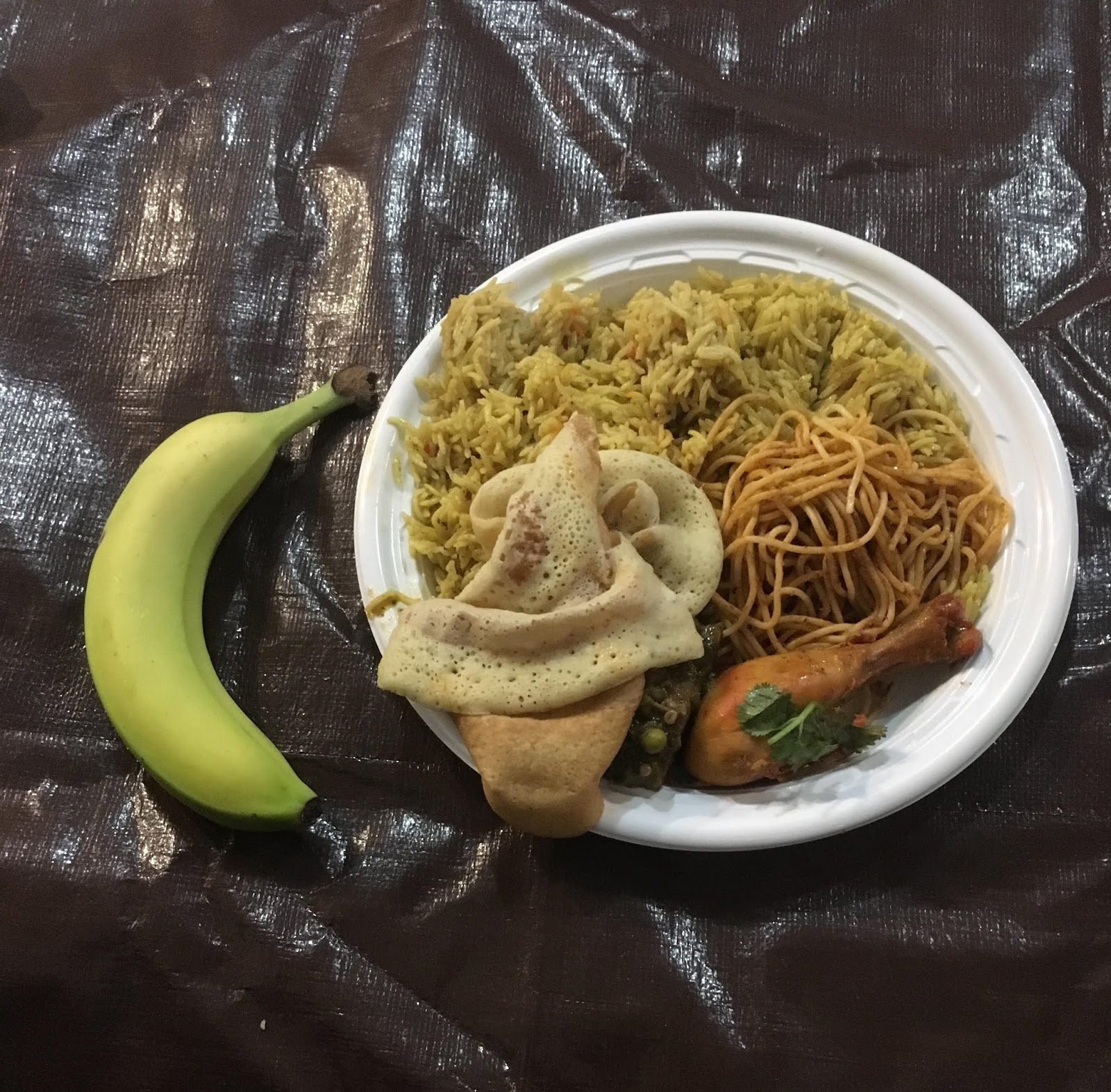
Walid and I met at 9pm, Downtown Crossing, while I was reading about Donald Glover's baby momma and how it created some controversy. Walid and I embraced very longingly. When I complained that I was thirsty, he showed the banana he brought me and told me about his Somali iftar at his new neighborhood mosque.

Walid's dinner
He was served by other men and had eaten everything with his hands like a good sport. Prior to dinner, he compared the prices of food at the neighborhood supermarkets and found them to be not much cheaper than prices in New York. I also complained that at least NY places give one a sense that they are family businesses, whereas the chain stores of Boston do not bring down the prices as much as one would expect.

While we were waiting for the T, a queerly dressed man, cowboy hat in tow, started passing comments to everyone he saw. He said to us, "You two should get married!" We replied as he walked by, "we're already married!" which made him feel slightly sheepish. Walid was very happy that even strangers could see how much in love we were.

Walid also called many of his relatives today. He passed on the greetings of his cousin, who studied as a pharmacist and said "say hello to your beautiful wife." <3 We returned home and watched the lo-fi version of Patriot Act on the mattress "scam" and discussed which mattress we should buy next.

Finally, a funny desi joke my friend Aaron sent to me!


الاثنين، 30 أبريل 2018

Arabic Music Performance in Boston


Boston College organized a free Arabic music concert on rainy Sunday night, April 15th, at Gasson Hall. Prof. Ann Lucas said the introductory remarks first in English and then in Arabic. She welcomed us with “أهلا و سهلا” and also wished that the program will continue in the future (في مستقبل) Many of the audiences also were Lebanese. I stood throughout the show because all the chairs were taken. It was my first time at such a formal Arabic music performance. Before my exposure to music of the same region was mostly dabke and zajal music.


The main show of the evening featured  Lebanese oud performer Charbel Rouhana. Before he went on stage, the ensemble and chorus performed Levantine folk songs featuring themes of love and scenes of nature in the first half. Children of the Center for Arabic Culture the opened the show with My Darlings Around me (حبايبنا حولي), conducted by Syrian lawyer and conductor Alma Riceh. This choir is the only children’s Arabic choir in Massachusetts. The remaining choruses were directed by Nizar Fares, a Beiruiti who holds a PhD in musicology. During certain intervals, the Qanun player also had his solo parts and the audience responded with loud applause.

from Wikipedia


Dr. Fares, who also plays the Oud and is a musician in his own right, praised Charbel Rouhana to have accomplished what he thought as excellence that required an average person at least four times the amount of effort. Rouhana took stage and played several more numbers of Levantine songs as well as Oud-centric musical arrangements for us. The later learned that the oud is an instrument 3500 years old and has heavily influenced the Spanish guitar. 

Gasson Hall April 15th; Picture found from website


I also attended an Oud performance in Beirut, where I sat very formally at first; but I soon realized that Oud could also be entertained for a dance party. The crowd in the bar rose to their feet and also made requests upon the performer. I later found out that Rouhana also performs Oud in jazz style.

In this case, at Boston College, it was modeled off of a European influenced understanding of a performance. I had read about Umm Kulthum’s rise in fame as well as her collaboration with old forms of performances. While she retained the formal Arabic language in her pronunciations, she also contended with the new arrival of film and dressed in European dresses. 

Umm Kulthum and her ensemble

The Lebanese dialect lyrics of this musical performance was transliterated and translated for us to follow. I could understand “moon” and “lover.” During the call and response sections, I also participated in the choruses. I noticed that the gender of the addressee is important in Arabic; God would be presented as a gender-specific figure in literature and poetry. In contrast, Indian Sufi music addresses God in gender-neutral terms.

After the last amusing song Qahwa (coffee), a nun from Lebanon presented an award to Boston College’s music department, commended this performance and also praised the ability for music to communicate through all cultures. She also looked forward to future performance exchanges in Boston. Rouhana also signed his book on Maqam for people who were interested in purchasing it. I would like to learn more about Arabic music theory in the future.