‏إظهار الرسائل ذات التسميات activism. إظهار كافة الرسائل

الخميس، 18 أبريل 2019

Misogyny from men in closed quarters

I have been interacting with non-hetero men for many years and this week is the first time I am suffering from intense misogyny from a non-hetero man -- Ernesto Gonzalez.  He has been my partner's roommate for the past couple of years. My partner and I have yet to move in together. For these reasons, I have been interacting with him on an personal level (in closed quarters). I am documenting these events for personal as well as public purposes, which shall be clear below.

So what happened in the past week? Here is my version:
Both Ernesto and Walid are currently in the process of moving away from their shared apartment. Ernesto continuously throws away Walid's things, assuming that those things are his (including food items). These actions are inconsiderate and selfish at the least.
In addition to this ongoing problem, another fiasco happened: Ernesto decided that he would visit his partner this past week. I purposefully scheduled my visit so that Ernesto would be away from the apartment. Due to miscommunication, he did not leave during my originally planned stay. On April 15th, he notified my partner Walid around 9pm that Walid can no longer stay as promised till the first week of May. This was another inconsiderate act from him because it is basic courtesy to notify anyone earlier of these changes in lease contracts. Walid acquiesed. I was extremely upset; I cried, protested and fought with Walid over this matter. Ernesto did not mention any of these issues the following day.
On April 17th, Ernesto sent a message to Walid asking him to keep things quiet. He was clearly referring to our sounds of intimacies. Perhaps due to his particular religious upbringing, Ernesto found these sounds more disturbing than my voices of protest and fight on the 15th.
I am particularly upset because my personal privacy has become a "man's matter" rather than something one should discuss directly with me. Ernesto is using his male privilege to suppress my freedom.
Furthermore, Ernesto messaged Walid, saying that he will bring his partner with him on Sunday (April 21st). This arrangement further conflicted with my plans, which was to spend the weekend with Walid, without someone eavesdropping and reporting our acts of intimacy. I booked the trip on April 15th, two days before Ernesto declared his one-sided plans. I decided to cancel my plans and thus wasted a bus ticket I ordered.
Another reason for my shock at Ernesto's behavior is because he continuously complains about his work issues with Walid, expecting Walid to be his dutiful listener, while he disrespects the objects owned by Walid (thus affecting my living standards) as well as Walid's time.
I explained my side of the events to Walid yesterday, and I am writing about it again because solidarity among marginalized people is often at risk due to certain people's selfish and misogynistic behaviors. While I have aspired to create friendships and solidarity across all genders, it is easier said than done. I am still hurt over the events that happened this past week. It is additionally desparing for me as a marginalized person: due to the rising cost of private space, there is no easy solution outside of property ownership that would prevent these events from happening.

الأربعاء، 20 ديسمبر 2017

Solidarity, Dissimulation, and Making Space

Many recent articles now have discussed the rather unwelcoming world of activism and how it could potentially discourage activism. I personally have yet to be fully engaged in any offline activist community, due to my transient occupation as a student. But I do see these trends and feel the effect. Similarly, there have been heated debates revolving the politics of Ta-Nahisi Coates and Cornel West. While I do agree with West's analysis, there are also the issues of authority and personal relations at stake: Who gets to call someone a neoliberal? Who are we talking to? Where is the public sphere? Twitter? Cafes? Likewise, there have been intense name-calling among Arabs in the U.S., especially in light of the Lebanese-Saudi tensions. A Lebanese performer in Boston criticized the policies of Saudi Arabia last month, which caused many people to leave the venue in either outrage or dismay. I was not there so I am not sure what was exactly said. I wish there was a way for people to share their opinions without resigning to a simple refusal. Al Jazeera also published a good piece about the value of connected histories and a certain type of mindset that prevents these histories. I agree with him that "What we are witnessing throughout the Arab and Muslim world is a battle for the soul of the Muslim past to inhabit the spirit of the Muslim future." Perhaps that is also why Cemil Aydin's history book on The Idea of the Muslim world is so timely. He also shares a lot of contemporary connections with politics on a great episode of the Ottoman History podcast. He argues: through tracing the historical roots of Pan-Islamism, one can become wary of the sloganeering of politicians and rebel factions. The author of the Al Jazeera piece, Professor Hamid Dabashi, also published a book Being a Muslim in the World engaging in similar themes

I also have been questioned by an Iraqi Kurdish person in the U.S. in regards to my allegiance vis-a-vis Arab-Kurd relations, which prompted me to think: How should we make space for one another in this context?  Much effort is dedicated to explaining Others to an "American" public, but identities are fluid and Muslim / Brown-skinned folks living in the U.S. also should provide space for each other. In other words, we are also entitled to the public sphere to process our own beefs as much as anyone. 

A friend studying in Turkey wrote about the book markets of Istanbul and how patrons usually avoid political subjects. This phenomenon can be traced to the Ottoman era, and is a mark of being "cultured." Nowadays, most of us in the U.S. no longer have that leisure to be that "cultured." At the same time, too much criticism also can be a hindrance to forming solidarity.

It also reminds me of a history paper presented on a learned scholar who practiced dissimulation in the Ottoman era. The paper argued that the scholar was Shi'a and most people around him knew about it for decades on end. In my understanding, even dissimulation, in either the religious or political sense, is not simply an individual act and requires patience for and understanding of each other. Dissimulation (into whiteness or heteronormativity) requires not only the person to meticulously dissimulate and pose as a  authentic member of the "mainstream," but also a community of people who take him/her at his/her words and not reveal.

In a rather different context, for many who faced discriminatory checkpoints in the post-2005 urban Iraq, pretending to be a person from different sect was an important survival skill. While the scale of violence has yet to become that high in the U.S., there are definitely rising tensions around me. Much has been written about how to organize without leaking information about undocumented people to the ICE. Yet I am also speaking about a social issue. At times, exclusionary views seem to be much easier to espouse than inclusive ones, which then silences and erases certain people's experiences. How can we devise politics that allows space for thinking and debating, without invoking too much of a person's identity that s/he/they would rather not speak about? 

Below is an interesting passage on South Asian-Iraqi connections from page 45 of Recasting the Region by historian Neilesh Bose. Even though he was writing about political organizing of the early twentieth century, it is equally relevant to today as well. 

“Shatt-il Arab” one of Nazrul’s most well-known poems from this era, expresses the feeling of a Bengali soldier in Iraq, near the Shatt-il Arab, and his loving feeling of admiration for Arab heroes in Iraq, the ‘land of martyrs’. Repeated laments over the ‘spilt blood of valiant Arabs’ and pure Arabian riverbanks establish the poem as a paean to Arabic culture and Islamic civilization in that region. The poem also sings a song of fondness to that ancient land between the Tigris and Euphrates as a measure of universalist Islamic identity. The end of the poem places the suffering of the Bengali soldier, the pain, sorrow, and hurt felt in war, and in death, alongside the Iraqi army: Iraqi army! Here in this story / We in the Bengal army / Can say your suffering is ours!” Regarding Muslims identity, Nazrul places the Bengali and the Iraqi into a common Muslim world of mutual love and admiration. The Bengali protagonist remains a Bengali, never to be shorn of a particular cultural location. Muslim identity is part of a larger universalism which doesn’t exclude, but rather, actively includes the local sense of identity. It is one of the first poems to appear after WWI that combines a look towards the future with a feeling of belonging in the Muslim and Bengali world.
While one may be skeptical about the "objectivity" in the idealism invoked by the poet Nazrul, it is also a breeze amidst heated geopolitical contestations and certain venomous youtube comments. 

Iraq, Indian soldiers within the British forces in a suburb of western Baghdad in 1917. First shared by Old Iraqi Pictures

السبت، 9 سبتمبر 2017

In Conversation with a Pakistani Student on Politics

This is a partial transcription of my interview with Zaheer who was quite active in his years at his University based in Karachi with activities in support of PPP (Pakistan People's Party).  We conducted the interview in Goettingen, at his dorm during last year's Ramadan. The dorm is known as the student village (Studentendorf) and is usually free of political discussions about Pakistan. Zahir frowns on these discussions, which in his experience often led to discordance among friends. He was also fasting for Ramadan at the time of the interview. Therefore I am very grateful that this interview took place. The interview was initially conducted for my thesis on Pakistani nationalism; it was a difficult topic and I later changed it. The first half of the interview transcription with Zaheer was lost due to a computer problem. But the following transcription is also quite illuminating on current Pakistani politics and civil society.


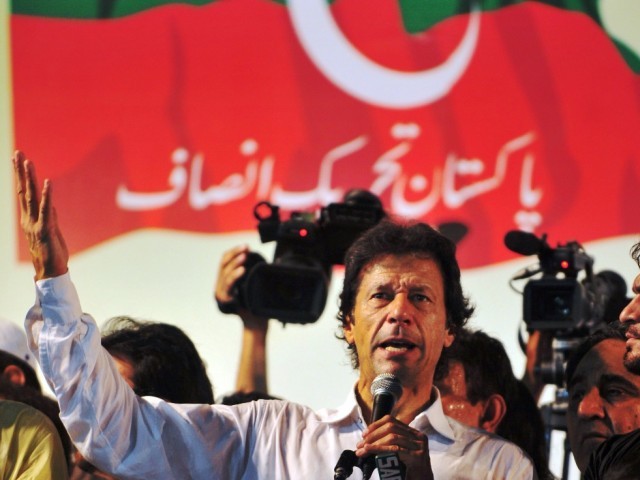
Founder of PTI former cricketer Imran Khan


Has your family voted?

Zaheer: Yeah, they do. In Pakistan, it doesn't matter if it's a non-party or party basis election. In Pakistan, especially villages (90-95%) voting is done on [an] individual basis, not on party [basis]. If there are 10 candidates in one constituency, we will vote for 1 person. It doesn't matter if he stays in PPP, Noon league or any other Party. This is one reason for the bad democratic system in Pakistan, it's not a real democracy. It's the case in most developing countries. In developing countries, most parties do not continue for the next term. In developing countries, people won't satisfy. In developing countries, people are educated and they know, if they want to see results, they have to give a person 8-10 years. Because 4 years is nothing, especially for major projects. But in developing countries, they don't [give that much time]. So one time one party wins, next time it's a clean sweep. Next time, again that party comes. So in Pakistan, there was a two party system. Now the paradigm has changed, there is a new party that has gained a lot of attention and votes. In voting, Pakistan Tehreek-e-Insaf (PTI) is the most popular party. But for the last 50-60 years it has been a swinging from one side to another side thing.


How does your family vote?

Zaheer: Mostly personal or on caste, religious lines. In my family, the females mostly are not interested in politics, they are just told 'ok we are going to vote for them,' and they say "ok. fine." One of the males say vote for them, and that's it. But now, my younger sister is educated and has a pretty good knowledge of politics and she's into it. So this time she was there, she has started discussions with the family members and others. "Ok we have to think." It's getting changed.


In your family who usually decides (which way the vote goes)?

Zaheer: The educated ones decide. Most of the educated people [of my family] are out of the village. Half of them are in Karachi, I am here [in Germany], some guys are in Islamabad.


They don't go home to vote?

Zaheer: No. Some family members vote in Karachi. But in village, my uncle, he participates and he decides "we are voting them." It's not forcefully, but they ask, "we will vote for them." In our societies people have respect for them, so they don't oppose.


Which candidate is supported from your village?

Zaheer: In the national level, mostly people vote for the People's Party. Those who think on party lines they vote for People's Party. There is also a member of national assembly and member of the provincial assembly. So these guys swing and don't have a fixed party. They participated in 3 different parties.

Our village used to vote for these two people. But now the younger generation stood and said "we are not going to vote for this person. We are voting for him, his father and grandfather, so we didn't get anything. He just came in election time and doesn't show up again" and so on.

You can say the elders are on one side and the younger (generation) are on another side. The young generation won in the last 3 elections. They stood against the panchayat system and the main decision makers of the village, they got the vote and they won. So this is the indication that the elders have to think "what I have suggested in the last elections," about their policies and loyalties.


Which party does your Karachi part of your family support?

Zaheer: The People's party. Why? I am very interested in politics so I have views on all of the parties. For example, the MQM (Muttahida Quami Movement). I vote 10/10 for party organization. They have good control on party and good party infrastructure. They give chance to the middle class or lower class to lead. But there is a problem. There is a terror wing, which is a big question mark. The MQM is a very liberal pary, open-minded, so you can say it's a left party. I like them but they support terror. There are some people who are there (in the terror wing).
The next party I like is the Awami National Party in the Khyber Pakhtunkhwa, which is pretty much liberal. But it's very limited, it's only in Khyber Pakhtunkhwa, their leaders are more pro-Afghanistan than Pakistan, but still they are a liberal party. So I think it's a good party.


"The Awami National Party's holds much support in Pashtun-dominated areas of Karachi. They have decked this bridge with their traditional red, and slogans supporting the party's Karachi leadership." - Asad Hashim, Al Jazeera


I like and support People's Party, because it's the Party of most educated people, and they are more liberal, they have real democratic attitudes, so such kind of parties we need in Pakistan. Other parties, for example PTI, PTI is good, their slogan ["Justice, Humanity and Self Esteem"] is good. They are demanding good things, but their way of proceeding is not very good. Unfortunately, I don't agree with their ways most of the time.


What do you mean? In terms of the execution?


Zaheer: Not the execution. For example, the [PTI's] wish is: "within a day something happens and the things would change." Big change doesn't happen. Big change only happens when there is a war. You have to give a lot to get big change. For example, last year or the year before, there was demonstration against election rigging and so on. The PTI boycotted the elections. There was a good chance to get a big change. In Pakistan, elections are always rigged. So they were demanding to investigate and demanding to change the constitution and electoral votings. They were demanding everything that was good for the election system. But suddenly, Imran Khan said, "ok, we are not accepting anything unless Nawaz Sharif (our Prime Minister) resigns." Which was not the point. (The PTI) demanded 6 demands. There was a time when the government was almost ready to accept 6 out of 6 demands. In politics it doesn't happen. In politics, you cannot get 100%. If you get 50%, it's your win. And then, all logical and right demands (the government) was going to accept, then Imran Khan said "we need the resignation of Nawaz Sharif." Once he saw that "I have a big crowd, I have a big force, let's demolish it," that was the point when all other parties stood with Nawaz Sharif, because (Imran Khan) was almost against the parliament system. They stood with him, and by the time the whole pressure was gone.

So the government that was ready to agree the 6 demands, at the end (Imram Khan) got nothing. There isn't any change in the electoral system, and he hasn't got any single thing. It was the individual decision. One person has wasted 3 months of the nation. He has wasted energies of the people. I would say 200,000 or even more people were sitting in Islamabad, that was wasted. So I wouldn't go behind that leader. The leader who cannot judge or who cannot bargain the right thing is not right. This is one reason. Another reason is that he is pro-Taliban. He was saying "we have to talk we have to talk," but it seems like he did a little chorus. He repeatedly said "we have to talk we have to talk." Ok, we have to talk. But it's not like we are begging to talk. We are a sovereign country, we have to take action so we have to bring them on the table on our terms. So Imran Khan is very famous among the young generation, he is our national hero, and I respect him as my hero. But he is my hero in cricket, not in politics. But most of the Pakistanis consider him as a hero in politics as well. Yes, his demands are right. But he has changed the game , he was pro-Taliban and everyone was giving justification "yes he's saying right" and that was a big question mark for me.

But otherwise yes I support most of the things (represented by) PTI.


The final party Muslim League, they don't have a democratic attitude, they are ruling like a dictator, so i don't like them. Every time they come in power, they created mess. Every time they messed up with the army, and then the army took over, and then the army messed up the country, and then every time they have given the country to the People's Party to regain the strength and reestablish the institutions. We had coup 3 times. After all 3 times, the People's Party came into power.


So you think the army intrudes in civil society. Do you think the civil society is stronger now?
Raheel Sharif, center right, with prime minister, Nawaz Sharif, center left.
Caren Firouz/Reuters

Zaheer: Yes, I think so. Civil society has become and is becoming stronger. I wish we are not going to have another coup or another army dictatorship. I don't think it's going to happen. For example, there were serious conflicts between the government and the general head quarters (GHQ) of he Army. But the army didn't dare to coup. One can say that was a time when the Army could have took over but didn't. Media has played a large role there. There is more awareness, people are more vibrant now. They are taking part in politics. Our army chief, general Raheel Sharif, he belongs to a family who has served since long. some of his family members has got the highest Nishan [i-Pakistan] award in the army (*Wikipedia: The Nishan [i-Pakistan] "is the highest of civil awards and decorations given by the Government of Pakistan for the highest degree of service to the country and nation of Pakistan"). He kept his family tradition and stayed away from politics. he could have taken over in recent years if he wanted to. People were ready, political parties were ready, everyone was ready.


If there was a coup, there wouldn't have been a lot of resistance. You can see on the media. The government was almost gone. There wasn't a lot of control on institutions. right now, there are Panama leaks, the PM (Prime Minister) was listed.

There were some people calling for a "military coup and save the country" and so on. In developing countries, the memory is short. They don't think about the past but focus on the present.
I don't think it's going to happen again. In the past, the army was on one side, the otehr side political parties wanted to take over and fabricating reasons to take over. Nawaz Sharif has dismissed our army chief when he was on an official trip in Sri Lanka. Sharif dismissed him. That was something very vague. You are the supreme leader, you can do it, but you have to do it in a proper way. They created a mess and was the reason for the army to take over.

Recently, when Imran Khan was in the demonstration, there was a peak time and everything was settle for a [military] takeover. But the parties such as PPP stood with the government. They said, we also want change, within parliament or within our system. Not extra.

In the past, there was a fight between PPP and Muslim League Noon. They were always blaming each other until the army takeover. Now there were tensions between parties, but they didn't get to the point so the army takeover. There is maturity in political parties. The reason was provided by political parties (for an army takover)

They stood by Nawaz Sharif and against Imran Khan and all those who wanted to demolish and wrap up the system. They stood against that thing. We don't support to wrap up the system, we don't support to demolish our parliament. if you want to change something, let's talk get into the Parliament, let's talk and decide here we will support you.

-------------------------------------------------------------

Some unanswered question from my side: Even though Imran Khan's movement was a mass movement, it could also harbor antidemocratic tendencies and might pose a threat to civil society.

الاثنين، 29 يونيو 2015

India's Search for Progressive Law

Sandipto Dasgupta, Columbia PhD of political science, gave a thought-provoking and lively talk on the Indian Constitution at my department this month. It was part of his long-term book project Legalizing the Revolution. He uses the important concept that critiques how legalism imposes linguistic constraints on the outcome, and thus makes law always backward-looking: precedence necessitates future decisions. Yet he argues that the Indian Constitution has a potential to become a more revolutionary document than other existing ones. It embodies transformative constitutionalism, termed by K. Klare in a 1998 essay, characterized as legally-driven empowerment and change. In South Africa, for example, readings of the Constitution focuses on issues such as "multiculturalism, close attention to gender and sexual identity, emphasis on participation and governmental transparency, environmentalism and the extension of democratic credentials into the ‘private sphere’."They are in contrast with contractual constitutionalism like the American and French Constitution, which has checks and balances as well as judicial review that prevents it from later turmoil. 

Land reform is one of the most important example regarding the Indian constitution's progressive status and interpretation. Dasgupta argues that this precedent made the later judicial activism through public interest litigation regarding environmental issues in the 1980s possible. Land reform was accepted as an important process to be implemented by the Congress Party when they come to power: on the one hand for the purpose of creative an equitable society in response to peasant movements, and on the other hand, for removing less productive feudal structures as part of the Modernization project.

Congress leaders also agreed that it should be compensative land reform, in which landowners would be compensated. Lawyers faced the problem of how to use it to implement the compensation: How much should the law compensate for land reform? The process is complex and one cannot tie it to one term because contexts vary. There was a consensus among the legal writers that there should be no qualifiers for “compensation” and that the local judiciary representatives should decide. There should have some coherent principle followed throughout the process, but it does not have to be good or just.

One example Dasgupta provided was the Bela Banerjee case. Her land was taken to resettle Partition refugees in Bengal in 1950. Yet Mrs. Banerjee only got compensation from the 1946 price, which has increased since. The Supreme Court declared that this act was unconstitutional because the word “compensation” implies just equivalence and should correspond with market value. I could not help but notice how this process was so much more calculated and technical than the impromptu tribunals in China's land reform that not only took away landowners land, but also in some cases executed them.

Dasgupta notes that this reform was not based on the notion that everyone has natural rights to property. My issue with this framework is the lack of foundation. If rights, such as right to land, are not absolute, the interpretation of them can go in many directions. The interpretive law can fall back on "Hindu" or "Islamic" custom like the British rulers, or it could be used for a progressive goal like land reform. This is the classic problem regarding constitutionalism in the U.S.: Interpretation v. Original Intent. I am not familiar with common law and the British probably have a different understanding based on their law; for example, while the U.S. Supreme Court may legalize gay marriage under the 14th amendment, the British law could have the same outcome with different legal reasoning. Yet I still think that one should have to have a clearer idea of what the ideology is when arguing for a progressive Indian constitution. 

Jawaharlal Nehru thought that writing better text could could help the political mandate of post-independence social justice and bypass conservative roadblocks, yet both Nehru and Dasgupta notes that the class status of lawyers was another issue new legal language could not bypass. Dasgupta quotes Nehru, the Indian constitution "has been purloined by lawyers." The parliament wanted to use legalistic language to mediate the process, but the parliament also has to cede the interpretation powers to lawyers or expert committees. Dasgupta is acutely aware of the question of interpretation under constitutionalism, and I look forward to reading analyses of central themes in Indian legal interpretation, perhaps with more case studies.