‏إظهار الرسائل ذات التسميات civil society. إظهار كافة الرسائل

الاثنين، 6 نوفمبر 2017

Some Moments from the film "Forget Baghdad"

The documentary film Forget Baghdad, made in 2002, is actually a remembrance of Baghdad. Four Iraqi Jewish writers living in Israel recount their childhood watching Egyptian and Indian cinema. They also recalled their Communist youth before they emigrated to Israel. Only one of the interviewees remained a communist after he left Iraq. Communism seemed to have been a very historically specific quest that resonated with them at the time, rather than a dogma. One interviewee recalls how he would participate in Marxist reading groups. He gave a very literal take on idealism and materialism, while the discussant leader wanted something more theoretical. Then a worker who had a nickname of “Big Thumb” provided an answer about how idealism and materialism were related in a dialectic sense. The interviewee felt disappointed in himself. I was surprised that such deep discussions took place in those times of Baghdad.

Trailer


All of them recall the protests in 1946 and how many strangers in the city were in solidarity with communists. I had read about Communist movements in Iraq before but I never read first-hand accounts. The site of protest—the British embassy— was close to the red light district, and one interviewee hid with the help of the prostitutes. Another interviewee, Sami Michael, is an award-winning novelist. During the protests, he found himself under the body of his friend which was being kicked by a police. He was so mad, he attacked the police while shouting, "He is an intellectual and he is about to die!" The police would have shot him if it wasn't for a woman in an abaya who stood between them. He ran to the river and was given a boat to escape. He escaped all the way to Mashhad and was hidden in a mosque, even though under normal circumstances he would not have been allowed. I did not know about the restrictions on Jewish people entering Mashhad before watching this documentary.
All the interviewees expressed the sentiment that most of the Iraqi Jews were not Zionists and did not want to leave Iraq as late as 1950. But there were bombs (allegedly planned by Zionists) in Jewish areas that scared many of them away.


Director Samir and his cousin Jamal Al Tahir in front of the Kremlin in Moscow. Originally from Dschoint Ventschr Filmproduktion.

In addition to the accounts given the by the interviewees, the filmmaker Samir provides a lot of context and paints a very complex picture. He shows how there were more politically-sharp newspapers accessible in Israel compared to the situation in Iraq. Many of the interviewees contributed to newspapers and reflected on their relationship with Arabic and Hebrew. The filmmaker  comments on how much of the Arab hostility towards Israel forgets that there are also Arabic-speaking people in Israel. The filmmaker also interviews the film studies scholar, Ella Shohat, who is also a Baghdadi Jew. She discussed how certain Israeli films tend to harmonize the issues of the nation by presenting Ashkenazi and Mizrahi Jews as culturally different but ultimately suitable for marriage and reconciliation. She is a Mizrahi Jew who felt a deep sense of alienation from Israeli society. She recalled how Iraqi Jews were forcibly sprayed with DDT when they landed in Israel. European-style bread would be subsidized by the state, while pita bread was not. Many Iraqi Jews labored on farms in order to win their position in society.
Shohat recounted her first time meeting an Iraqi Arab for the first time when she was in New York. Yet he was also foreign to the concept of Iraqi Jews and had not heard of the Farhood (pogroms). She exclaimed that people’s memories often forgets history. Now, fortunately, there is a Babylonian Jewry Heritage Museum dedicated to the history of people like Shohat.
The writer Sami also admits that sometimes he feels that “In the Arab world we are Jews, in Israel we’re Arabs.” He later laughs and says he is a baklava, a mix of both cultures. He complained that Israel is an ideologist country, superficial and small. Yet he said that he became more accustomed to settling in Israel once his daughter was born: for her, Israel will be her home; and for this reason, he decided to place his roots here for good.

In terms of the language, I could understand the word “fish” when Sami reminisced about the Iraqi specialty. I also understood the words spy (jasoos) and nationalism (al-qaumiyya). Overall it was a deep and engaging documentary film that clearly required a lot of effort.

السبت، 9 سبتمبر 2017

In Conversation with a Pakistani Student on Politics

This is a partial transcription of my interview with Zaheer who was quite active in his years at his University based in Karachi with activities in support of PPP (Pakistan People's Party).  We conducted the interview in Goettingen, at his dorm during last year's Ramadan. The dorm is known as the student village (Studentendorf) and is usually free of political discussions about Pakistan. Zahir frowns on these discussions, which in his experience often led to discordance among friends. He was also fasting for Ramadan at the time of the interview. Therefore I am very grateful that this interview took place. The interview was initially conducted for my thesis on Pakistani nationalism; it was a difficult topic and I later changed it. The first half of the interview transcription with Zaheer was lost due to a computer problem. But the following transcription is also quite illuminating on current Pakistani politics and civil society.


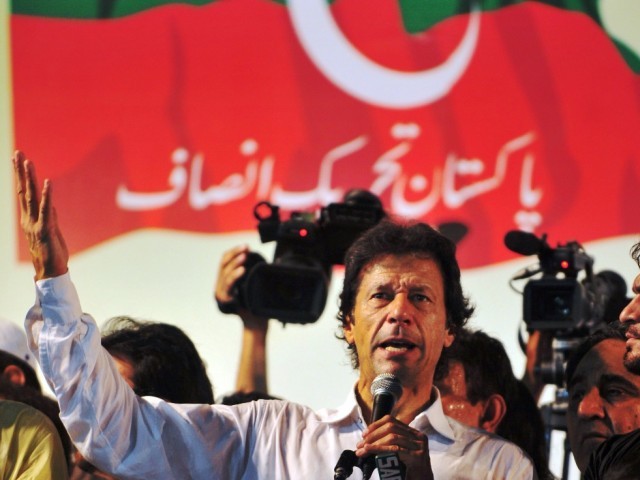
Founder of PTI former cricketer Imran Khan


Has your family voted?

Zaheer: Yeah, they do. In Pakistan, it doesn't matter if it's a non-party or party basis election. In Pakistan, especially villages (90-95%) voting is done on [an] individual basis, not on party [basis]. If there are 10 candidates in one constituency, we will vote for 1 person. It doesn't matter if he stays in PPP, Noon league or any other Party. This is one reason for the bad democratic system in Pakistan, it's not a real democracy. It's the case in most developing countries. In developing countries, most parties do not continue for the next term. In developing countries, people won't satisfy. In developing countries, people are educated and they know, if they want to see results, they have to give a person 8-10 years. Because 4 years is nothing, especially for major projects. But in developing countries, they don't [give that much time]. So one time one party wins, next time it's a clean sweep. Next time, again that party comes. So in Pakistan, there was a two party system. Now the paradigm has changed, there is a new party that has gained a lot of attention and votes. In voting, Pakistan Tehreek-e-Insaf (PTI) is the most popular party. But for the last 50-60 years it has been a swinging from one side to another side thing.


How does your family vote?

Zaheer: Mostly personal or on caste, religious lines. In my family, the females mostly are not interested in politics, they are just told 'ok we are going to vote for them,' and they say "ok. fine." One of the males say vote for them, and that's it. But now, my younger sister is educated and has a pretty good knowledge of politics and she's into it. So this time she was there, she has started discussions with the family members and others. "Ok we have to think." It's getting changed.


In your family who usually decides (which way the vote goes)?

Zaheer: The educated ones decide. Most of the educated people [of my family] are out of the village. Half of them are in Karachi, I am here [in Germany], some guys are in Islamabad.


They don't go home to vote?

Zaheer: No. Some family members vote in Karachi. But in village, my uncle, he participates and he decides "we are voting them." It's not forcefully, but they ask, "we will vote for them." In our societies people have respect for them, so they don't oppose.


Which candidate is supported from your village?

Zaheer: In the national level, mostly people vote for the People's Party. Those who think on party lines they vote for People's Party. There is also a member of national assembly and member of the provincial assembly. So these guys swing and don't have a fixed party. They participated in 3 different parties.

Our village used to vote for these two people. But now the younger generation stood and said "we are not going to vote for this person. We are voting for him, his father and grandfather, so we didn't get anything. He just came in election time and doesn't show up again" and so on.

You can say the elders are on one side and the younger (generation) are on another side. The young generation won in the last 3 elections. They stood against the panchayat system and the main decision makers of the village, they got the vote and they won. So this is the indication that the elders have to think "what I have suggested in the last elections," about their policies and loyalties.


Which party does your Karachi part of your family support?

Zaheer: The People's party. Why? I am very interested in politics so I have views on all of the parties. For example, the MQM (Muttahida Quami Movement). I vote 10/10 for party organization. They have good control on party and good party infrastructure. They give chance to the middle class or lower class to lead. But there is a problem. There is a terror wing, which is a big question mark. The MQM is a very liberal pary, open-minded, so you can say it's a left party. I like them but they support terror. There are some people who are there (in the terror wing).
The next party I like is the Awami National Party in the Khyber Pakhtunkhwa, which is pretty much liberal. But it's very limited, it's only in Khyber Pakhtunkhwa, their leaders are more pro-Afghanistan than Pakistan, but still they are a liberal party. So I think it's a good party.


"The Awami National Party's holds much support in Pashtun-dominated areas of Karachi. They have decked this bridge with their traditional red, and slogans supporting the party's Karachi leadership." - Asad Hashim, Al Jazeera


I like and support People's Party, because it's the Party of most educated people, and they are more liberal, they have real democratic attitudes, so such kind of parties we need in Pakistan. Other parties, for example PTI, PTI is good, their slogan ["Justice, Humanity and Self Esteem"] is good. They are demanding good things, but their way of proceeding is not very good. Unfortunately, I don't agree with their ways most of the time.


What do you mean? In terms of the execution?


Zaheer: Not the execution. For example, the [PTI's] wish is: "within a day something happens and the things would change." Big change doesn't happen. Big change only happens when there is a war. You have to give a lot to get big change. For example, last year or the year before, there was demonstration against election rigging and so on. The PTI boycotted the elections. There was a good chance to get a big change. In Pakistan, elections are always rigged. So they were demanding to investigate and demanding to change the constitution and electoral votings. They were demanding everything that was good for the election system. But suddenly, Imran Khan said, "ok, we are not accepting anything unless Nawaz Sharif (our Prime Minister) resigns." Which was not the point. (The PTI) demanded 6 demands. There was a time when the government was almost ready to accept 6 out of 6 demands. In politics it doesn't happen. In politics, you cannot get 100%. If you get 50%, it's your win. And then, all logical and right demands (the government) was going to accept, then Imran Khan said "we need the resignation of Nawaz Sharif." Once he saw that "I have a big crowd, I have a big force, let's demolish it," that was the point when all other parties stood with Nawaz Sharif, because (Imran Khan) was almost against the parliament system. They stood with him, and by the time the whole pressure was gone.

So the government that was ready to agree the 6 demands, at the end (Imram Khan) got nothing. There isn't any change in the electoral system, and he hasn't got any single thing. It was the individual decision. One person has wasted 3 months of the nation. He has wasted energies of the people. I would say 200,000 or even more people were sitting in Islamabad, that was wasted. So I wouldn't go behind that leader. The leader who cannot judge or who cannot bargain the right thing is not right. This is one reason. Another reason is that he is pro-Taliban. He was saying "we have to talk we have to talk," but it seems like he did a little chorus. He repeatedly said "we have to talk we have to talk." Ok, we have to talk. But it's not like we are begging to talk. We are a sovereign country, we have to take action so we have to bring them on the table on our terms. So Imran Khan is very famous among the young generation, he is our national hero, and I respect him as my hero. But he is my hero in cricket, not in politics. But most of the Pakistanis consider him as a hero in politics as well. Yes, his demands are right. But he has changed the game , he was pro-Taliban and everyone was giving justification "yes he's saying right" and that was a big question mark for me.

But otherwise yes I support most of the things (represented by) PTI.


The final party Muslim League, they don't have a democratic attitude, they are ruling like a dictator, so i don't like them. Every time they come in power, they created mess. Every time they messed up with the army, and then the army took over, and then the army messed up the country, and then every time they have given the country to the People's Party to regain the strength and reestablish the institutions. We had coup 3 times. After all 3 times, the People's Party came into power.


So you think the army intrudes in civil society. Do you think the civil society is stronger now?
Raheel Sharif, center right, with prime minister, Nawaz Sharif, center left.
Caren Firouz/Reuters

Zaheer: Yes, I think so. Civil society has become and is becoming stronger. I wish we are not going to have another coup or another army dictatorship. I don't think it's going to happen. For example, there were serious conflicts between the government and the general head quarters (GHQ) of he Army. But the army didn't dare to coup. One can say that was a time when the Army could have took over but didn't. Media has played a large role there. There is more awareness, people are more vibrant now. They are taking part in politics. Our army chief, general Raheel Sharif, he belongs to a family who has served since long. some of his family members has got the highest Nishan [i-Pakistan] award in the army (*Wikipedia: The Nishan [i-Pakistan] "is the highest of civil awards and decorations given by the Government of Pakistan for the highest degree of service to the country and nation of Pakistan"). He kept his family tradition and stayed away from politics. he could have taken over in recent years if he wanted to. People were ready, political parties were ready, everyone was ready.


If there was a coup, there wouldn't have been a lot of resistance. You can see on the media. The government was almost gone. There wasn't a lot of control on institutions. right now, there are Panama leaks, the PM (Prime Minister) was listed.

There were some people calling for a "military coup and save the country" and so on. In developing countries, the memory is short. They don't think about the past but focus on the present.
I don't think it's going to happen again. In the past, the army was on one side, the otehr side political parties wanted to take over and fabricating reasons to take over. Nawaz Sharif has dismissed our army chief when he was on an official trip in Sri Lanka. Sharif dismissed him. That was something very vague. You are the supreme leader, you can do it, but you have to do it in a proper way. They created a mess and was the reason for the army to take over.

Recently, when Imran Khan was in the demonstration, there was a peak time and everything was settle for a [military] takeover. But the parties such as PPP stood with the government. They said, we also want change, within parliament or within our system. Not extra.

In the past, there was a fight between PPP and Muslim League Noon. They were always blaming each other until the army takeover. Now there were tensions between parties, but they didn't get to the point so the army takeover. There is maturity in political parties. The reason was provided by political parties (for an army takover)

They stood by Nawaz Sharif and against Imran Khan and all those who wanted to demolish and wrap up the system. They stood against that thing. We don't support to wrap up the system, we don't support to demolish our parliament. if you want to change something, let's talk get into the Parliament, let's talk and decide here we will support you.

-------------------------------------------------------------

Some unanswered question from my side: Even though Imran Khan's movement was a mass movement, it could also harbor antidemocratic tendencies and might pose a threat to civil society.