‏إظهار الرسائل ذات التسميات democracy. إظهار كافة الرسائل

السبت، 9 سبتمبر 2017

In Conversation with a Pakistani Student on Politics

This is a partial transcription of my interview with Zaheer who was quite active in his years at his University based in Karachi with activities in support of PPP (Pakistan People's Party).  We conducted the interview in Goettingen, at his dorm during last year's Ramadan. The dorm is known as the student village (Studentendorf) and is usually free of political discussions about Pakistan. Zahir frowns on these discussions, which in his experience often led to discordance among friends. He was also fasting for Ramadan at the time of the interview. Therefore I am very grateful that this interview took place. The interview was initially conducted for my thesis on Pakistani nationalism; it was a difficult topic and I later changed it. The first half of the interview transcription with Zaheer was lost due to a computer problem. But the following transcription is also quite illuminating on current Pakistani politics and civil society.
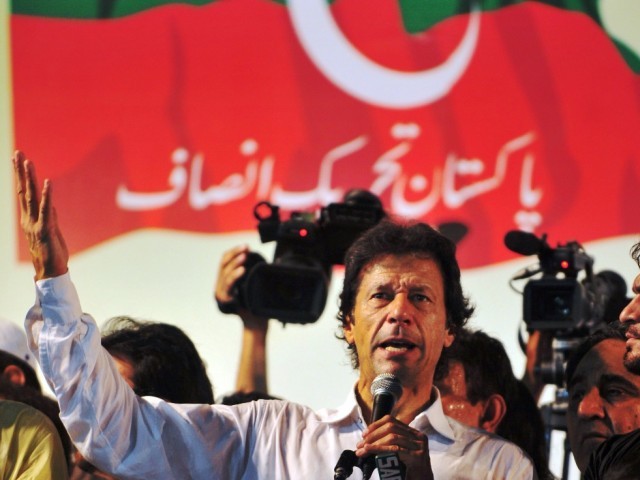

Founder of PTI former cricketer Imran Khan


Has your family voted?

Zaheer: Yeah, they do. In Pakistan, it doesn't matter if it's a non-party or party basis election. In Pakistan, especially villages (90-95%) voting is done on [an] individual basis, not on party [basis]. If there are 10 candidates in one constituency, we will vote for 1 person. It doesn't matter if he stays in PPP, Noon league or any other Party. This is one reason for the bad democratic system in Pakistan, it's not a real democracy. It's the case in most developing countries. In developing countries, most parties do not continue for the next term. In developing countries, people won't satisfy. In developing countries, people are educated and they know, if they want to see results, they have to give a person 8-10 years. Because 4 years is nothing, especially for major projects. But in developing countries, they don't [give that much time]. So one time one party wins, next time it's a clean sweep. Next time, again that party comes. So in Pakistan, there was a two party system. Now the paradigm has changed, there is a new party that has gained a lot of attention and votes. In voting, Pakistan Tehreek-e-Insaf (PTI) is the most popular party. But for the last 50-60 years it has been a swinging from one side to another side thing.


How does your family vote?

Zaheer: Mostly personal or on caste, religious lines. In my family, the females mostly are not interested in politics, they are just told 'ok we are going to vote for them,' and they say "ok. fine." One of the males say vote for them, and that's it. But now, my younger sister is educated and has a pretty good knowledge of politics and she's into it. So this time she was there, she has started discussions with the family members and others. "Ok we have to think." It's getting changed.


In your family who usually decides (which way the vote goes)?

Zaheer: The educated ones decide. Most of the educated people [of my family] are out of the village. Half of them are in Karachi, I am here [in Germany], some guys are in Islamabad.


They don't go home to vote?

Zaheer: No. Some family members vote in Karachi. But in village, my uncle, he participates and he decides "we are voting them." It's not forcefully, but they ask, "we will vote for them." In our societies people have respect for them, so they don't oppose.


Which candidate is supported from your village?

Zaheer: In the national level, mostly people vote for the People's Party. Those who think on party lines they vote for People's Party. There is also a member of national assembly and member of the provincial assembly. So these guys swing and don't have a fixed party. They participated in 3 different parties.

Our village used to vote for these two people. But now the younger generation stood and said "we are not going to vote for this person. We are voting for him, his father and grandfather, so we didn't get anything. He just came in election time and doesn't show up again" and so on.

You can say the elders are on one side and the younger (generation) are on another side. The young generation won in the last 3 elections. They stood against the panchayat system and the main decision makers of the village, they got the vote and they won. So this is the indication that the elders have to think "what I have suggested in the last elections," about their policies and loyalties.


Which party does your Karachi part of your family support?

Zaheer: The People's party. Why? I am very interested in politics so I have views on all of the parties. For example, the MQM (Muttahida Quami Movement). I vote 10/10 for party organization. They have good control on party and good party infrastructure. They give chance to the middle class or lower class to lead. But there is a problem. There is a terror wing, which is a big question mark. The MQM is a very liberal pary, open-minded, so you can say it's a left party. I like them but they support terror. There are some people who are there (in the terror wing).
The next party I like is the Awami National Party in the Khyber Pakhtunkhwa, which is pretty much liberal. But it's very limited, it's only in Khyber Pakhtunkhwa, their leaders are more pro-Afghanistan than Pakistan, but still they are a liberal party. So I think it's a good party.


"The Awami National Party's holds much support in Pashtun-dominated areas of Karachi. They have decked this bridge with their traditional red, and slogans supporting the party's Karachi leadership." - Asad Hashim, Al Jazeera


I like and support People's Party, because it's the Party of most educated people, and they are more liberal, they have real democratic attitudes, so such kind of parties we need in Pakistan. Other parties, for example PTI, PTI is good, their slogan ["Justice, Humanity and Self Esteem"] is good. They are demanding good things, but their way of proceeding is not very good. Unfortunately, I don't agree with their ways most of the time.


What do you mean? In terms of the execution?


Zaheer: Not the execution. For example, the [PTI's] wish is: "within a day something happens and the things would change." Big change doesn't happen. Big change only happens when there is a war. You have to give a lot to get big change. For example, last year or the year before, there was demonstration against election rigging and so on. The PTI boycotted the elections. There was a good chance to get a big change. In Pakistan, elections are always rigged. So they were demanding to investigate and demanding to change the constitution and electoral votings. They were demanding everything that was good for the election system. But suddenly, Imran Khan said, "ok, we are not accepting anything unless Nawaz Sharif (our Prime Minister) resigns." Which was not the point. (The PTI) demanded 6 demands. There was a time when the government was almost ready to accept 6 out of 6 demands. In politics it doesn't happen. In politics, you cannot get 100%. If you get 50%, it's your win. And then, all logical and right demands (the government) was going to accept, then Imran Khan said "we need the resignation of Nawaz Sharif." Once he saw that "I have a big crowd, I have a big force, let's demolish it," that was the point when all other parties stood with Nawaz Sharif, because (Imran Khan) was almost against the parliament system. They stood with him, and by the time the whole pressure was gone.

So the government that was ready to agree the 6 demands, at the end (Imram Khan) got nothing. There isn't any change in the electoral system, and he hasn't got any single thing. It was the individual decision. One person has wasted 3 months of the nation. He has wasted energies of the people. I would say 200,000 or even more people were sitting in Islamabad, that was wasted. So I wouldn't go behind that leader. The leader who cannot judge or who cannot bargain the right thing is not right. This is one reason. Another reason is that he is pro-Taliban. He was saying "we have to talk we have to talk," but it seems like he did a little chorus. He repeatedly said "we have to talk we have to talk." Ok, we have to talk. But it's not like we are begging to talk. We are a sovereign country, we have to take action so we have to bring them on the table on our terms. So Imran Khan is very famous among the young generation, he is our national hero, and I respect him as my hero. But he is my hero in cricket, not in politics. But most of the Pakistanis consider him as a hero in politics as well. Yes, his demands are right. But he has changed the game , he was pro-Taliban and everyone was giving justification "yes he's saying right" and that was a big question mark for me.

But otherwise yes I support most of the things (represented by) PTI.


The final party Muslim League, they don't have a democratic attitude, they are ruling like a dictator, so i don't like them. Every time they come in power, they created mess. Every time they messed up with the army, and then the army took over, and then the army messed up the country, and then every time they have given the country to the People's Party to regain the strength and reestablish the institutions. We had coup 3 times. After all 3 times, the People's Party came into power.


So you think the army intrudes in civil society. Do you think the civil society is stronger now?
Raheel Sharif, center right, with prime minister, Nawaz Sharif, center left.
Caren Firouz/Reuters

Zaheer: Yes, I think so. Civil society has become and is becoming stronger. I wish we are not going to have another coup or another army dictatorship. I don't think it's going to happen. For example, there were serious conflicts between the government and the general head quarters (GHQ) of he Army. But the army didn't dare to coup. One can say that was a time when the Army could have took over but didn't. Media has played a large role there. There is more awareness, people are more vibrant now. They are taking part in politics. Our army chief, general Raheel Sharif, he belongs to a family who has served since long. some of his family members has got the highest Nishan [i-Pakistan] award in the army (*Wikipedia: The Nishan [i-Pakistan] "is the highest of civil awards and decorations given by the Government of Pakistan for the highest degree of service to the country and nation of Pakistan"). He kept his family tradition and stayed away from politics. he could have taken over in recent years if he wanted to. People were ready, political parties were ready, everyone was ready.


If there was a coup, there wouldn't have been a lot of resistance. You can see on the media. The government was almost gone. There wasn't a lot of control on institutions. right now, there are Panama leaks, the PM (Prime Minister) was listed.

There were some people calling for a "military coup and save the country" and so on. In developing countries, the memory is short. They don't think about the past but focus on the present.
I don't think it's going to happen again. In the past, the army was on one side, the otehr side political parties wanted to take over and fabricating reasons to take over. Nawaz Sharif has dismissed our army chief when he was on an official trip in Sri Lanka. Sharif dismissed him. That was something very vague. You are the supreme leader, you can do it, but you have to do it in a proper way. They created a mess and was the reason for the army to take over.

Recently, when Imran Khan was in the demonstration, there was a peak time and everything was settle for a [military] takeover. But the parties such as PPP stood with the government. They said, we also want change, within parliament or within our system. Not extra.

In the past, there was a fight between PPP and Muslim League Noon. They were always blaming each other until the army takeover. Now there were tensions between parties, but they didn't get to the point so the army takeover. There is maturity in political parties. The reason was provided by political parties (for an army takover)

They stood by Nawaz Sharif and against Imran Khan and all those who wanted to demolish and wrap up the system. They stood against that thing. We don't support to wrap up the system, we don't support to demolish our parliament. if you want to change something, let's talk get into the Parliament, let's talk and decide here we will support you.

-------------------------------------------------------------

Some unanswered question from my side: Even though Imran Khan's movement was a mass movement, it could also harbor antidemocratic tendencies and might pose a threat to civil society.

السبت، 10 أكتوبر 2015

Two Talks: Bihar Elections, Caste-Based Affirmative Action

Intellectual life at Jawaharlal Nehru University is on fire. One usually never needs to venture off campus to get food for thought. After submitting three tutorials and a rough draft of two thousand words, I had some breathing space to attend many talks this past week. Four of them were especially interesting and I will reproduce some of the points below of the two which are most related: Bihar elections and Affirmative Action in India. Another post on informal labor and feminist organizing in India will follow soon after. Please note that I did not use a recording device and sometimes left early. This blog post is my takeaway of the talks. Readers can always find the people's original works to follow up on their opinions.


Public meeting at a mess in JNU, Prof. AK Ramakrishnan (the content of that meeting is not discussed in this post)

I went to a panel discussion on Bihar politics. I have also been drawn to this issue because two friends from Bihar, Abhay and Kishlay, are politically conscious youths from Bihar and have been closely following the events. I was puzzled by the extent to which politicians with constituents outside of Bihar even had to make the decision whether or not to enter the state election campaign. One friend said that the elections in Bihar had a coattail effect, akin to that of the president elections in the U.S. 
In acknowledging of this influence, The moderator / chair Prof. Manindranath Thakur said quite aptly that nowadays, most scholars now look to Bihar to understand Indian electoral politics. There are roughly four stages of Bihar politics, from 1952-1967, the Congress Party dominated the scene. From 1967 to 1972, the Congress Party was still central but had to form coalition governments with other parties. From 1972 to 1990, Congress Party had a comeback wile the chief minister changed with a volatile trend. Since 1990 to now, Bihar politics has been dominated by OBC activism by folksy and later corrupt politician Lalu Prasad Yadav and his party Janata Dal, later RJD. Before 1995 there were no special Dalit booths and afterwards their voter turnout increased significantly. Initially Lalu and Nitish Kumar started in politics together, then they split for decades with Nitesh heading the Janata Dal-United (JDU). Now BJP poses a larger threat in the region for this coming election and Nitish Kumar and Lalu have joined arms again against BJP and its NDA coalition. 


Among the four panelists, political analyst Ajit Kumar Jha gave one of the most forthright opinion on the matter. Unlike the elections in 1995, when only 1 survey poll was done by him and Yogendra Yadav, this year there have been around 10 survey polls. Only 3 of the 10 polls indicated that they favored the other parties over BJP. Thus Mr. Jha does not think the secular bloc can stop Modi, not because Modi is strong but because the previous government has bankrupted many constituents' goodwill. Mr. Jha sees Nitish Kumar frantically copying the styles of Narendra Modi's campaign, such as spending large sums on campaigning. Nitish has also built large museums like Modi, while Mr. Jha thinks it would have been better spent on infrastructure for his campaign. But Nitish has not established a successful campaign equivalent to Modia's Smart City for the village-dominated Bihar. Agriculture performance has been dismal and thus constitutes little leverage. Furthermore, according to his poll stats, more and more Dalits and upper castes are voting for the BJP. 


More reading

"Bihar politics is like Game of Thrones. There are no ideologies, no principles and certainly no ethics. Its pure politics, unadulterated and unsparing to the weak."


Ruled or Misruled: Story and Destiny of Bihar
by Santosh Singh
"Ruled or Misruled offers a 360 degree journey of Bihar politics since Independence, especially since the Congress’ downfall in 1990. An out and out reporter’s book, tells an interesting and tumultuous journey of the post-1990 legends of Bihar politics - Nitish Kumar, Lalu Prasad, Ram Vilas Paswan and Jitan Ram Manjhi with the legendary clash between Nitish Kumar and Narendra Modi - with the untold version on the 2010 dinner cancellation and Nitish’s ambition, providing the third angle."
So how does the panel relate to the second talk I went to? Caste reservations and caste identity politics, such as the one we see in Bihar, go hand in hand. Many elites and middle class believe that caste politics have ruined Bihar. They often conflate the loud and seemingly rough politicians with the policies, and charge at caste reservations as ways of currying favor. But Professor Ashwini Deshpande's talk on affirmative action in India gives a nuanced and contextual study of Scheduled Castes and Other Backward caste reservations to debunk many of the myths held by the mainstream. In her words, "Everyone has an opinion [about Affirmative Action] but there are few rigorous studies."


Here is a breakdown of the several arguments she responds to and counters.

Common Argument 1: The benefits don't reach the poorest of the poor. 
Yes, that's true. But Affirmative Action is not an anti-poverty program, it only aims for public sector jobs and colleges. To get there they are already the privileged within their backward caste. It won't solve all caste inequalities, but Affirmative Action desegregates the elite and that is a huge development.

Common Argument 2: Job efficiency lowers after introducing Affirmative Action
Her study with Weisskopff of University of Michigan Does Affirmative Action Affect Productivity in the Indian Railways proves otherwise.

Common Argument 3: If lower castes do not get in with the same merit, their confidence decreases while their sense of inferiority increases.
The Shape of the River is a book about African Americans who were accepted in elite universities (Princeton and Ann Arbor); they said despite initial difficulties, it was worth it. Many college graduates reflected that they would go again even if they knew ahead of time about the humiliation they had to face.


Common Argument 4: The clustering effects bring the more privileged backward castes the benefits and positions, while replacing the economically poor upper castes. It's a regressive policy.
Empirical studies on the Indian case (Bertrand et al 2010) showed that in an engineering exam, the Dalits who got in the school were significantly better off than the other Dalits who didn't get in, while the upper castes who didn't get in sought other opportunities and were not so different than the upper caste students who enrolled. Thus the policy is not regressive.

Common Argument 5: Affirmative Action reinforces caste divisions rather than weaken them, such as the Patel agitation.
After the Right to Education Act, there have been reservations based on economic class as well. But the elites continue to complain. In Deshpande's opinion, having to share privilege is the main problem for these elites. 
One important point she made was that many discussions of caste reservations pertain only to the lower caste. The people under general category sounds like they don't have castes, while they do indeed benefit for being Brahmins or Kshatryias. 

I am very heartened to see defenders of progressive policies such as Prof. Deshpande. The same arguments are made by Chinese in the mainland against minorities as well as recent Chinese immigrants in countries that have even more progressive Affirmative Action policies. I hope that there would be more studies similar to Deshpande's angle done on minorities in mainland China as well.

More Reading:
Her book Affirmative Action in India. OUP, Oxford India Short Introductions series, 2013.

الأحد، 14 ديسمبر 2014

The Old Revolution

If the Egyptian Revolution happened in 2008 I would have been much more familiar with the political actors. I had been very concerned with democratic freedoms around the world, especially China's, and even staged or joined politically charged performance art in Beijing. But times have changed and my personal opinions regarding the discourse of democracy and human rights have also been complicated since. Ethically, a crucial point occurred when an opportunistic entrepreneur and alumni gave a speech at my college. To put it bluntly, he got rich during the privatization of the former Soviet Union's state sector the 1990s. During the speech, he was very unabashed about the fact that he took advantage of an unraveling country's state sector. He married a Czech wife and lives in Czech now as a millionaire. When I asked something along the lines of whether he sees the same happening to China, he was unconcerned with the moral dimension but rather focused on the "How to Get Rich" factor. He recommended people who have the ambition to go to Burma for the next liberalization windfall and invest there. I still remember this event, but this is my first time recounting it and I still feel indignation that there will always be these type of people who take advantage of political changes in other countries and encourage others to do the same. I see opportunistic actors gaining material benefits in China if liberalization occurs, and I hope that when people discuss "democracy" arriving they would also recognize this moral (if not legal) hazard. In and out of China, I am more concerned with AIDS rights, feminism and specific labor movements.

As a historian in training, I also know that certain cases have specific contexts and democratic experience of one country is not necessarily transferable to another country. However, these issues appear in discussions when I am in studying in Germany, since I met people who are from different parts of the world (and many who are anti-American). I have recently befriended an Egyptian, called A., who is my age. He comes from a Muslim family but he himself is non-practicing (no fasting during Ramadan, drinks and eats pork.). He is not very anti-American but he is sufficiently skeptical of neoliberal discourses. I have shared my favorite book that critiques the idea of "economics" as this objective subject that can necessarily promote development through top-down means, The Rule of Experts, by Timothy Mitchell with A. last month. 

More on this incredible book later, which was not the core of our discussion today over coffee. (A really tall and clumsy German sat next to us in the Balzac cafe, spilled his tea and then his stuff. When he settled down with his handwritten notes papers, he was probably also listening) I learned that A. was part of the revolutionary wing in Egypt and on and off with the Socialist wing from Jan. 25th 2011 and stopped a few months after his female cousin M. got arrested around the time after the military took power through a coup the second time, around July 2013. M., according to A., along with a group that consisted of half girls and half boys, were left in a desert for some time. None were fed for some days. The girls were released because it was very controversial. The boys were sentenced to 15 years in jail. M. is still active in pro-democratic organizations but A. thinks that it is too dangerous and that there is no hope. He does not want to return to Egypt, for both political and social reasons (he finds them too materialistic. I recommended him to check out the scene in China. Arabs in this city still regard A. as an Egyptian, regardless of how disaffected he is.).

A. still wants to take part in leftist groups in Germany and he thought about groups that help refugees. We have only arrived for 2 months so we have yet to find our "组织." I have tried talking with some Socialists here, references I got from the U.S.,  but my German is not at their level yet to be of any help. A. also attended Socialist Alternative meeting in New York, near Zuccotti Park, and was invited to talk about the Egyptian Revolution in 2012. He thinks that this invitation would not happen again these days. The enthusiastic side of American politics is that people are genuinely outraged by racist police brutality against African American males, but Egypt under the undemocratic leadership of al-Sisi does not seem to have a lot of hope in A.'s opinion.

Here's a song by Leonard Cohen about personal loss and political defeats, also the title of this post.


I fought in the old revolution
on the side of the ghost and the King.
Of course I was very young
and I thought that we were winning...

Yes, you who are broken by power, 
you who are absent all day, 
you who are kings for the sake of your children's story, 
the hand of your beggar is burdened down with money, 
the hand of your lover is clay.