‏إظهار الرسائل ذات التسميات diaspora. إظهار كافة الرسائل

الخميس، 31 ديسمبر 2020

Diaspora and Development


While reading a book about water management in Yemen, I was surprised to learn that 6 centuries ago, people from Yemen were migrating from the Hejaz to what is present-day Ethiopia due to ecological distress. I also read about the Rashaida tribe (aka “Bani Rashid”) which followed a similar migratory pattern a hundred and fifty years ago in a large-sized coffee table book at the St. George Art Gallery. They currently live on the coastal areas of East Africa.


This question about the survival of the Yemeni people has haunted me since I have been following the heart-wrenching developments of the civil war. Many organizations focus on the lack of humanitarian intervention into this region from developed nations. Yet much less is discussed about the relationship between Yemen and Africa at large. The latter is considered  relatively undeveloped, but provides assistance nonetheless through economic networks. 


“Diaspora” has a complicated relationship with the nation-state. As Yemen strives to define its identity as a nation-state, with the Southern Transitional Council vying for prominence and calling for political autonomy, the survival of the diaspora is also a worthy subject of discussion a humanitarian and academic perspective.


Yemeni restaurants dot the urban spaces of Djibouti and Addis Ababa. The restaurants are generally popular among the upper-middle class of these respective cities. The restaurant-goers consume Yemeni culture in its aesthetics and food alongside a sense of Islamicate culture, such as designs of Yemeni architecture.


A rather elaborate version of Yemeni fish. Source: internet


The menu includes lamb as well as Yemeni fish, which is usually baked and served on a flat and dry surface. The restaurant "Bait al Mandi," located in the embassy-dotted Heron area of Djibouti, even had a French menu. This menu signified the class of the targeted clientele. As I ate in the "Al Pasha" restaurant, which is located in the former colonial space of Djibouti, a high ranking Djibouti military officer also was eating lunch to my left, as well as 4 abaya-wearing girls to my right. The girls self-consciously switched to communicate in French when they joined my table. The buffet at the up-scale Kempinski Hotel, near the shoreline, costs 45 dollars a person. This buffet also included the item of Yemeni fish. Through culinary heritage, Yemeni people find a way to maintain their economic independence through the upper echelons and aspiring classes of (Islamicate) Africa, without any handouts from (non-Muslim) developed nations. 


This trend of perceptions of a certain diaspora, which differs from the way English media portrays them, also follows a China-related observation. Western development agencies pioneered the foreign presence in East Africa. Their buildings are usually gated and guarded with barb wire. Their cars are usually very clean and up-to-date in comparison with the dusty and slightly run-down city buses common people use for transportation. The general vibe of these agencies toward the area seems optimistic but also condescending, since their presence has been felt for decades. In contrast, China’s presence feels much more pragmatic: profit is the name of the game and hardcore construction capital accumulates, instead of the other abstract notion of “development.” While China also engages with similar efforts of development, such as poverty alleviation and disease preventions, other sectors do not shy away from the business element of China’s involvement in Africa. In Ethiopia, furthermore, many of the tiles on the street are distinctly from mainland China. To trace it even further back, Addis Ababa has socialist architecture harking back to a different type of internationalism than the current one led by development agencies. Yet development agencies and mainland China-led initiatives both share a secular bent and an emphasis on financial accountability. The ethical aspect of accountability and sociability can easily be lost in translation during the search for construction and development.


Both the China population and Yemeni diaspora do not fit in the dominant literature on foreigners in East Africa, and thus have drawn my attention. This article has discussed their presence in terms of urban consumption as well as racial identity. After the abolition of slavery in most parts of the world, the evolving identities of “Africa” can be indicated not only through skin or tribe, but also capital. Though capital accumulation is intertwined with racial identity around the globe, the native-foreign relationship cannot be distinctly drawn alongside the binary of exploitation. While welcoming populations seeking refuge such as the Yemeni people, nationalism is alive and well alongside capitalism in East Africa. As the PM of Ethiopia calls for importing more “zero-zero” standard of new cars instead of used cars from abroad, the role of the Chinese and other non-Ethiopian diaspora will need to find a new way of continuing their commercial relationship with Ethiopia.

الجمعة، 7 يونيو 2019

Ramadan 2019: Day 25 - Eid al-Fitr

I will skip writing about some days, partly because I am lazy, and partly because I want to discuss the feelings of the end right now. I usually did not have a lot of opportunities for making meaning with others in previous endings of school or relationships. Eid is very special in that sense because it is a public celebration of the end of an intimate matter related to the body and soul. Astrology appeals to me for the same reason, because some humans become aware of the lunar calendar and celestial order through astrology as well. The lunar calendar of Chinese Han culture did not make a very deep impression on me prior to the discovery of Islamic months and astrology.

On Day 24, Khalid, Walid's brother, called us and Walid told him about my day of fasting. Khalid has two sons, who are very cute in their different ways. He recently went through a divorce, and I was curious to see that he was still wearing his wedding ring. He reminded me of my parents' experiences, even though I know very little of either case. He asked if I was happy being with Walid, and I said sometimes. He said it's ok, we are also only sometimes happy with Walid. I enjoyed his self-deprecating humor and openness to my emotions. He told us that he was learning English because he wants to communicate with me when I visit their house.


Day 25 Thursday

Stills from the film Shadow Play (2018) directed by Lou Ye
In the afternoon, I watched a Chinese thriller film, The Shadow Play. The Chinese name of the film is also adapted from a famous Mandarin song, "there is a cloud made up of rain, floating in the wind." The Taiwanese woman A-yun, whose name means cloud, made a fortune in mainland China during the prime years of her youth. Her untimely death despite her wish to return to Taiwan also reminded me of the lack of ritual that can mediate my coming and going from mainland China to the U.S. In contrast, I really appreciate the different Islamic ways of mediating different forms of existence and relationships to place, such as the verse read before traveling.


Afterward, I went to the big mosque because Walid told me that there would be fish in the evening. I sat at my usual corner and continued to read Empire of Guns. It was my first time visiting there without wearing a hijab. Walid later introduced me to his co-worker's fiancee, who is a practicing convert. She told me that the mosque during Night of the Decree (laylat-ul-qadr) was fully packed. We both were curious about each other and talked for over an hour. She started her studies in Boston last year and lived along the green MBTA line. I also met one of her friends, a student from Turkey. But in the end, the curiosity seemed to be largely intellectual and felt like fieldwork. She did not seem to have had many Asian American friends and was surprised that I could be both Asian American and Han Chinese. It is also partly due to the fact that fewer women of color engage in the public sphere. She seemed to be self-conscious about her origins and her single-parent mother, as was I. I congratulated her on Eid in advance because I knew I would not see her before then. The fish was a little bland but I was grateful for the free food.


Day 26 Friday - Eid al-Fitr (Tuesday for some, Wednesday for others)

On Saturday, Walid and I bought some more food and a blender from C0stco. He thought he might give the soon-to-be-wed couple a blender as a gift as well.

I received my first issue of the International Journal of Middle Eastern Studies in the mail today. I joined their membership recently because I will present at the upcoming conference in New Orleans. I was very happy to read Dr. Max Weiss's article, which called for critical Ba'ath studies, rather than reproducing the "war-mongering" rhetoric of the post-2003 era.

On Sunday, I watched an interesting video about feminine energy. Walid and I walked to the park nearby to bathe in the sunlight and I tried to discuss some of my spiritual goals in life. He and I talked, looked at animals and also heard some children play nearby. He also climbed a tree, which I thought was quite cool and funny.

During the following days, Walid and I continued to have conflicts over our interpersonal relationships. We ate his last iftar together and he sang an Arabic song jokingly, that said, "I wish Ramadan was longer." I mourned June 4th, which was the 30th anniversary of the Tiananmen Massacre. Walid celebrated Eid with the mosque community while working on that day. He started work at 5am for necessary preparations. He met Omar, from Taha collective, and wrote a Faceb00k post about it. The other people from Taha collective started celebrating Eid mostly on the later day, Wednesday.

I was glad and relieved that it was over. I felt overwhelmed with the connotations of the holiday and Walid's work schedule. I wished Ahmad and some other close friends "Eid Mubarak", but not as much as I had expected when this month first. I was happy to see snaps of people in Gulf countries all dressed up, hanging out, giving children money and getting new haircuts. I, meanwhile, gave and received zero gifts.

On the bright side, at least I did not have to call any relative I did not want to call:

from a meme group on Faceb00k

Reading the following tweets saved me from more bitterness--


I wondered to Walid, why I only hear from people who are distributing food to the poor, but not poor people receiving food offerings during Ramadan (except me)? The good news is that I finally successfully submitted all documents for food stamps received news from the Massachusetts DTA on this issue. I was grateful that this unusual schedules ended and Walid's non-Ramadan schedule is more similar to my summer schedule. Walid ate plenty of dates at his workplace and perhaps will return to his non-date diet, which usually lacks fruit. I also finished my box of dry dates that I bought a long time back during the last days of Ramadan, 2019.

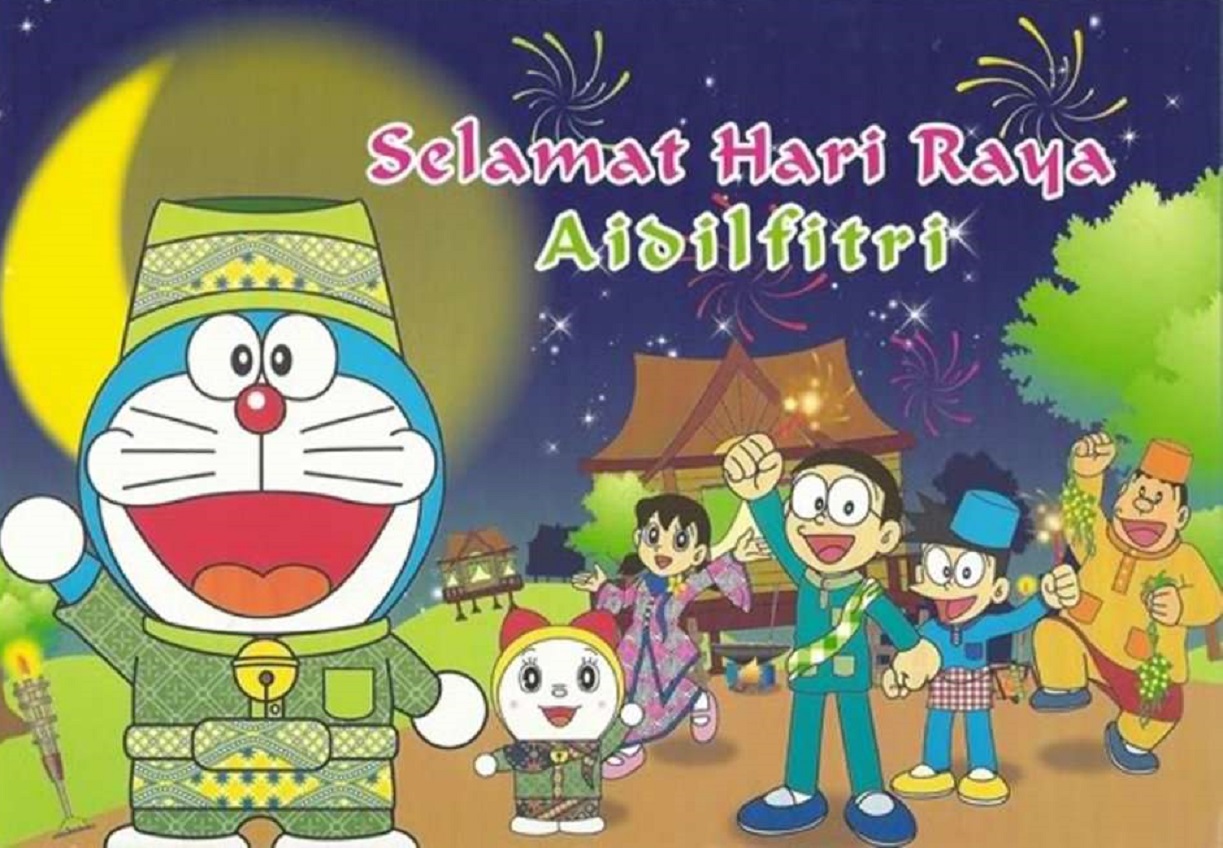
Doraemon themed Eid al-Fitr Celebration graphic. Interesting to see the Japanese anime characters in Islamic clothes....


الأحد، 6 أغسطس 2017

Identities in Beirut: Who is an Arab?

Overlooking the street in Hamra from the balcony of where I lived
During my one-month stay in Beirut, I mostly walked and took the bus to the Arabic language institute Saifi in the area called Gemmayze. I lived in Hamra, which is towards the west side of the city. Although they are only three miles apart, they are vastly different. Gemmayze is an art district frequented by hipsters and fashionably-dressed tourists at day and party-goers at night. While Hamra is also known for its party-goers and tourists, the European / white Americans are less conspicuous. More locals patronize Hamra, which has also been known for its historical cafe culture. More pan-handlers are also visible in Hamra. It is also much more hustling and bustling throughout the day and night. In between these two areas, I would cross by heavily guarded Christian churches, poorer Shi'i neighborhoods, as well as the heavily gentrified / reconstructed Downtown area. 
Houses of a poor Shi'i neighborhood


Through traveling from the West to the East side of Beirut almost every day, I picked up many markers of gender, class, and sects in the urban spaces. While the class differences and high level of commercialized property in Beirut were more obvious to me, symbols of sects and discourses surrounding identity also came to me through my walks or chance-encounters. This is one of the experiences I have encountered; it is significant not only because the conversation was related to identity, but also because it was one of the few times the interlocutor was extremely vocal in regards to politics. I will write at least two more, featuring a Christian book shop in Hamra and a friend who lives in Dahiya.

________________________________________


On my last day in Beirut, I ordered an Uber car for my trip to the airport. Dani accepted my request and drove up in a rather large car. He could not help me move the luggage from upstairs, since he could not leave the car unattended, but he helped me load it in the car. I was very flustered because I packed most of the things last-minute and was drenched in sweat. I was also worried about the cab fare's payment option, since I was not very familiar with the Uber app. (The last time I used it was in eight months ago.) The east-bound traffic was also terrible. Dani noticed my stress and he was very eager to divert my attention to other things. He offered me water and mints and told me that even if the payment doesn't go through, things will be alright. I noticed that there was a wooden cross hanging at the rear view mirror as soon as I entered the car, and picked up that he was probably a Christian.


He could speak some sentences in English, such as praising the flavor of the mints or informing me the adequate time one should arrive at the airport for an international flight (3 hours, according to him, although later I found out that nobody really does that). I also used some Arabic that I learned over the summer course.  I learned that he is 42 years old and lives about 20 minutes away from Beirut (Either in the town of "Baouchriyeh" or "Bacha"). For more complicated conversations, we relied on the Google translate audio function on his phone, which was surprisingly accurate. Somehow he knew that I was in a very reflective period of my life. He told me in a heart-felt and philosophical manner that happiness is most important thing. "Money is not important. If you have a loving family and a house of your own, you will be happy," showed Google translate. He was curious about my deal in Beirut as well. At one point he asked me if I work for the US government (in a totally calm and natural way). I knew that many Americans in the region probably work for the government, so I said no without thinking too much about it. Then he asked, Why are you studying Arabic? I tried to express my interest in politics and history. He was even ready to settle for the seemingly unsatisfactory answer.  Then I landed on "hab"(which i wanted to use for a special interest in  cultures) but then he understood it as love in general. I also accepted at that point of the difficult conversation that the reason can be explained as for love. I said I have an Iraqi friend. 

"Have you been to Iraq?"

"Not yet. Will go some day."

I said that Beirut does not seem to be a very happy place. He did not disagree outright, but explained it through economic terms. He said that Lebanon has a lot of money. Some people have jobs and money, some people don't have money. Some people work a lot, and have three jobs. 

He complimented US society because it is the dream for a lot of people and is the land of opportunity. I did not know how to explain to him the various issues of race and economic inequality, so I just nodded along. 

Then he started to talk about how the politicians in Lebanon are corrupt. He said that Lebanon is using a multi-denominational system. There is no accountability because of this arrangement. I said that there will be a new constitution next year, so hopefully things will change then. He said that if they apply constitution, Lebanon would be the most beautiful country in the world. (In my opinion, it is already very beautiful, but I thought it is always nice to aspire to more as a public citizen, so I didn't say anything.) He also pointed out later that there is trash littered on the road to the airport and it hurts him to see it as such.

Then the conversation took a surprising turn. He started blaming Arabs. He said that 90 percent of Arabs are bad. I asked, are you not an Arab? He said, I am Phoenician (Fini). I did not need Google translate for this identity marker.  I already knew about the politicization of the ethnic marker Phoenician and it was also featured during a Father-Son dialogue in the film West Beirut. (It was also strangely similar--they started discussing problems of Lebanon and how the Arab world has made it worse, to which the son decidedly distances himself by declaring that he is Phoenician.) The last time I asked this question related to the Arab ethnicity was during the start of my Lebanon trip. A friend of my host, who I will call W, was giving me a concise version of his view of Arab historiography. His politics of Arab nationalism, which included a union of Jordan, Palestine, Syria and Lebanon, stemmed from his view of history. At one point I asked, if everyone is "Arab", then why different languages exist? And are you an Arab? W said that different groups of people decided to adopt the language, and that those who did adopt the language "became" Arab, like he did. The ironic thing was that he was a light-skinned ginger who has emigrated to Italy and often passes as an Italian.

Back to the cab ride. Dani proceeded to say something that astonished me so much I could only laugh: "The Arab was created to sleep." Google translate wrote. I was kind of confused until he clarified with gestures that he meant--Arabs were created to eat and sleep. He explained that Arabs take things for granted: "Thank you China, thank you Japan. Without the west we would only be on horses. No cars, no nothing (Ma fi shi)." I did not say much to that, because it was the first time someone was so honest to me about this issue. Later he helped me exchange my remaining Lebanese pounds to dollars, we arrived at the airport and I shook his hands goodbye. Behind this sentiment is a lot of colonial baggage (akin to intellectual and dissident Liu Xiaobo's statement that China should be colonized for societal progress) and also reveals the trend in which many Lebanese Christians have emigrated abroad. I am still confused how someone like Dani could be so attuned to societal problems and care for its betterment yet still come to simplistic conclusions. It is far too simple to say that Dani is "racist" or pro-Western: at least he has chosen to stay in Lebanon. He could see that religion is not only a practice but also an institution, since he knows that the multidenominational institutions in Lebanon systematically separate the people into groups so that the elites can divide the spoils. These were the same sentiments expressed during the 2015 "You Stink!" protests against the corruption of the Lebanese government. (Read more about the antagonistic relationship between sectarianism and government reform from the chapter "The Architecture of Sectarianization in Lebanon" by Bassel Salloukh in SectarianizationStill, I am hopeful that behind contradictory notions, there is also hope. 

الجمعة، 26 مايو 2017

Access to the Iraqi Field

In between a trip to Prague, I have been reading books on the modern history of Iraq, the legal history of women's rights in Iraq, and biographical narratives of diasporic Iraqi women. This coming month also marks the third year since I permanently moved from Beijing, which was my home for many years. Many reflections on diaspora and the meaning of living abroad came up when I read books on Iraqi politics as well as Kundera's classic The Unbearable Lightness of Being. I also compare diasporic conditions cross cultures during my time spent with the Pakistani student community in Gottingen. While the background of my interest is mostly personal, this blog post will mainly address the political issues and questions of methodologies that surfaced when I read the books on Iraq.


In her book Iraqi Women: Untold Stories from 1948 to the Present, Dr. Nadje Sadig Al-Ali presents material she gathered through interviews with women from four different diasporic communities, including Amman, London, San Diego, and Detroit. There are many similarities between the Iraqi communities I am reading about in Dr. Al-Ali's work and the Pakistani community I encountered, such as the highly contested narratives of the twentieth century. Given the hetergenous makeup of the Iraqi diasporic community, with different ethnic groups, sects and classes occupying different social and political lives, the matter is evidently complex. Generations also mattered: the order of persecution entailed a different relationship with politics. This was also spelled out to me during a conversation with a Kurdish friend, P., who comes from Syrian-occupied Kurdistan. He has stayed in Germany for many years and most of his family is here. He works, studies, and likes the idea that his future would be bounded with Germany. I told him during a conversation about the sufferings of my other Syrian friend who lives in India right now and has been separated from his family since the war started. He replied that indeed, it is a hard life for my friend and other recently exiled Syrians, but his own family had established themselves abroad earlier because they have been persecuted earlier as a religious minority. In other words, my friend may suffer now, but it's because he didn't have to think about it earlier. We each receive our own due in time.

Al-Ali also addresses the sectarian issue through her experiences in the field. During her research in the U.S., she stays with various Iraqi families and acutely notices the differences in locale and socialization. During her research in Dearborn and the broader Detroit Area, the issue of sect becomes strong enough for her to voice her own opinions in this particular situation:

As I talked to the group of young women refugees, it became evident that at least this group of recently arrived women had a very strong sense of their roots and identity, both as Iraqis and Shi'is involved a strong sense of entitlement in terms of rights and privileges in the new Iraq. It also entailed a very strong and, for me personally, disturbing sectarianism that was directed not only at Sunni Iraqis but also at Iraqi Chaldeans. Khadija, just like Fatima and her sister Zeinab, criticized Iraqi Chaldeans for having been supporters of the previous regime and for failing to engage in anti-government activities in previous years. I was puzzled by this sweeping generalization and condemnation of the Chaldean community. Although several Chaldeans I talked to had clearly appreciated the generally secular nature of the previous regime, especially before 1991, which allowed for the relative religious freedom of minorities, many of the more established and well-to-do Chaldean families have been active supporters of the Bush government and his war on Iraq. (p38, emphasis my own)


I also encounter this question of methodology when I conducted research in Germany and Lucknow. When I encounter South Asian and Iraqi Muslims and explain that one of my research interests include Shi'ism, it often sends a message that I am someone who has affinity with the imagined community of Shi'as. The scope of the imagined community depends on the world view and values of the person in question, and how he or she would answer the question of "who is a Shi'a." For me, the question is extremely delicate and variable on situation.

A picture of Imam Hussain in a food store owned by Iraqis. Louisville, KY,  2016
The paragraph by Al-Ali also raises the question of politics and religion: to what extent can one draw the line between sectarianism and political activism? Many of the NGOs and charities related to Iraq claim that they service all sects, which clearly shows there are many NGOs and charities that have particular sectarian identity, subtle or not. When does a "sectarian" conversation or situation call for an activist scholar, such as Al-Ali, to intervene? This also goes back to the debate within race and sociology: is one studying a social group for the purpose of an empirical understanding, or is there an ethical obligation to that group's future? When one labels and understands situations through the lense of sects in an informed manner, the research is usually empirically rich and analytically strong. But what are the additional methodological concerns?

In evaluating narratives of women's rights in Ba'athist Iraq, historian Noga Efrati has noted in her book Women in Iraq how positionality affects the written historical accounts.

Doreen Ingrams and Deborah Cobbet present the clearest examples of following only one narrative. Whereas Ingrams favors the Iraqi Women's Union narrative, Cobbett bases her work on the League for the Defense of Women's Rights narrative. Their contrasting historical probes were probably influenced mainly by their conflicting attitude toward the Ba'ath regime as well as by their personal connections with different Iraqi women. Ingrams, at least at the beginning of the 1980s, sided with regime supporters, whereas Cobbett sided with its opponents. (p134, emphasis my own)

Furthermore, what happens when one relies on one's own group identity to gain access? Researchers such as Nadje Al-Ali (p29) as well as anthropologist Hayder al-Mohammad have mentioned how their family introduced them to certain contacts in the field. Al-Ali has also met many contacts through her own activism in London and Hayder al-Mohammad established contacts from arising circumstances over the length of five years in Basra. Dr. Lila Abu-Lughod also discusses her father's role in her field:
[M]any people remain intrigued by what I wrote about my father having introduced me to this community, perhaps because it makes us think hard about our inevitable positionality in fieldwork. I understand my father’s motives a bit differently now that I am a parent, but I also worry that people exaggerate the importance of this introduction. I still treasure the ways I was able to participate in the intimate and lively women’s world. I know that it was a bit easier for me to be part of this family because of this identity. But even though being perceived as Arab, Muslim, and respectable (under the protection of my father) was important, I don’t think we should overstate its importance. Fieldwork is intense and interpersonally complicated for everyone. Once you are there, no matter how introduced, it is you—as a person—who develops the relationships you do, even as you never escape your locatedness.
It would be an overstatement to say that their research would have been markedly different without the family contacts; still, the question is unresolved in my mind. Al-Mohammad does a wonderful job of historicizing the idea of "tribes." He questions the method which sees tribes as the dominant form of social organization in his 2011 article "You have Car Insurance, We have Tribes." Still, access to tribes were crucial in the field, and the male Iraqi identity was no doubt a gamechanger in terms of on-the-ground research. He writes, "Many leaders are very generous, not only with their wealth and power, but also with their time. Many have also been tremendously protective of me, with no hope of ever seeing anything in return other than friendship and gratitude." Identity plays such a crucial role in these sites, and thus to present oneself with an established lineage (sect or locale) affects how one is perceived in the field. I would like to read more about the implications of this approach.

Al-Mohammad passionately argues about his positionality in an interview and invokes his "brown eyes" that sees what non-brown eyes fail to see--
I have skin in this game, to invoke an idiom I am rather fond of. I’m an Iraqi. I consider Basra my home and not London where I have spent more than twenty years. The problem is, then, where can I turn to that has been relatively untarnished by the theorizers and fly-by-night Iraq specialists? What I noticed was that events, local happenings and moments, are too small for the young bucks, trying to make their name in this racket, to get their hands dirty in. They also did not have access to such experiences, nor did they have a grasp of the background knowledge and ways of life of ordinary Iraqis, hence struggled to notice the significance of certain events. Many have conducted interviews in the north of Iraq in Erbil, or outside Iraq in Amman and Cairo with Iraqi refugees, but essentially, everyday life in Iraq has been beyond the reach of the machinery.

Finally, it is appropriate to end with this observation on academia by Hayder al-Mohammad, to understand the importance of entering the field with his particular approach:
The reason why anthropologists have turned to institutions, cults, groups, and scholars is because of the obvious difficulty in locating one’s fieldwork. Not being natives of the region where they are working in, most anthropologists have few doors open to them. But what starts off as a difficulty in locating where one should, and actually could, conduct fieldwork has a very serious impact on what is studied and how it is studied. Clearly, working with religious scholars and Imams will give you a very limited picture of Islam as it is lived.
...
Most anthropologists do not make clear at all how extraordinarily artificial the pictures they draw of Islam and the life of Muslims are because of the limitations of where they do their fieldwork. So artificial indeed that I have on many occasions sat with my ethnographies of Islam and translated it into Arabic to small crowds in Iraq for most to eventually breakdown into fits of laughter. The comments I hear on many occasions tend to be: “They must think we are really stupid in the West.” (emphasis my own)

الأحد، 28 يونيو 2015

Race and Gender in Music

What is the boundary of a tradition or genre? Music grants creative license, and market forces are increasingly determining the success of musicians rather than politics expressed in the music. This creates problems such as cultural appropriation, and the clear solution is not yet to be found. Jazz started as a music genre that expressed black suffering and the African American experience. Nowadays it is often associated with upper-class taste and elevator music. Yet one also finds it hard to call for a purge in all elements that are inauthentic.
The politics of culture remains an important issue for the Indian diaspora in the Caribbeans, as Tejaswani Niranjana shows in her book Mobilizing India: Women, Music, and Migration between India and Trinidad. The diaspora faces the anxiety of trying to prove they are also adherents of “Indian culture,” which dangers on feeding into Orientalist interpretations of hierarchies of authenticity. Some migrants from India have treated caste as a personal ascription and adopted the styles of conduct to appear as a twice-born. Due to the disproportionate ratio of male to female migrants, caste endogamy to the extent of “back home” was almost impossible. This trend has led to people like controversial writer V.S. Naipaul to think of the diaspora in the Caribbean as “mimic men” and have not “produced anything.” Some of them have thus tried to show their continuance of (Hindu) tradition at home and racial similarity and create exclusionist cultural projects. The left in Trinidad thus faces problems of race, where colonialists and racial purists on both sides tried to maintain an antagonist position toward each other’s interests, despite working class similarities.

Derek Walcott responded in a momentous Nobel Prize speech that the Caribbean has always been looked in a way that it is "illegitimate, rootless, mongrelized." It stems from an expansionist idea that the Caribbeans across the ocean “is new, this is the frontier, the boundary of endeavor, and henceforth everything can only be mimicry.”[Women, Music, and Migration between India and Trinidad. 37.] Yet there is undue appreciation to the innovative uses of the mix in chutney-soca, with Trinidadian English as well as Bhojpuri Hindi being featured in explicit songs. In ways chutney-soca songs are more authentic, organic, and egalitarian than some other "traditional" Indian songs. As Walcott eloquently asked, why are these practices "not 'celebrations of a real presence'? Why should India be 'lost' when none of these villagers ever really knew it, and why not 'continuing'?"


Soca music events allows for many working class women to participate in festive cultural expression, even while incurring wrath from conservative commentators. There are many suggestive lyrics, such as those sung by the famous Drupatee, which have suffered the ignominy of vulgar or obscene. Others stated that "no Indian woman has any right to sing calypso."[Ibid. 112-3.] Racial purity, like caste purity, relies heavily on the circumscription of actions of a community’s women. Hindu opinions in Trinidad has are parallels with Confucian projects in China, such as the House of Female Virtue (女德馆) in which claims to tradition and cultural authenticity threaten female self-respect, freedom, and mobility. The question of gender is under-explored in the quest for authenticity. Trinidad provides a great ground for research since it carries many intersectional questions. Tejaswani Niranjana’s book is a great analysis for the politics of class, race and culture.

Fore more: see documentary on Calypso-Soca music, Jahaji Music